Three-week Lake Michigan jiimaan journey revitalizing Anishinaabeg trade routes, connecting people to the waters
Written and Photographed by Logan Pierson
A soft breeze gently waved a newly hung flag on a branch in front of a boat ramp at Calumet Park in Chicago. In the early morning of Sunday, June 28, the water was calm. The weather was pleasantly mild and warm, and the cool blue light that engulfed the park gently transformed into soft gold as the sun rose. The flag reads “Jiimaan Journey.”
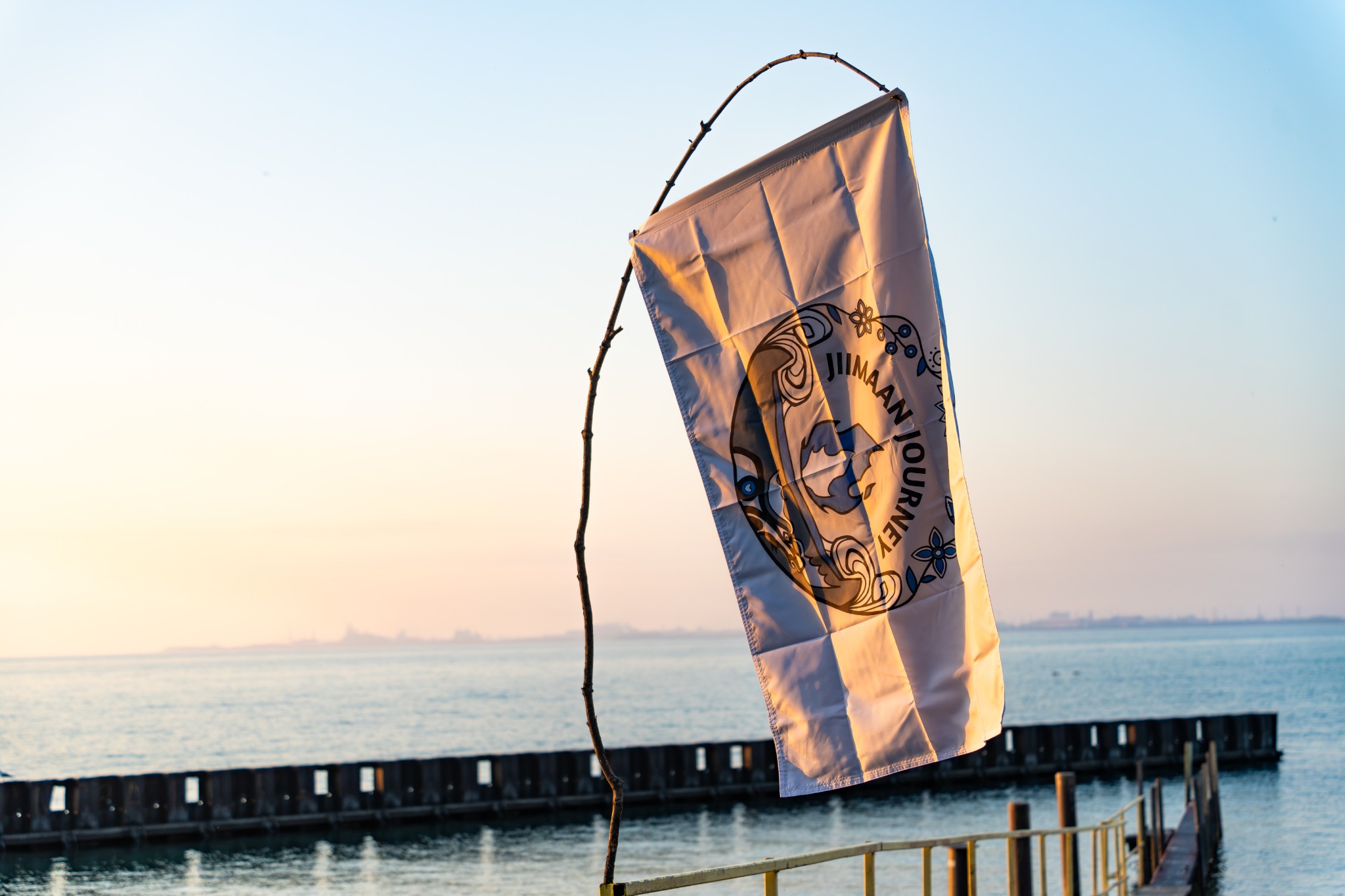
The 2026 Lake Michigan Jiimaan Journey flag hanging on the railing of the dock at Boat Ramp 1 at Calumet Park in Chicago after being unfolded by a crew member. The flag would go on to hang off one end of the jiimaan on the first day.
Fred Harrington (Little Traverse Bay Bands of Odawa Indians) rowed a Jiimaan, a canoe-like vessel traditionally made of natural materials such as birch bark, toward the nearby dock. Fourteen other crew members gathered at the dock to prepare to board the vessel – putting on life vests, checking their essentials to bring aboard and holding their paddles high. At this moment, they were about to begin a three week, approximately 350-mile, journey by jiimaan across Lake Michigan.
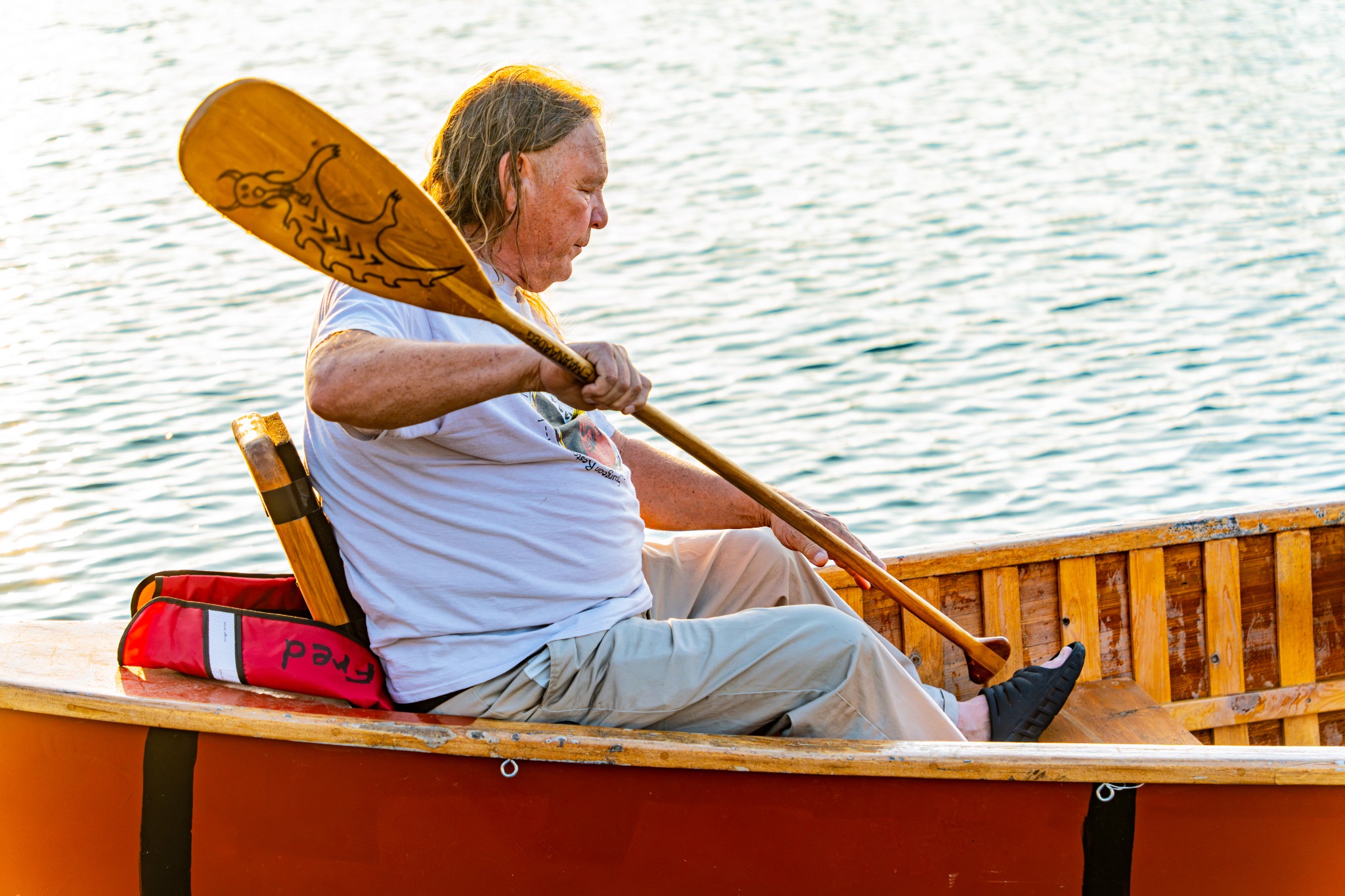
Jiimaan Caretaker Fred Harrington bringing the jiimaan to the dock after launching it at the boat ramp.
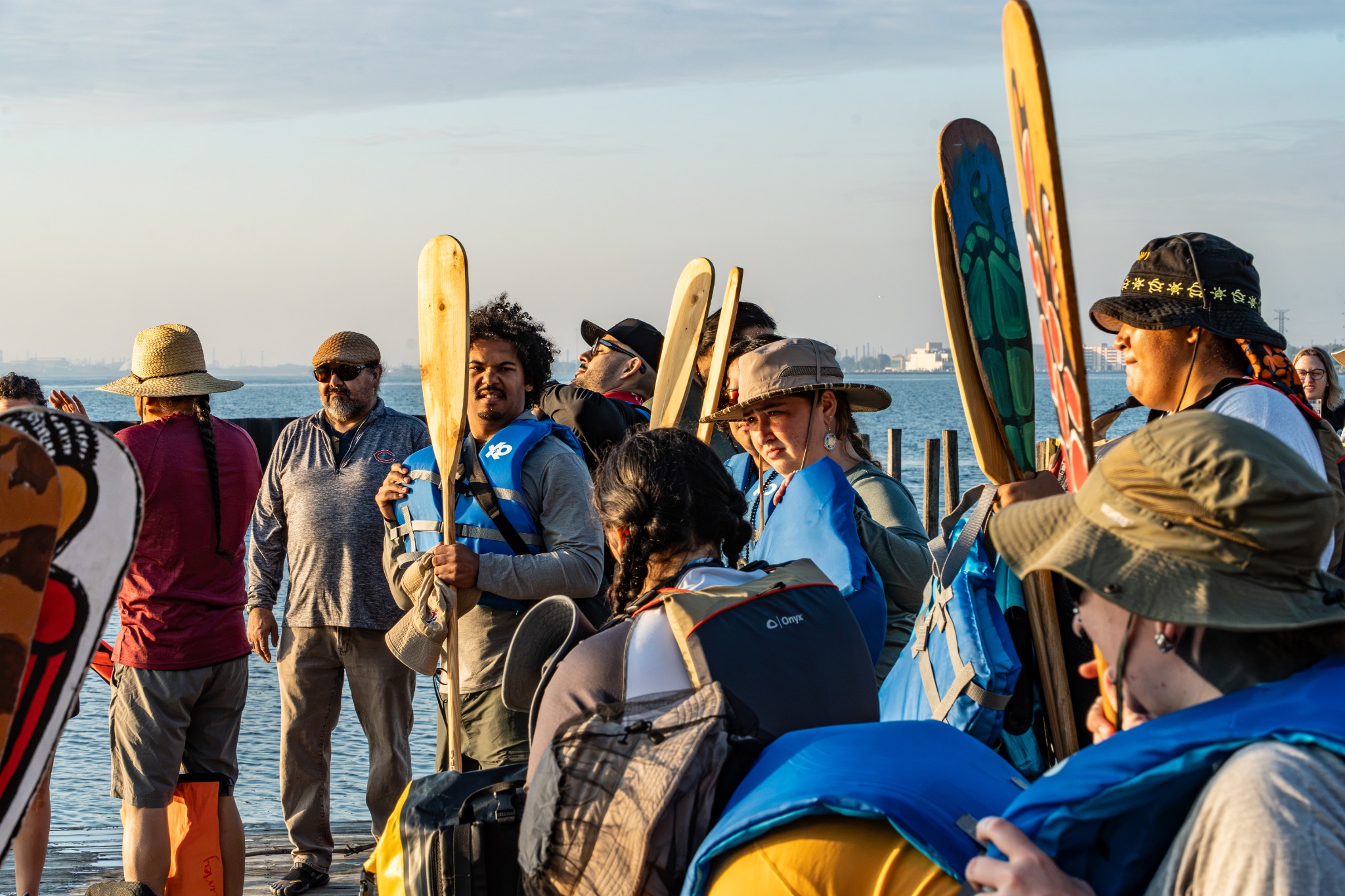
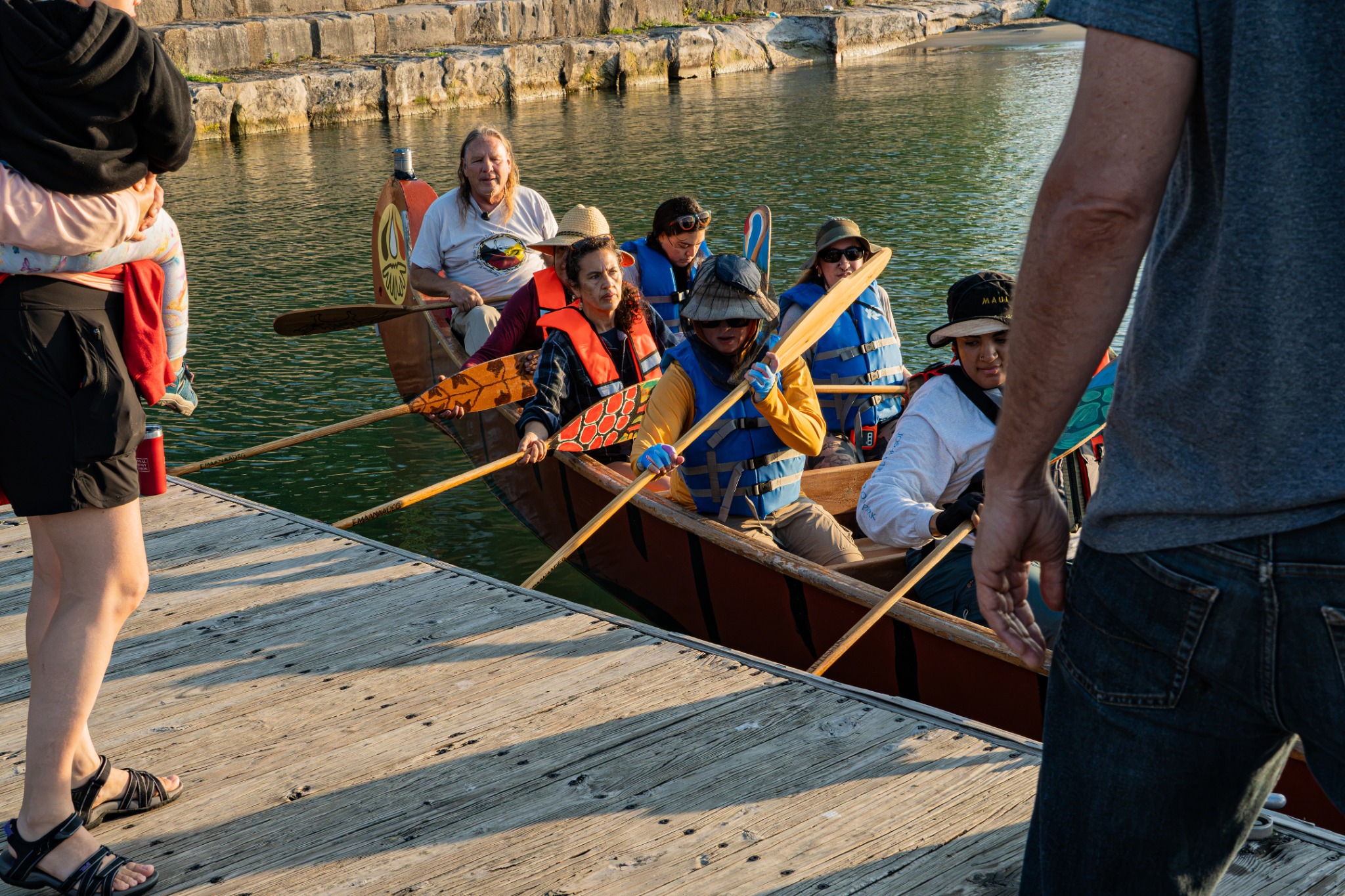
Crew members waiting to board the jiimaan with their paddles after putting on their life vests.
After the crew boarded, the Summer 2026 Lake Michigan Jiimaan Journey officially launched at 6:15 a.m. on Sunday, June 28 from Calumet Park with 15 paddlers onboard. Alongside Harrington, jiimaan caretaker, the launch crew included paddlers from Chicago’s Urban Native community, experienced paddlers, new Native and non-Native paddlers, and a documentarian, among others.
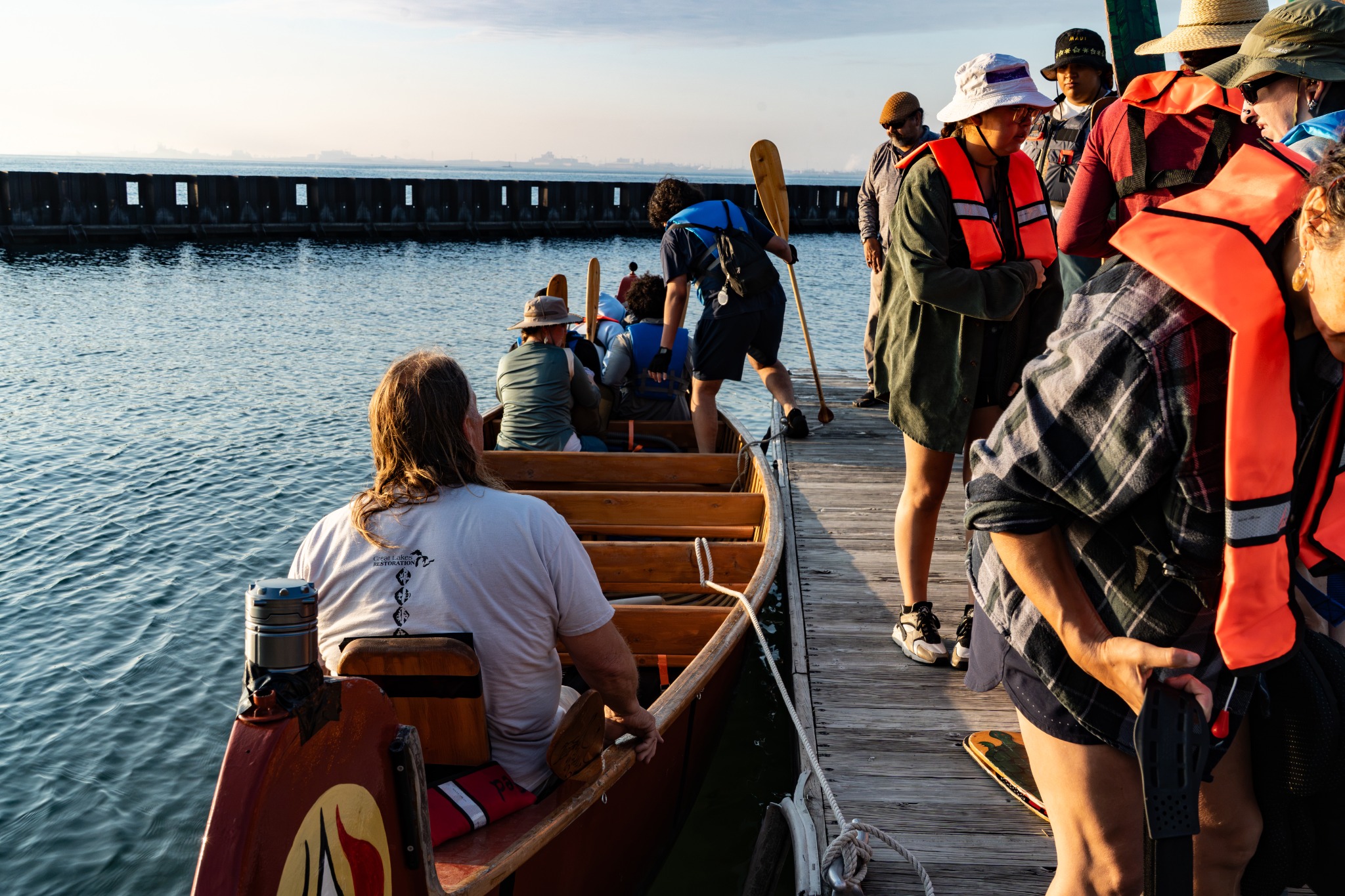
Crew members boarding the Jiimaan, starting with those who are boarding at the front and moving backward toward Fred Harrington as they take their spots.
The first day’s crew pushing off from the dock, launching the 2026 Lake Michigan Jiimaan Journey from Calumet Park in Chicago on June 28, 2026.
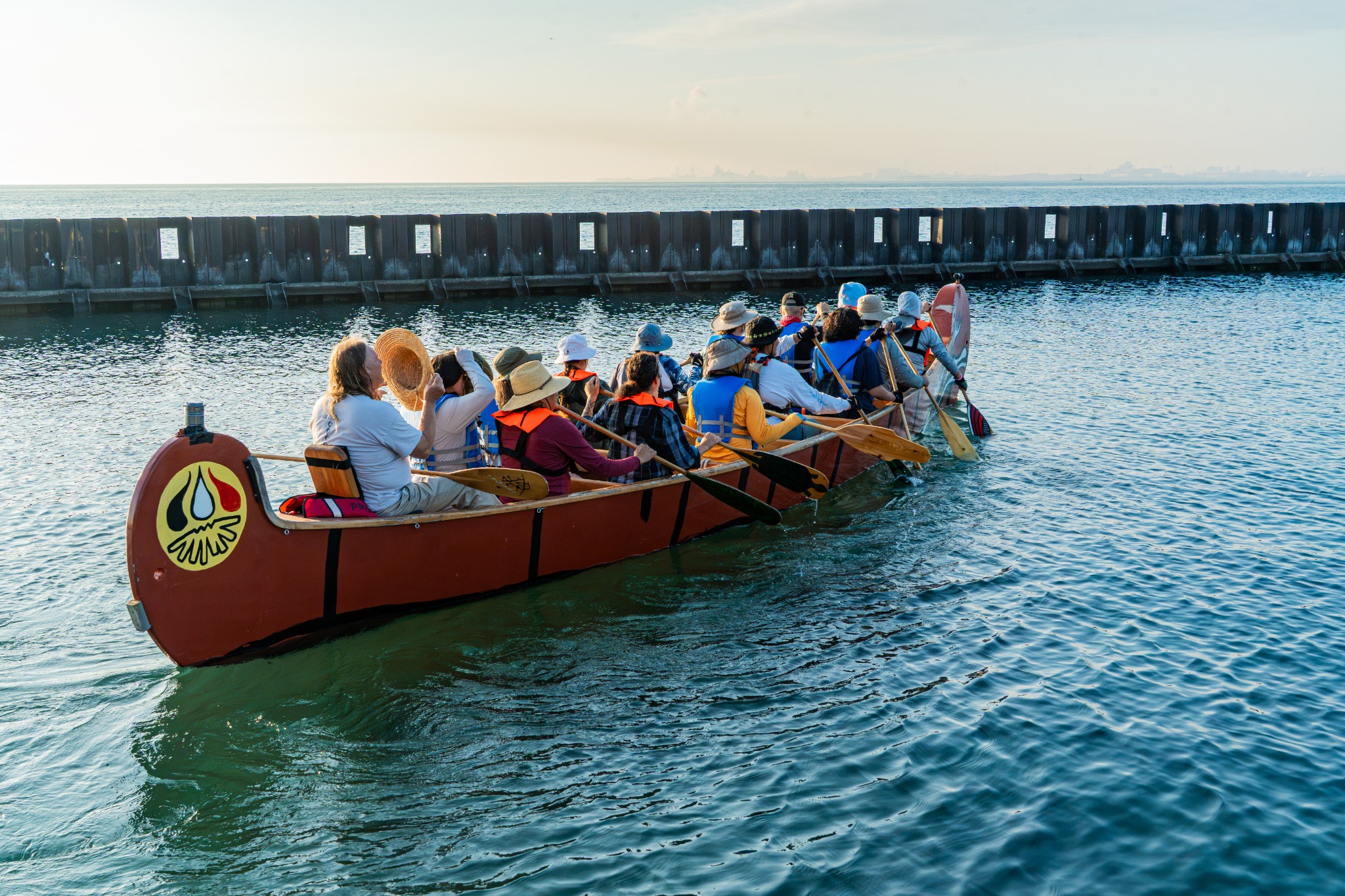
The crew paddling away from the dock.
The expedition first moved along the shoreline of Indiana, and is now moving along the shoreline of Michigan. It’s set to conclude at Little Traverse Bay, but could be extended to include the Straits of Mackinac, which connects Lake Michigan and Lake Huron.
According to Qwewaag and Lead Coordinators Megan Bang (Ojibwe, First Nations and Italian descent) and Anna Lees (Little Traverse Bay Bands of Odawa Indians), they plan to have two major three to four hour paddles each day. With weather permitting, they are expected to be in the morning and afternoon with the potential of evening paddles.
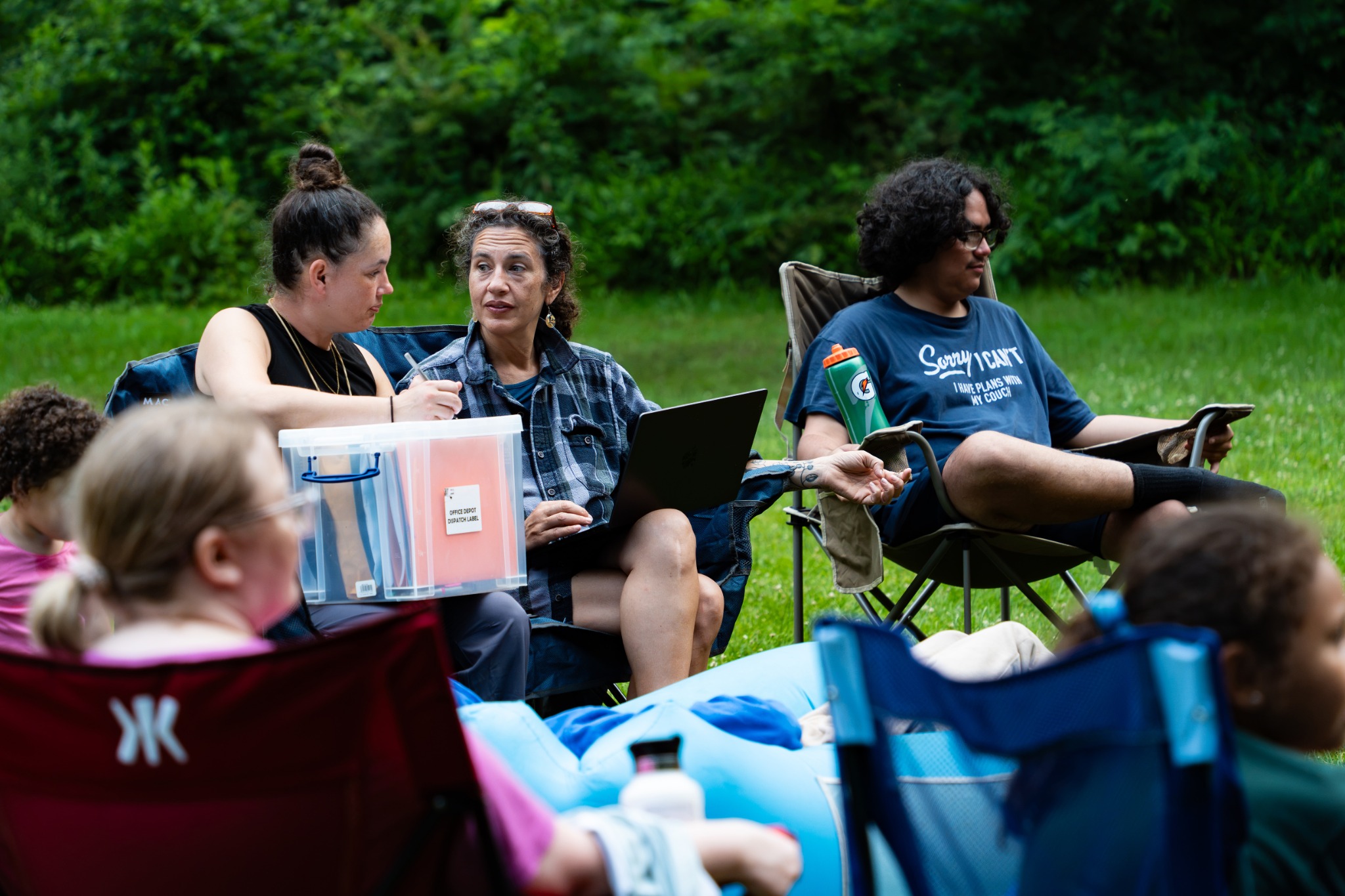
Anna Lees (left) and Megan Bang (center) holding a jiimaan circle after the first day on the jiimaan with the crew to establish rotating responsibilities with the crew for the coming weeks.
The lead coordinators said some crew members will participate in the jiimaan through the entire three week journey, while others will join later or leave earlier and contribute to the journey when they can.
While both Lees and Bang have adopted the roles of lead coordinators for the journey, they said that the journey was collectively coordinated through a group effort, with multiple meetings of over 30 people held to prepare and plan the journey.
The lead coordinators said that the journey serves a variety of purposes including ensuring that jiimaan knowledge and practices continues. Harringon added that he was excited for the younger generations to build relations to the water and for Native paddlers to experience what their ancestors had.
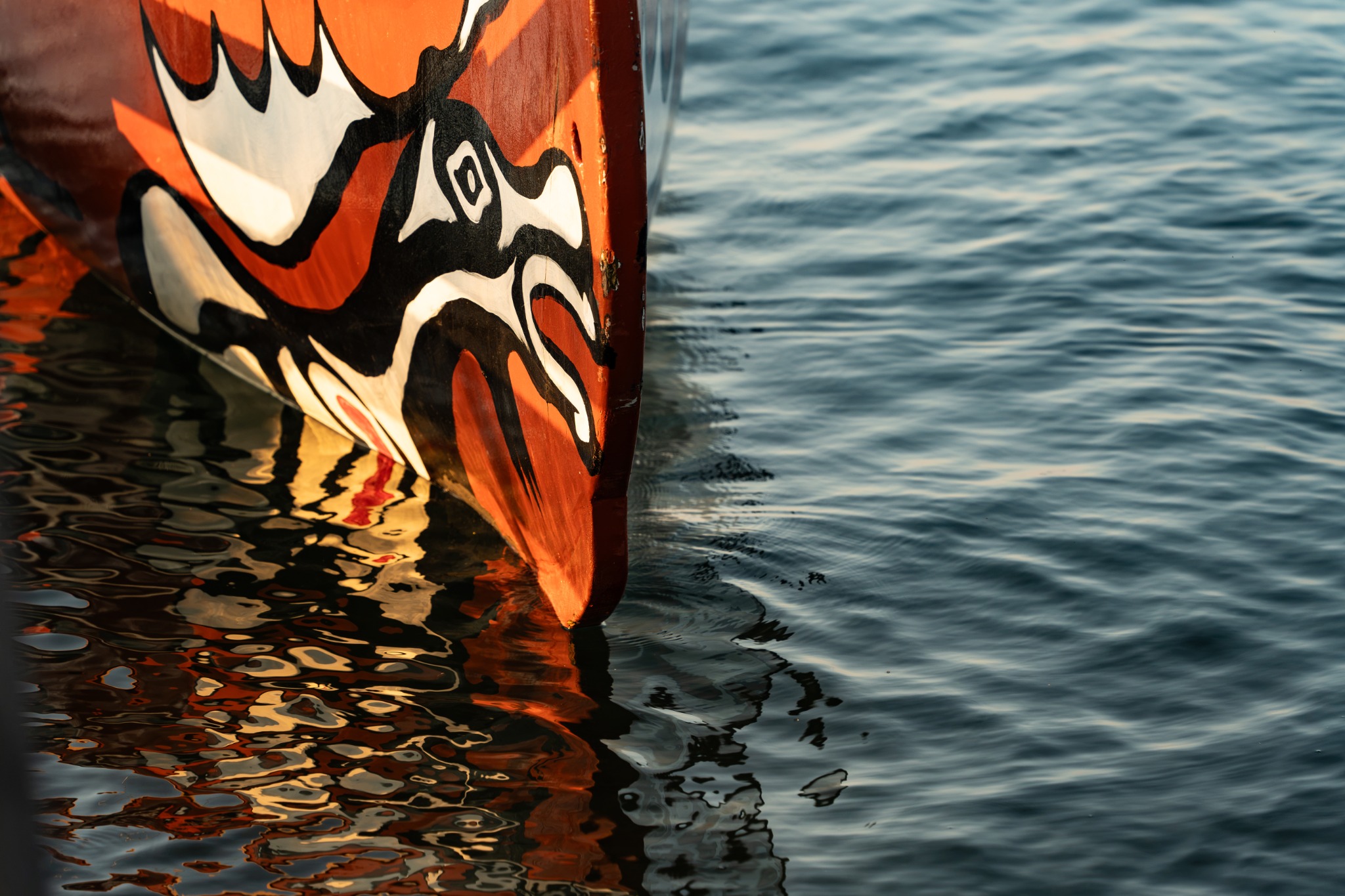
The jiimaan floating in the water tied to the dock after being launched from the boat ramp.
Miigis Curley (Ojibwe/Navajo), 20, and daughter of Bang, went on her first Jiimaan journey a year prior with Harrington and other paddlers. It was a two-day journey going to and returning from Beaver Island. She said it was an experience that humbled her.
“I have never felt closer to people in the same way that working together in a jiimaan does. Every movement impacts everyone else, and when you're in the middle of the water, miles and miles away from land, you can tell when the boat rocks a little because someone slipped – and that's okay,” Curley said. “You're intentional about what you do and what you put out.”
She said her first journey with Harrington brought about a special view of the sky, which she never got to see before as a person who grew up in cities her whole life. She said that as she found herself in the middle of the lake, paddling in the dark with no light pollution, she got to see a sky full of stars and color.
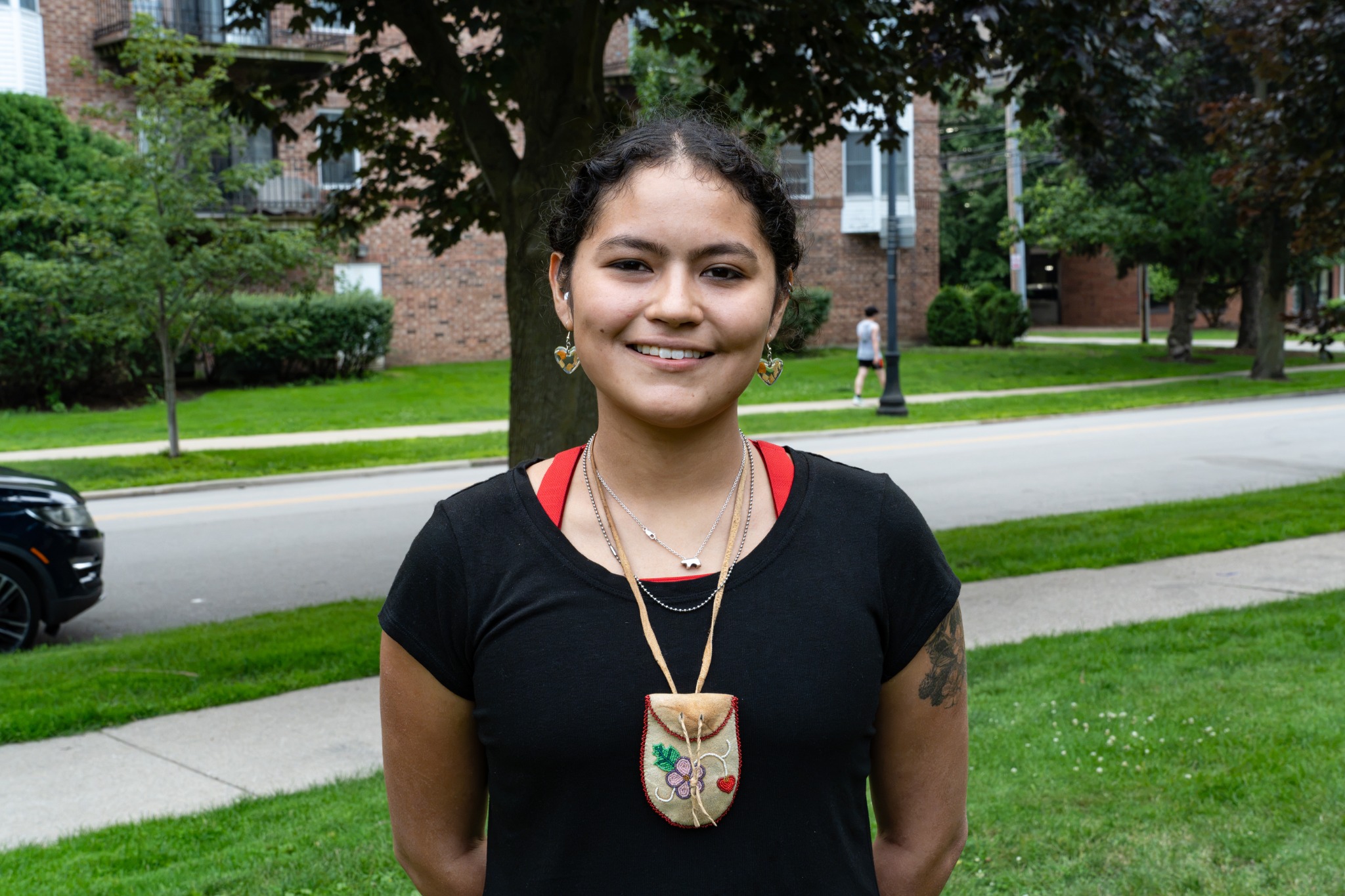
Miigis Curley outside of the Center for Native American and Indigenous Research at the pre-launch jiimaan circle, where some of the crew discussed plans for the journey, on June 27, 2026.
“That moment has really stuck with me, and it's kind of been the same for every jiimaan journey I've been on since,” Curley said. “Not many people get the opportunity to do three weeks of ceremony, and I don't know what might happen, but I'm excited.”
Morgan Demarrias (Sisseton Wahpeton/Taos Pueblo), 19, had never set foot on a jiimaan before the launch day, and is set to paddle through the full journey. He said that he is doing it to build confidence and show himself that he can make the full journey.
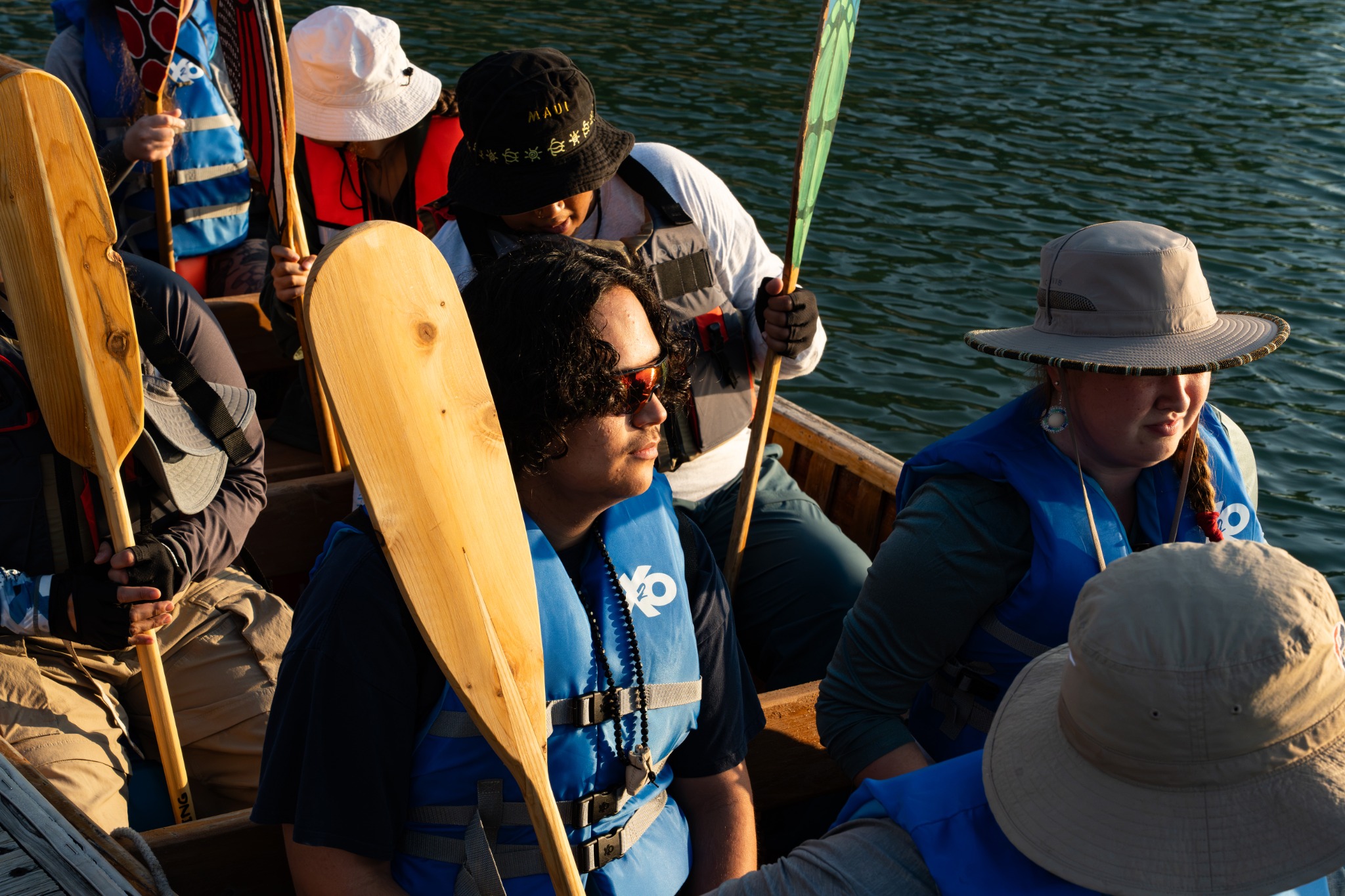
Morgan Demarrias waiting for the jiimaan journey to launch from the dock as others board the jiimaan.
The journey is moving through waters that have been governed by the Anishinaabeg (Three Fires Confederacy: Ojibwe, Odawa and Potawatomi). According to Lees, the Anishinaabeg have always navigated and governed the waterways by jiimaan for the purpose of harvest, trade, ceremony, governance, travel, recreation and more.
Lees said that the journey is also meant to showcase that the Three Fires Confederacy still exists, and are working in relationship and governance together through the waterways and trade routes.
The Three Fires Confederacy have consistently vocalized the importance of protecting the waters and have opposed environmental risks against them. They are among a number of other groups and tribes in opposition to the Great Lakes Tunnel Project and the controversial Line 5 oil pipeline, an aging pipeline carrying crude oil and natural gas liquids, run by the oil giant, Enbridge. The pipeline runs 645 miles from Superior, Wisconsin through Michigan, and Annishinaabeg waters, and stops in Sarnia, Ontario in Canada.
“One of the things I think about that is, that we've done that in relationship with the Confederacy, that we've had agreements, that we’ve had roles and responsibilities to be able to take care of the places where we live,” Lees said. “Things are hard right now, with climate, with extraction, with all of the things that are happening in the world. And so, to make that visible through a journey like this, and to come together and build our relationships, feels really important.”
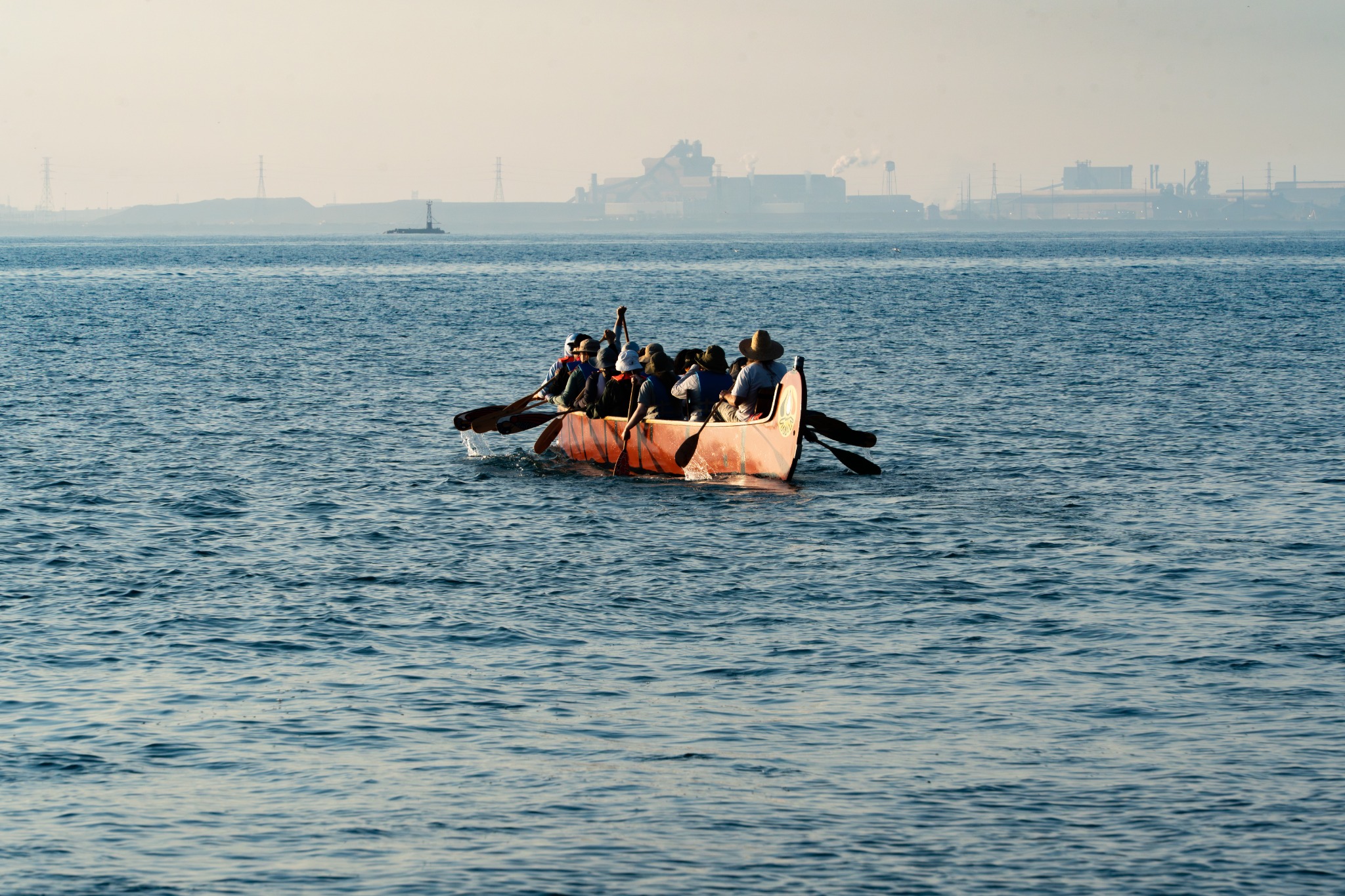
The jiimaan heading out into Lake Michigan and toward a nearby industrial block as they begin the 2026 journey.
According to Bang, who was on the first paddling session of the launch, the morning initially brought calm waters during the first hour, which led to an experience that was the highlight of the day for her.
“There were hundreds, if not thousands, of birds, on the water that were taking off,” Bang said. “We kind of paddled through the middle of them, which was lovely.”
While paddling, Demarrias said that he felt a sense of beauty from the vastness of the water and the sense of unknown that came from the lake’s size.
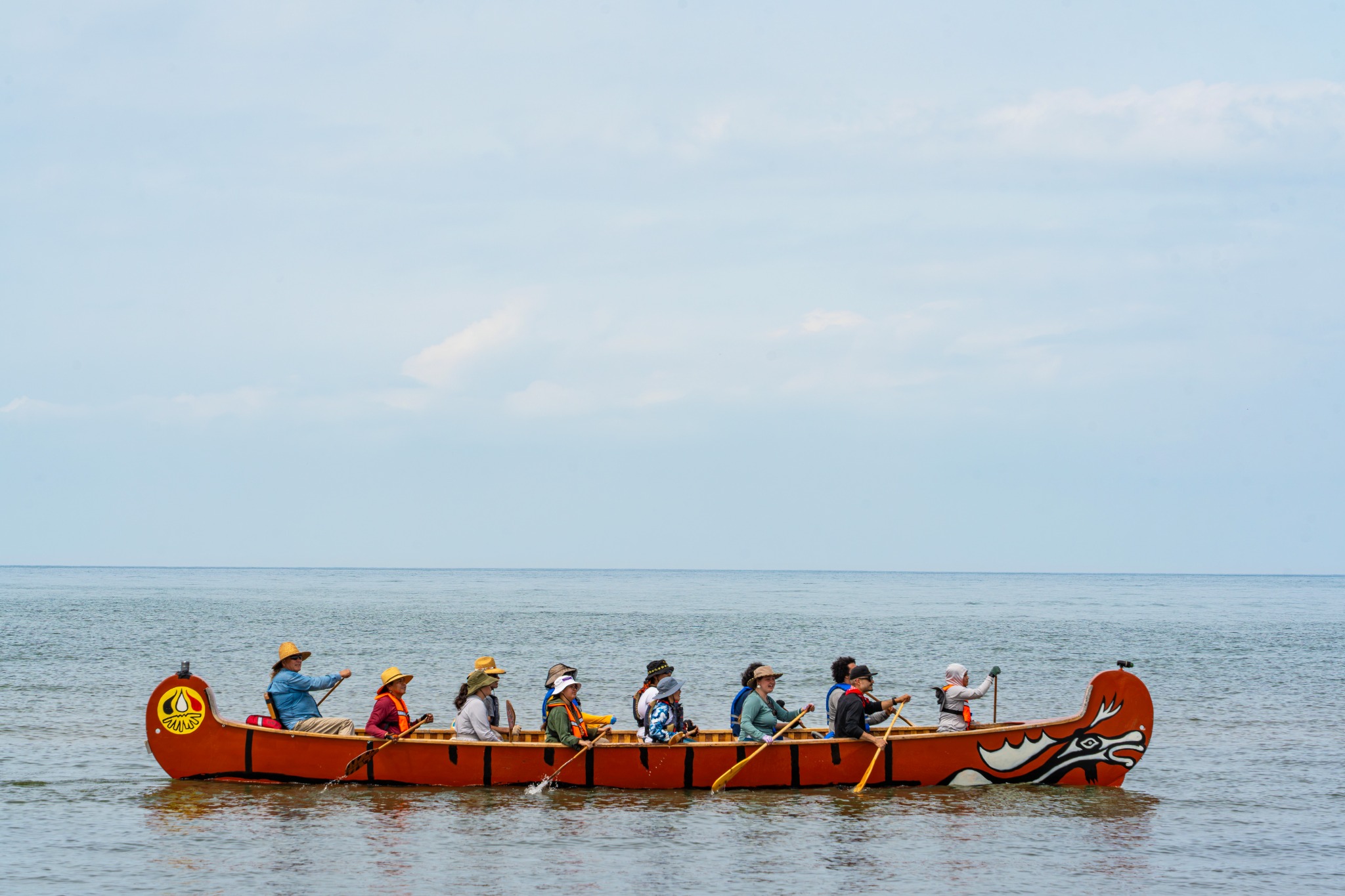
The jiimaan moving toward its stopping point for the first day in the waters at Lake Street Beach.
Bang said that as they came around a massive industrial block, the waves became bigger and choppier, but the crew managed to push through them. The crew went on to stop in the Jeorse Park Beach area in East Chicago, Indiana for food and recovery for a couple of paddlers who experienced a bit of seasickness.
Once rested, participating paddlers pushed into the second leg of day one.
Fiancées Cece Hoffman (Umatilla/Niimiipuu/Ojibwe), 28, and Tayah Carlisle, 29, joined the journey together and will be paddling to its end. Hoffman said that leading up to and during the journey, she has felt strong connections to her ancestors and future generations. She said that she wants to maintain these connections and the continued healing of her relationships with the waterways.
Hoffman echoed sentiments from Demarrias and Curley, and said she found beauty in the vastness of the water and joy through the collective experiences of the crew – which included singing pop and Disney music, sharing jokes, and finding comfort in the quiet moments where she could only hear the water.
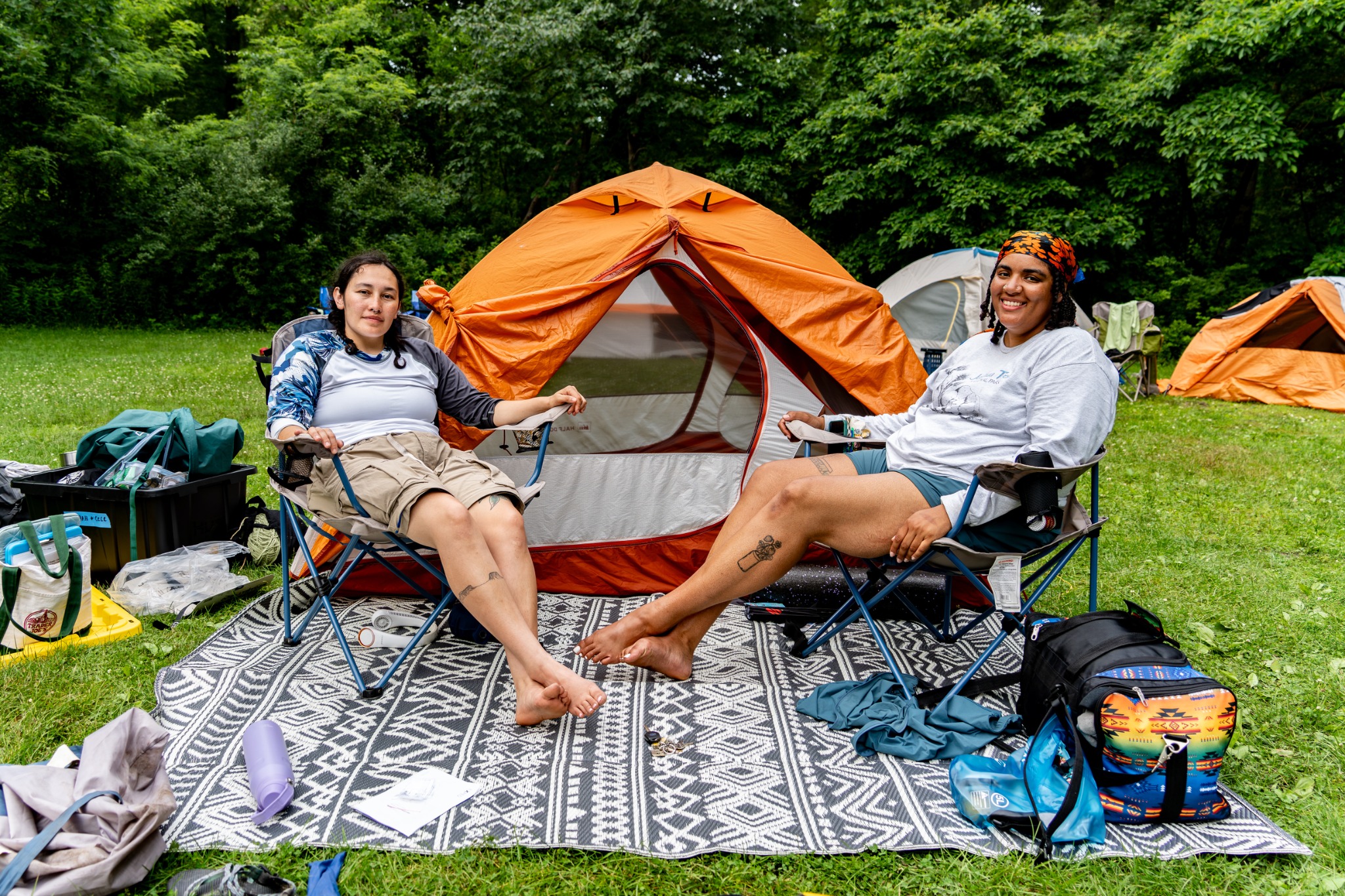
From left to right: Fiancées Cece Hoffman (Umatilla/Niimiipuu/Ojibwe), and Tayah Carlisle, at their tent at the Indiana Dunes Campground after the first day of paddling.
Carlisle said that as a Black American, she had a lack of a connection to the waterways due to colonial violence and the enslavement of Black Americans, but was wanting to establish her own positive relationship to the waters. Due to this, Carlisle said her first day started as an intense one as they moved out in the waters and she felt uncertainty in her journey.
However, she said she eased up as she let the mixture of emotions and reflection naturally flow through her as she entered the second leg of paddling, and took in the awe of the water.
“The fear that I was feeling I have not felt in a long time. I don't really put myself in these situations where I'm like doing something really new and on the water, and so I was feeling a lot of things,” Carlisle said.
“Going on to the second leg, I felt so much more confident and clearer, and was able to take in so much of the beauty and awe and notice the patterns of the water and color of the water, and also be present to my fellow paddlers.”
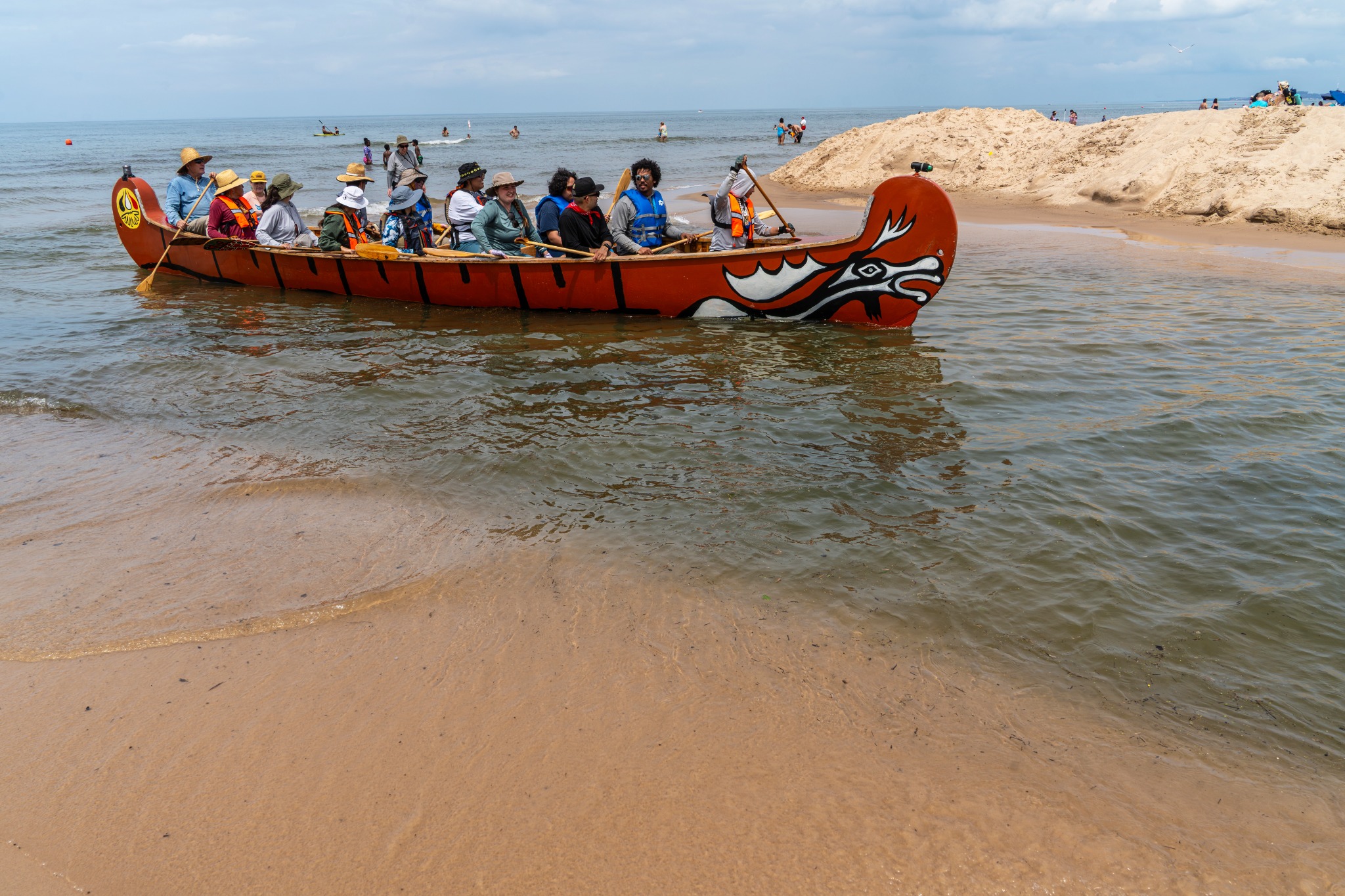
The jiimaan being directed toward the Lake Street Beach boat ramp by Miigis Curley after passing swimmers, boats and jet skis surrounding the waters nearby.
In the mid-afternoon, the paddlers came around another industrial block where they then caught sight of the end point for day one: Lake Street Beach, which is next to Marquette Park in Gary, Indiana.
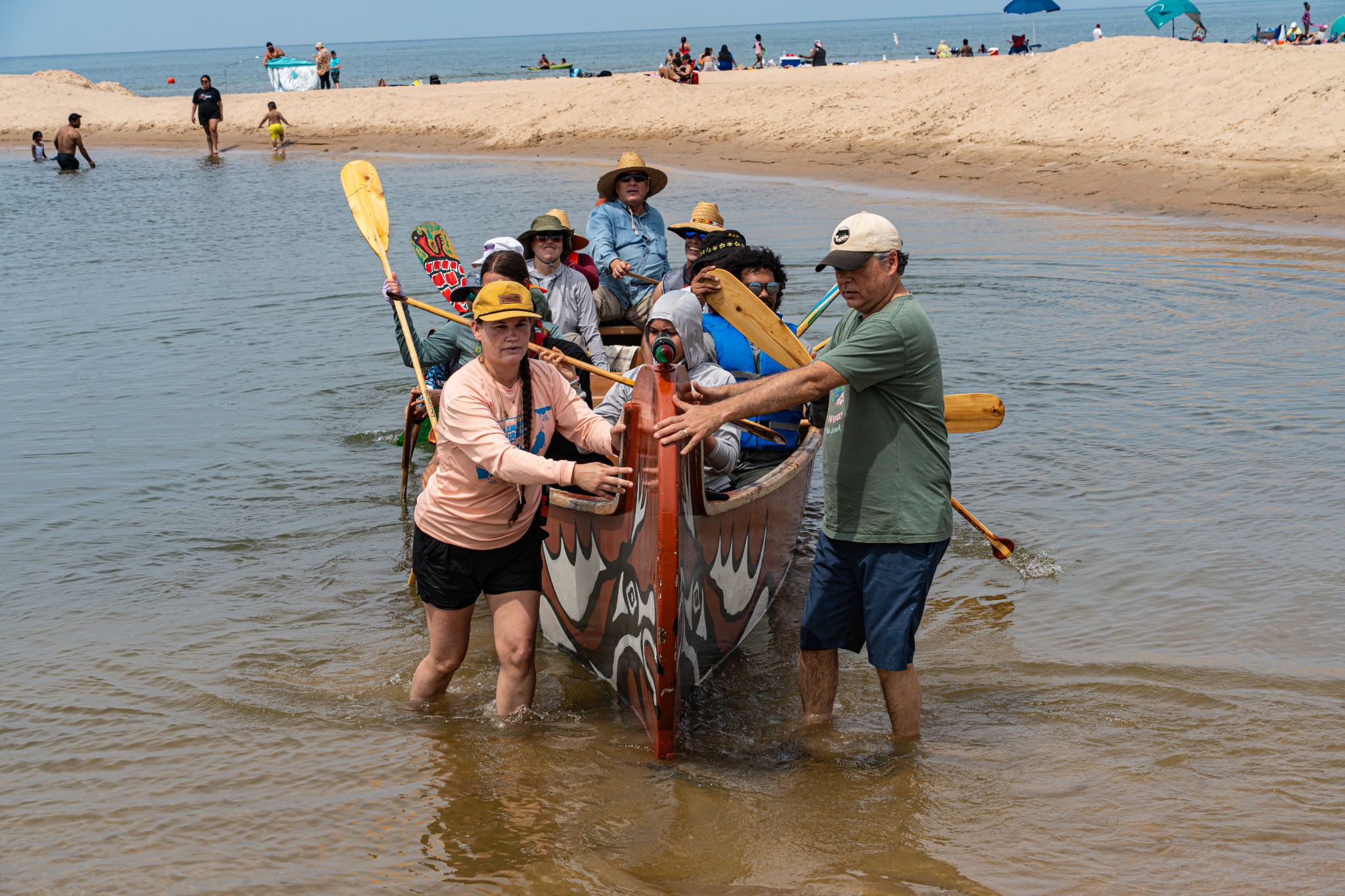
Anna Lees (left) and Aaron Golding (member of Seneca Nation) guiding the jiimaan toward the boat ramp at lake street beach after the water became too shallow for paddling.
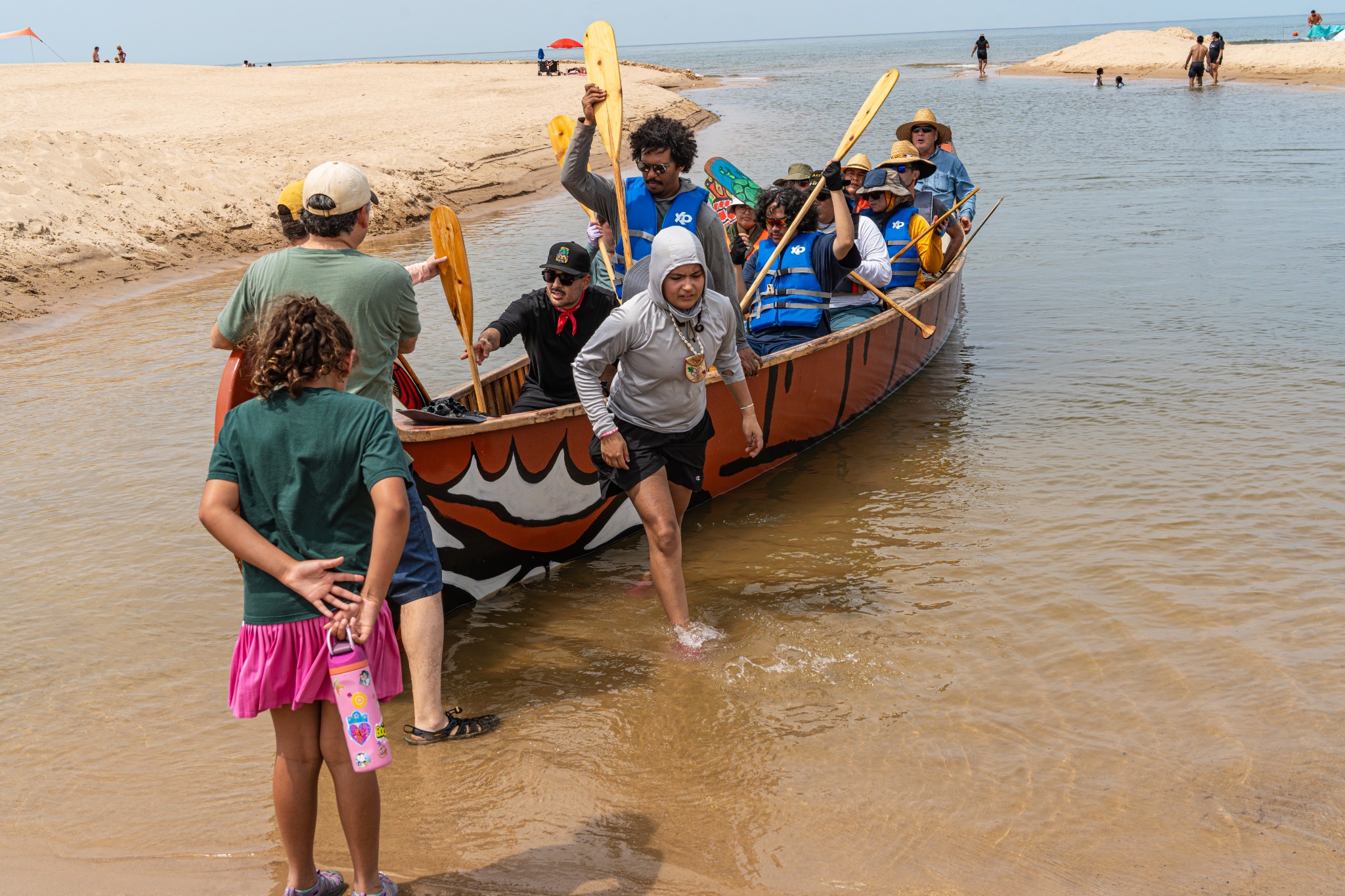
Miigis Curley is the first paddler to step out of the jiimaan after day one is concluded at Lake Street Beach.
The group were given approval to leave the Jiimaan next to the beach's boat ramp before they left to set up camp for the night at the Indiana Dunes Campground and conclude day one.
The crew is camping along the shoreline, spending between two to four nights at different sites before moving forward to the next. A ground crew will follow on land to help transport people and their gear back to the camp, help transport all camping gear as they change camping sites, and ensure they have enough necessary food and materials for the journey.
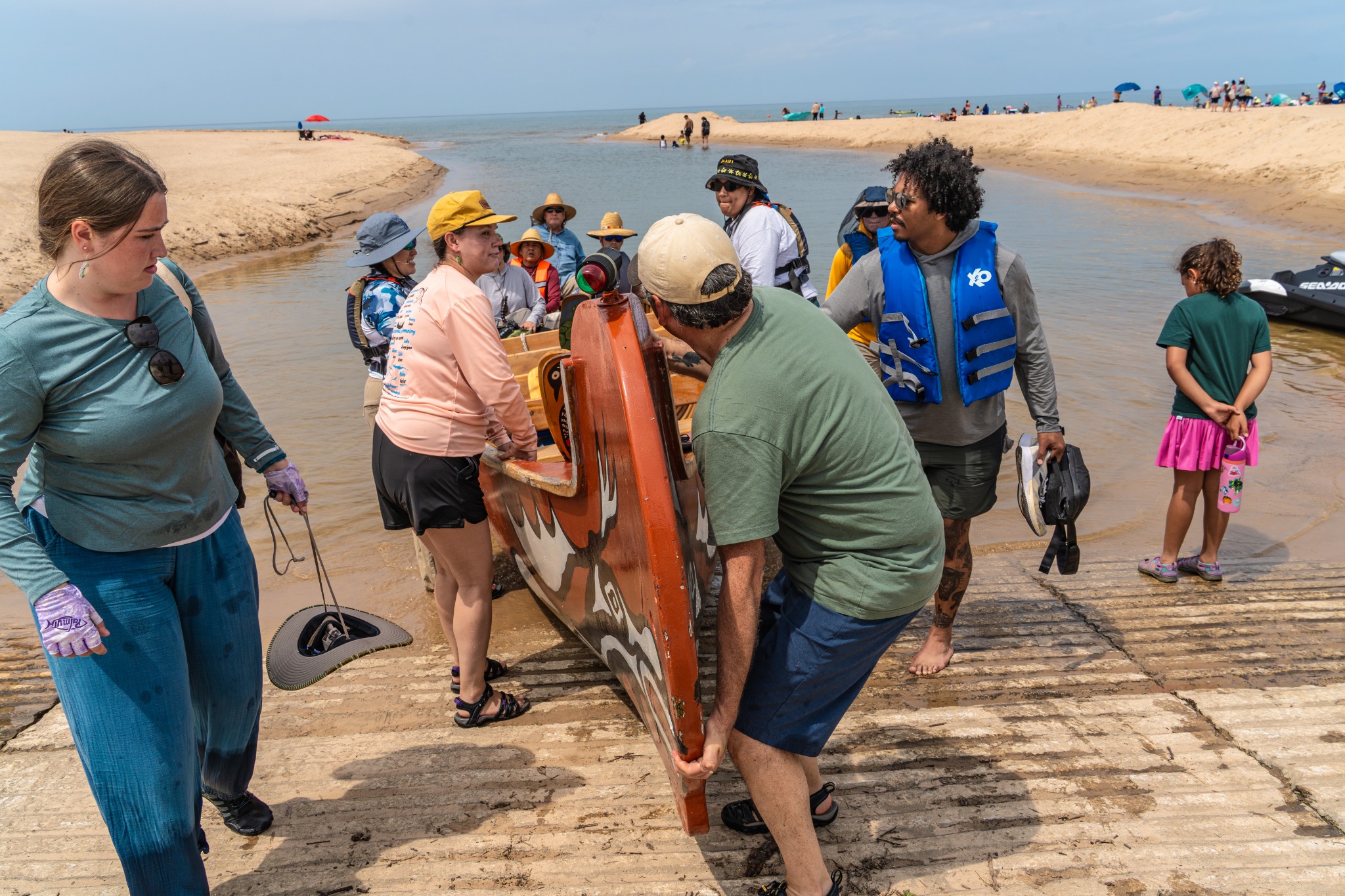
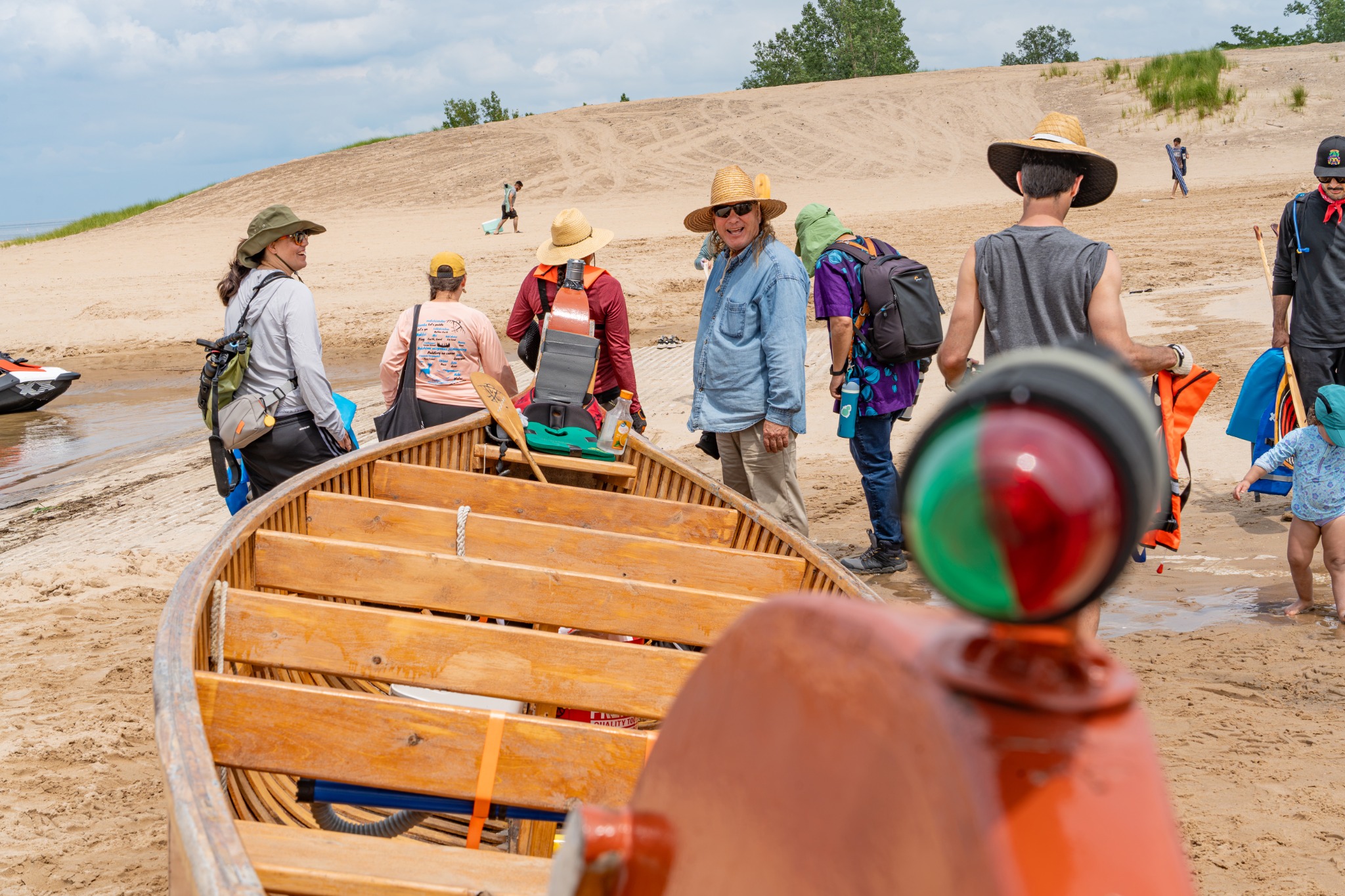
Anna Lees (left in pink) and Aaron Golding (center) moving the jiimaan onto the boat ramp at lake street beach with those in the front of the jiimaan that had exited.
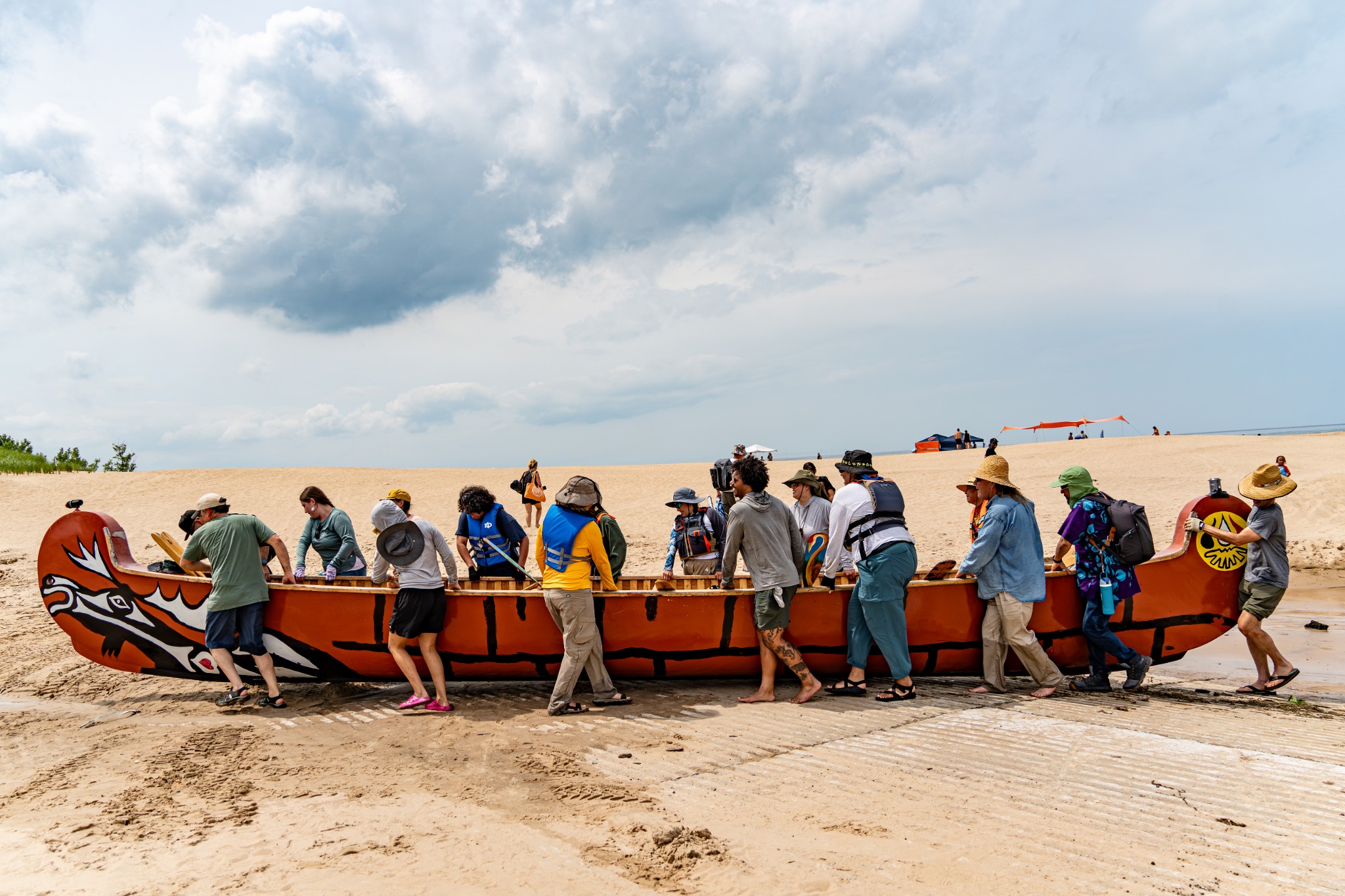
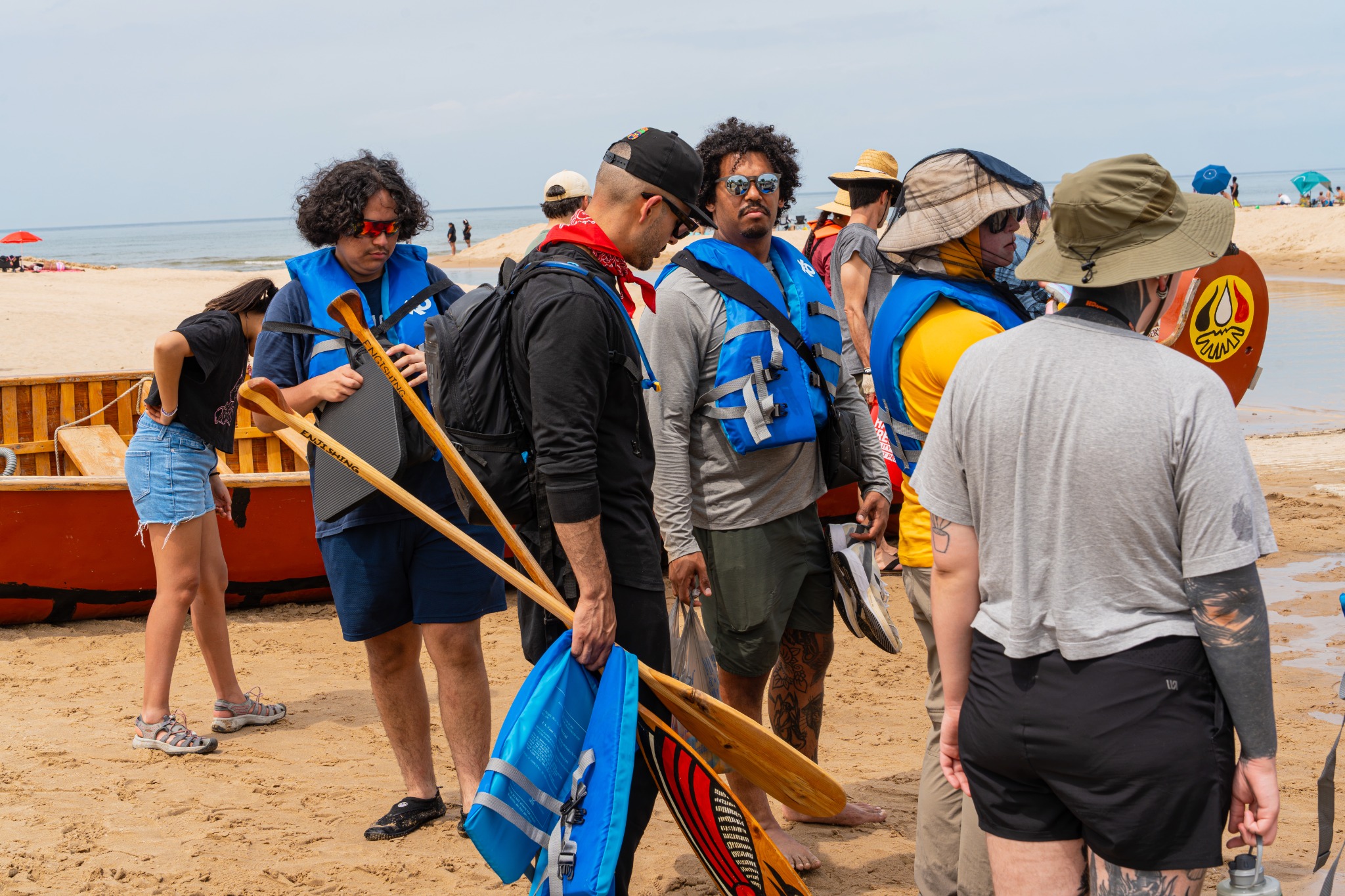
Everyone in the crew working together to move the jiimaan up onto the beach near the boat ramp at Lake Street Park.
While the collective group vocalized their feelings of exhaustion following the first day, they also shared eagerness for the weeks ahead and discussed roles and how to prepare for future time on the water.
Following the first day, people have joined and departed the journey after providing their available time. Recently, Harrington’s grandson joined them and steered the jiimaan in a recent paddle, and as of July 9, the crew was at Orchard Beach in Manistee, Michigan – about halfway up the Western shoreline of Michigan.
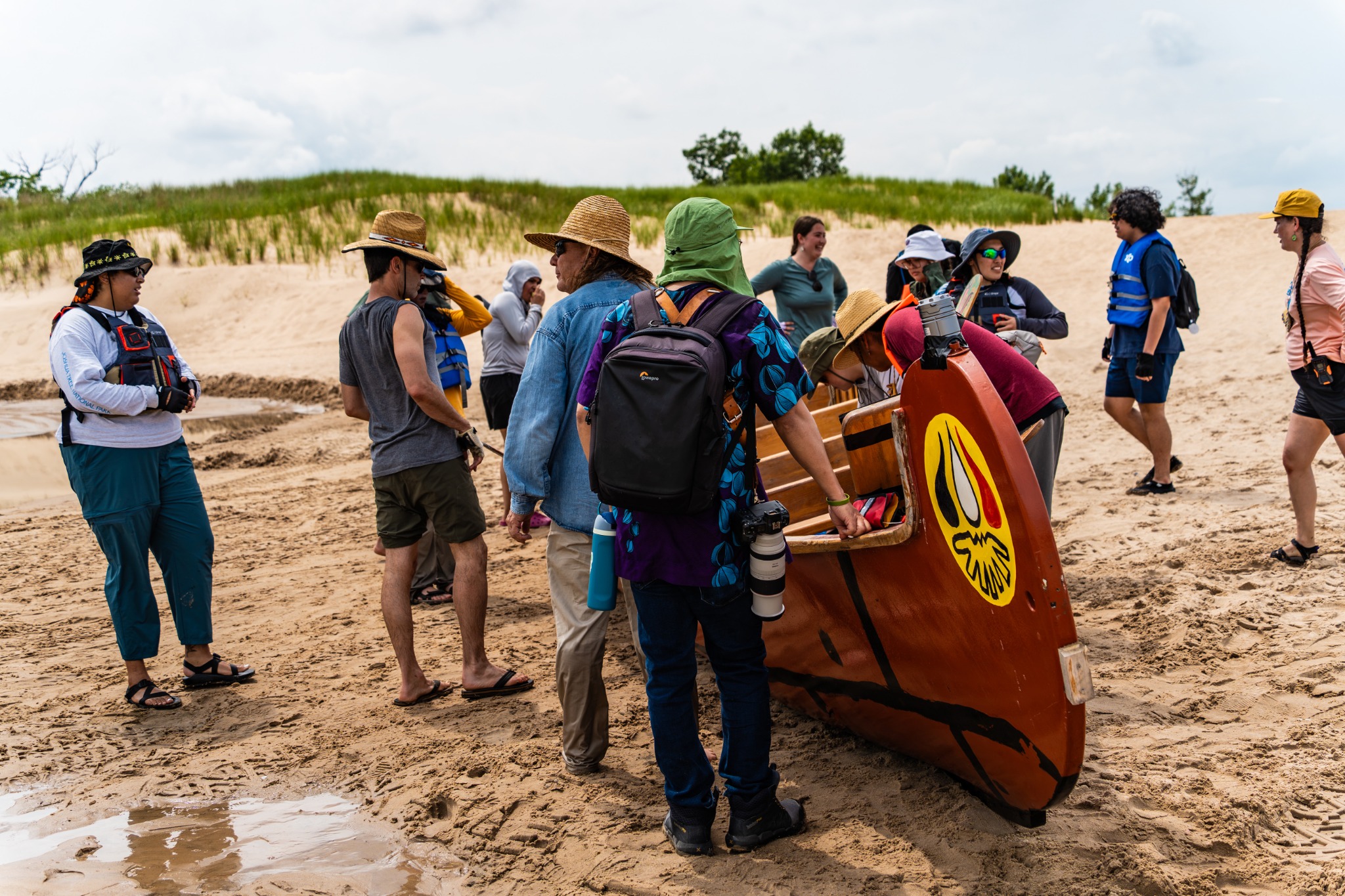
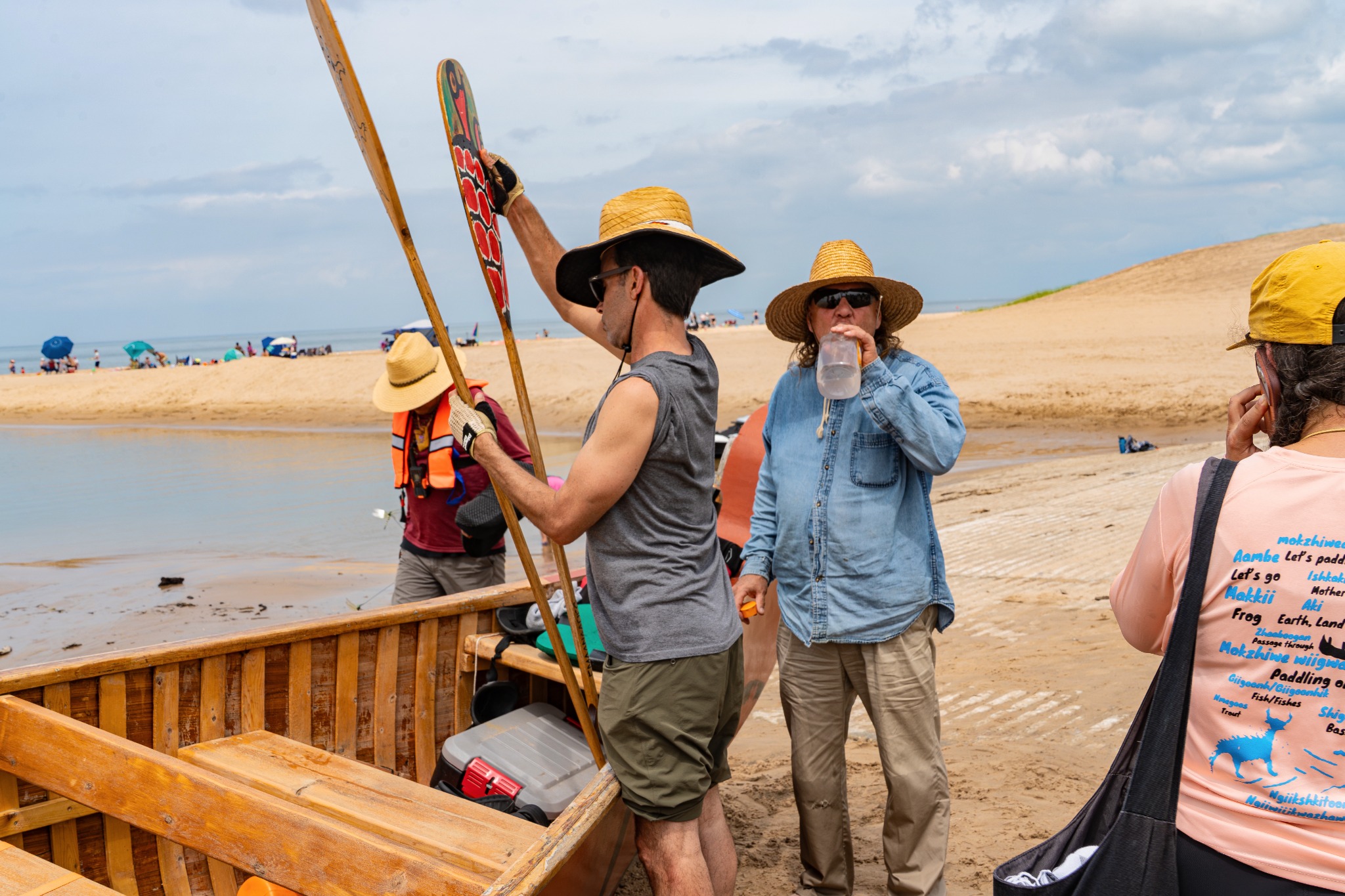
Everyone in the crew collecting personal items from the jiimaan after moving it onto the beach.
0 Comments Add a Comment?