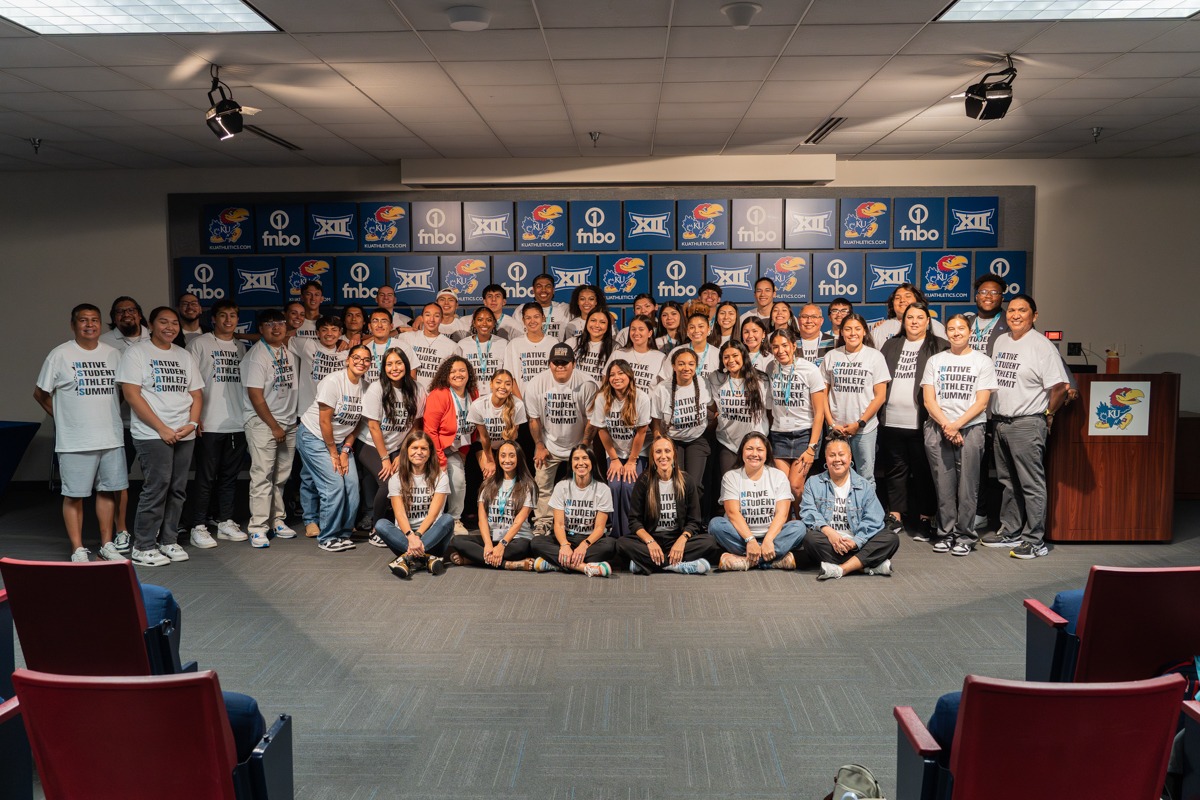
Second Native-Student Athlete Summit builds national network of athletes with connections to Nike N7, Billy Mills
Written and Photographed by Logan Pierson
The second annual Native Student Athlete Summit brought together over 50 Native Athletes in collegiate sports who built networks with each other, Olympic Gold Medalist Billy Mills (Oglala Lakota) and the Nike N7 brand visionaries, through shared experiences.
The three-day event, held at the University of Kansas and Haskell Indian Nations University, both located in the city of Lawrence, held educational sessions to give Native athletes, coaches and community leaders resources to budget, lead teams, expand their networks and build Native-centered community events.
According to the NCAA, Native athletes make up less than one percent of the organization’s student-athlete population – leaving many athletes as the only Indigenous teammate.
While some students found excitement in the professional connections they made, others were excited to link up with fellow students. This includes cross country and track and field runner Bahozhoni Church (Navajo, Pokagon Band of Potawatomi). Church attends Grand Valley State University in Michigan, which only found 73 Native students enrolled in Fall 2025. .
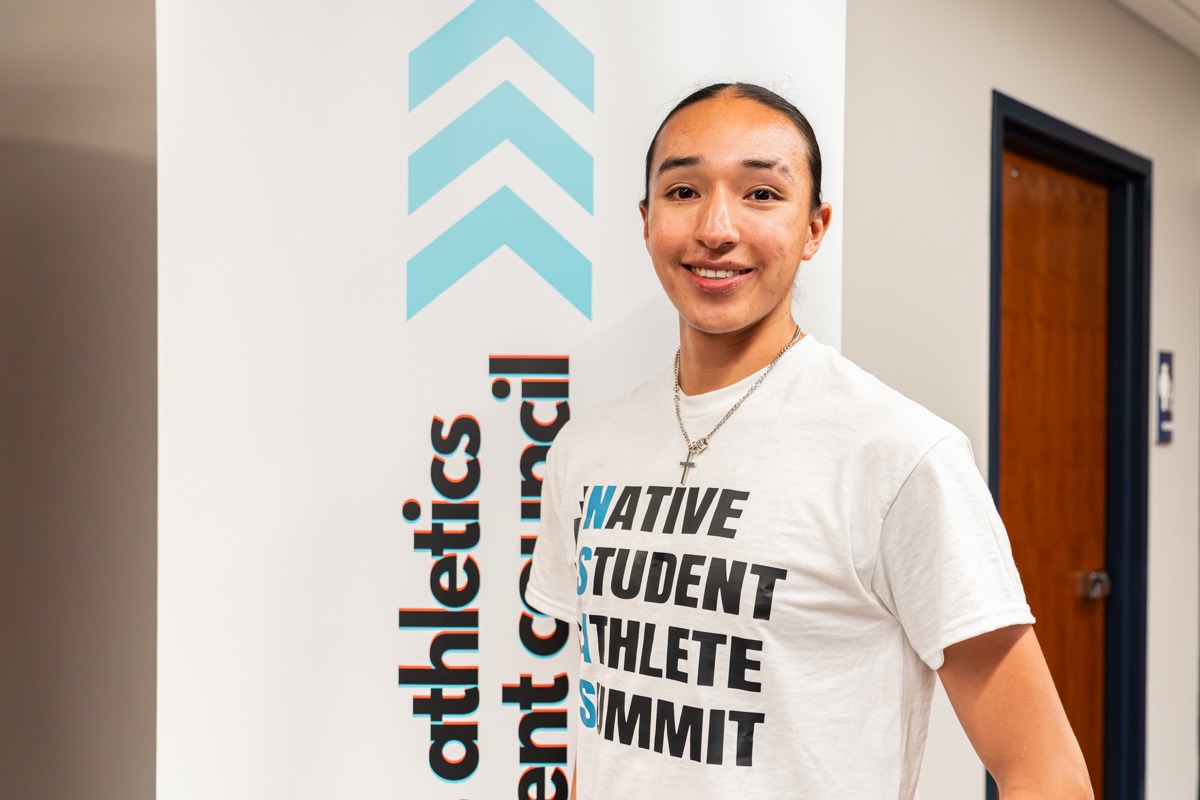
Bahozhoni Church (Navajo, Pokagon Band of Potawatomi), a track and field and cross country runner at Grand Valley State University.
“Just being able to be somewhere that's culturally relevant to me — this is a perfect place to be to recenter myself,” Church said. “I didn't know what was going to happen, but it was honestly probably one of the best decisions I made this year.”
Each day had a special speaker. Olympic Gold Medalist Billy Mills (Oglala Lakota) opened the event on Tuesday.
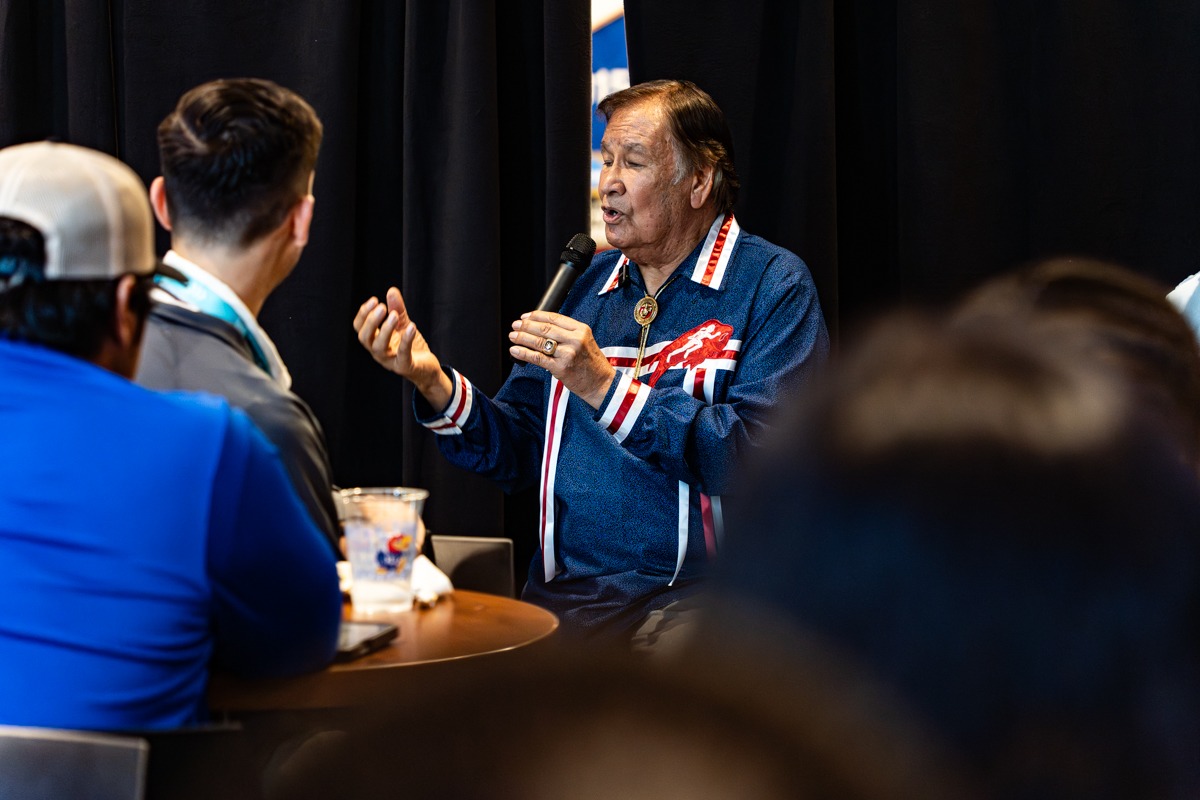
Billy Mills (Oglala Lakota) speaking about the journey to his Olympic gold medal victory in the 10,000-meter run at the 1964 Olympic Games in Tokyo. His speech explored his struggles with mental health, grief and diabetes as a young man, and he regularly praised his wife, Pat Mills, for her never-ending support. Mills concluded the speech by saying that he hopes another Native athlete, primarily a Native woman athlete, can take home the same medal he did.
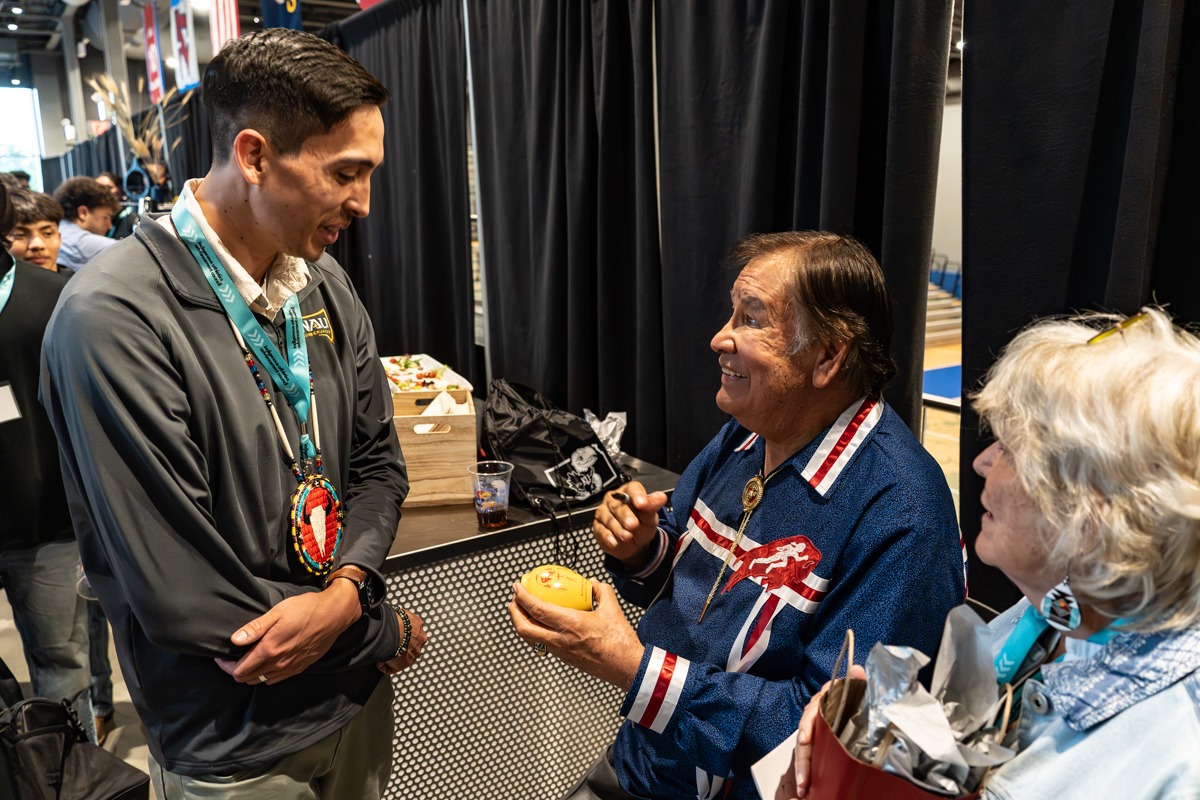
Billy Mills (Oglala Lakota) signing a Running Strong for American Indian Youth 40th anniversary vase of his Olympic gold medal victory for Skyler Benally-Bordeaux (Sicangu Lakota) on day one of the summit.
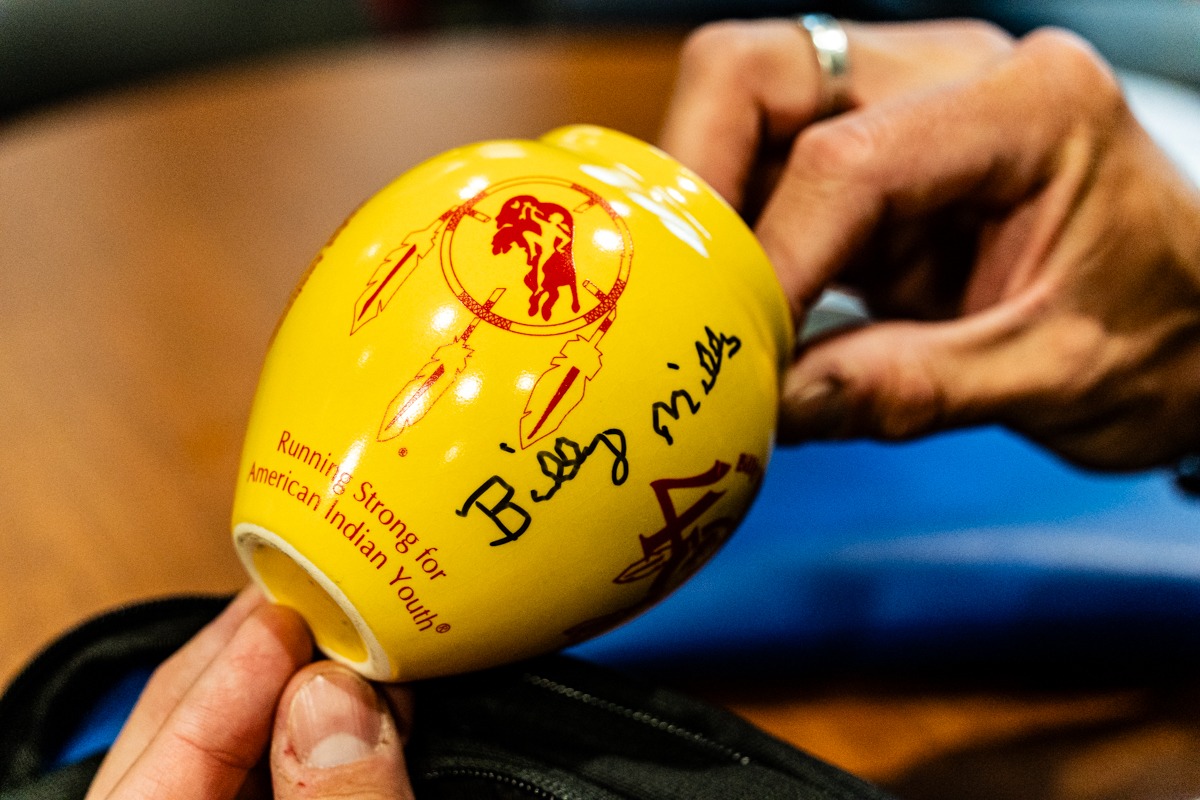
A Running Strong for American Indian Youth 40th anniversary vase of his Olympic gold medal victory signed for Skyler Benally-Bordeaux (Sicangu Lakota) by Billy Mills.
On Wednesday, Nike N7 Business Director, Izzy Yasana (Klamat, Modoc, Filipina), began the first of a day and a half of educational sessions from community leaders, coaches, academics and fellow athletes.
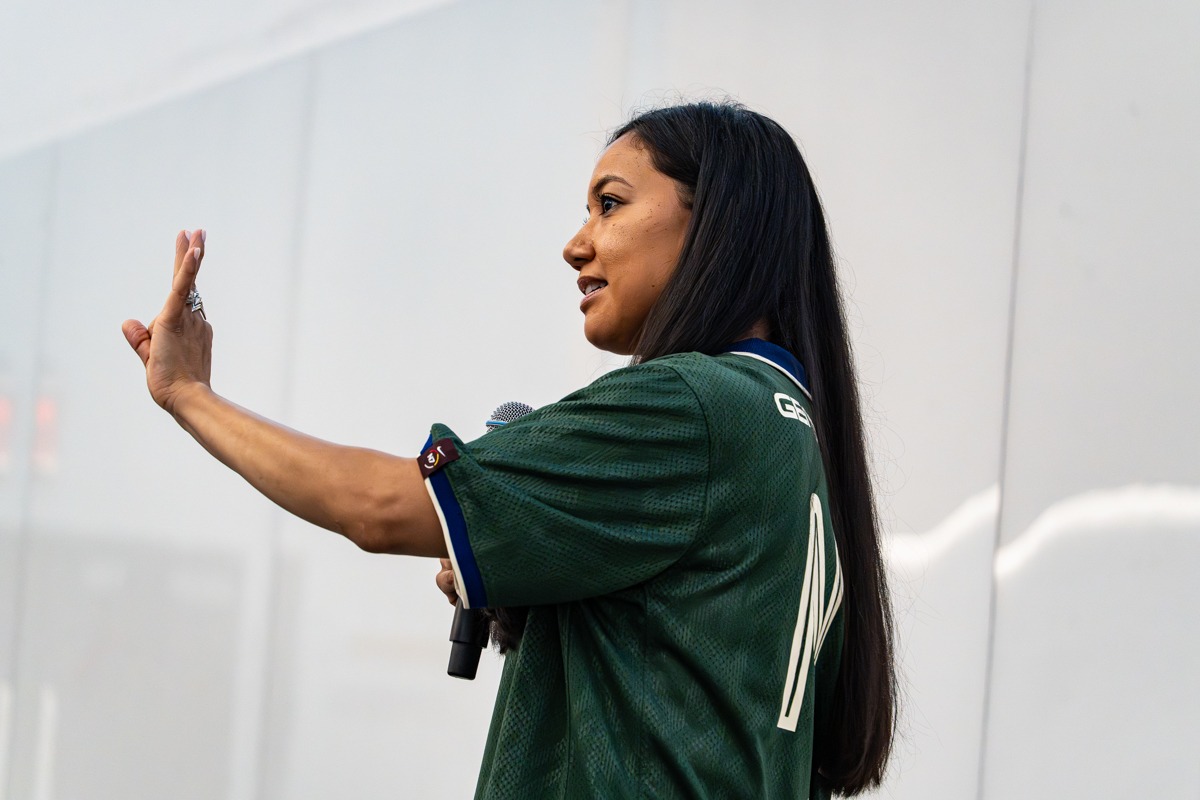
Nike N7 Business Director, Izzy Yasana (Klamat, Modoc, Filipina) giving the first session of the summit on Wednesday, June 3 in Gray-Little Hall at the University of Kansas. Yasana opened up her session by speaking about the importance of having pride in one's Native identity before speaking about her journey with Nike N7.
Kylena Paredes (Native Hawaiian), a soccer player at Dominican University, said she felt moved by Yasana's session, in which she spoke of representation and the importance of loving one’s Native identity.
“I grew up with Nike, always have loved Nike, and I think the fact that they're doing something to promote native and indigenous people is so great,” Parades said. “It seems small, like we're only one out of a million people, but still it's the group that's being represented and what it stands for.”
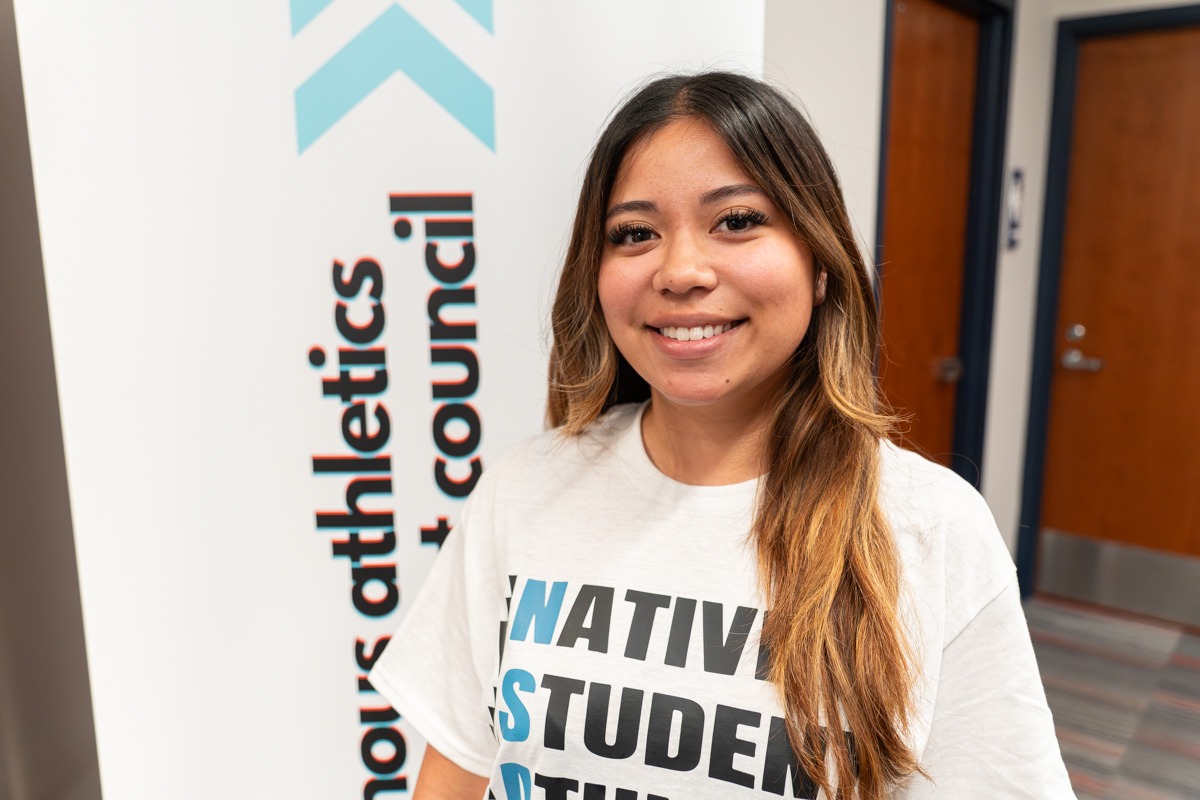
Kylena Paredes (Native Hawaiian), a soccer player at Dominican University, outside of Hadl Auditorium at the University of Kansas.
The summit and its sessions were set up by the Indigenous Athletics Advancement Council (IAAC), a nonprofit that works to advance Indigenous representation in athletics through providing education, support and resources for Indigenous student-athletes, coaches and administrators.
Sessions at the summit covered financial literacy, the difficulties of leadership, planning for life after athletes’ time with sports has concluded and much more. Most speakers, including Yasana, offered out her contact information to network and offer possible work.
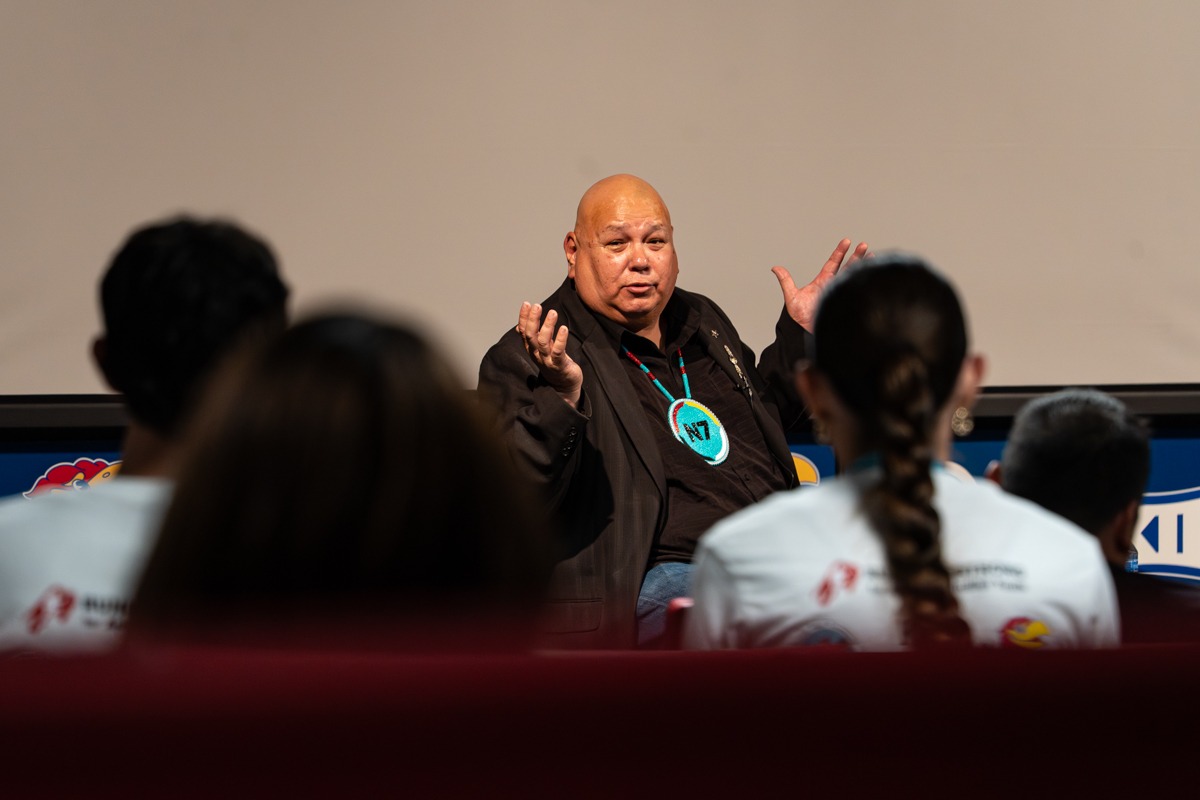
Nike N7 Founder, Sam McCracken (Fort Peck Sioux and Assiniboine) answering questions at the end of the Summit in Hadl auditorium at the University of Kansas.
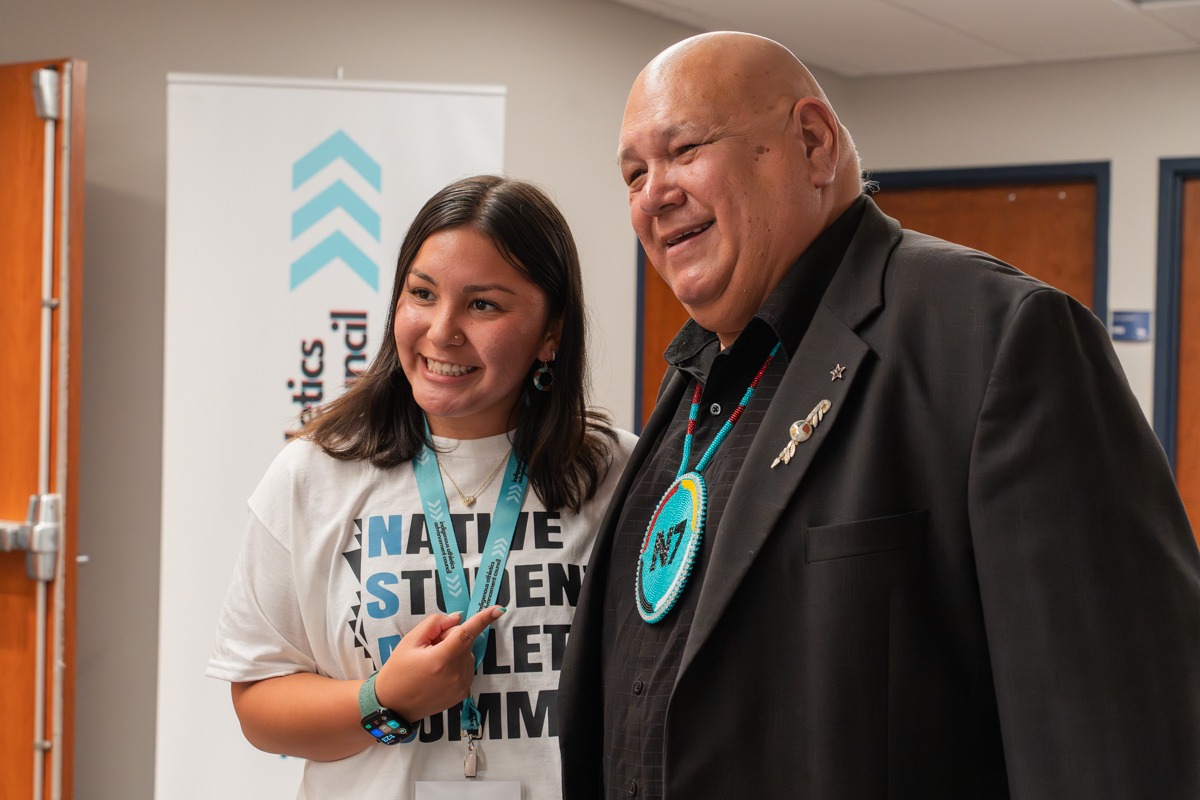
Nike N7 Founder (right) Sam McCracken (Fort Peck Sioux and Assiniboine) taking a photo with an athlete attendee outside of Hadl auditorium at the University of Kansas.
N7 Founder, Sam McCracken (Fort Peck Sioux and Assiniboine), shared how he felt the pressure to succeed at Nike and to inspire those who came after him. He encouraged the young athletes to open doors for other Native peoples as he and Yasana have.
Robert Doore, Blackfeet Nation, is the CEO and President of Chief Mountain Sports & Consulting – a firm which offers corporate training with specializations in tribal affairs relations, and careers in sports and business. Doore was one of many other people giving out his contact information and offered up possible intern work at the 2027 International Indigenous Games and Gathering – a celebration that seeks to bring Indigenous people from across the world to the Southern Alberta and Edmonton regions for Indigenous youth sports competitions, art festivals, ceremonies and more.
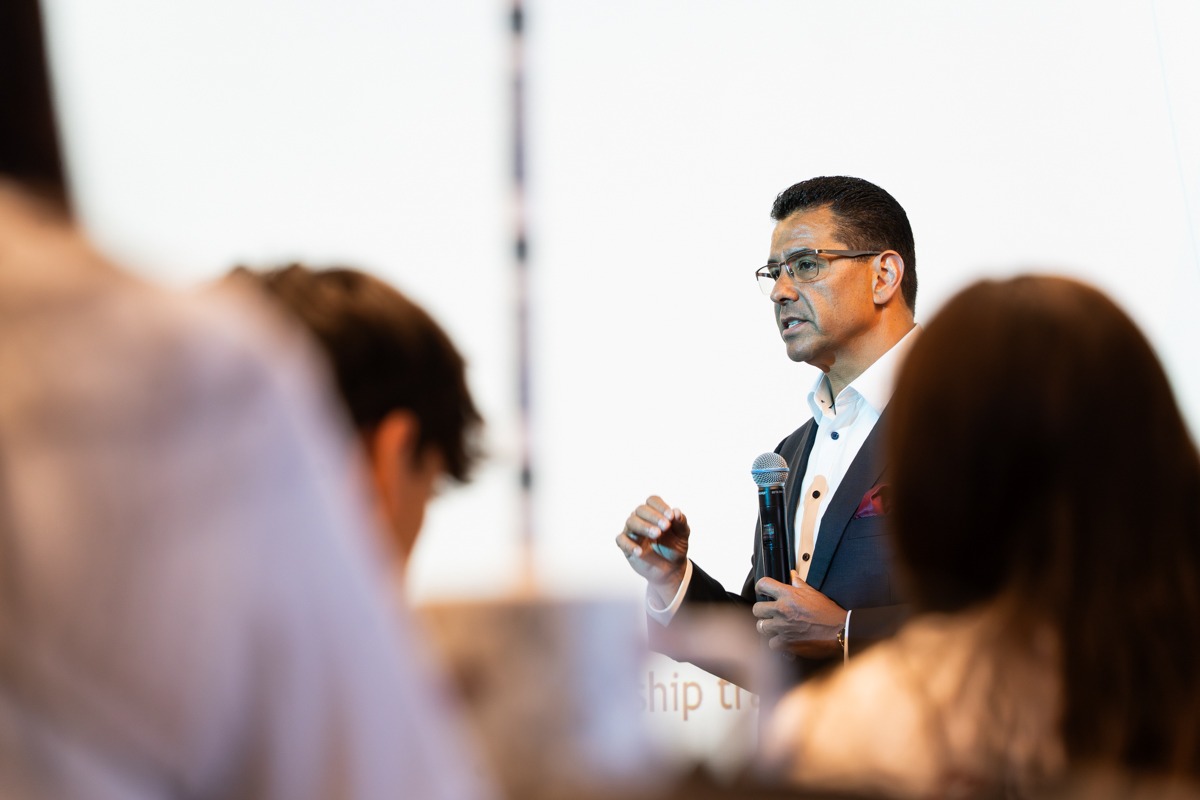
Robert Doore, Blackfeet Nation, using his session to teach athletes about the importance of leadership and roles in teamwork, efficient problem solving and overcoming adversity as a team.
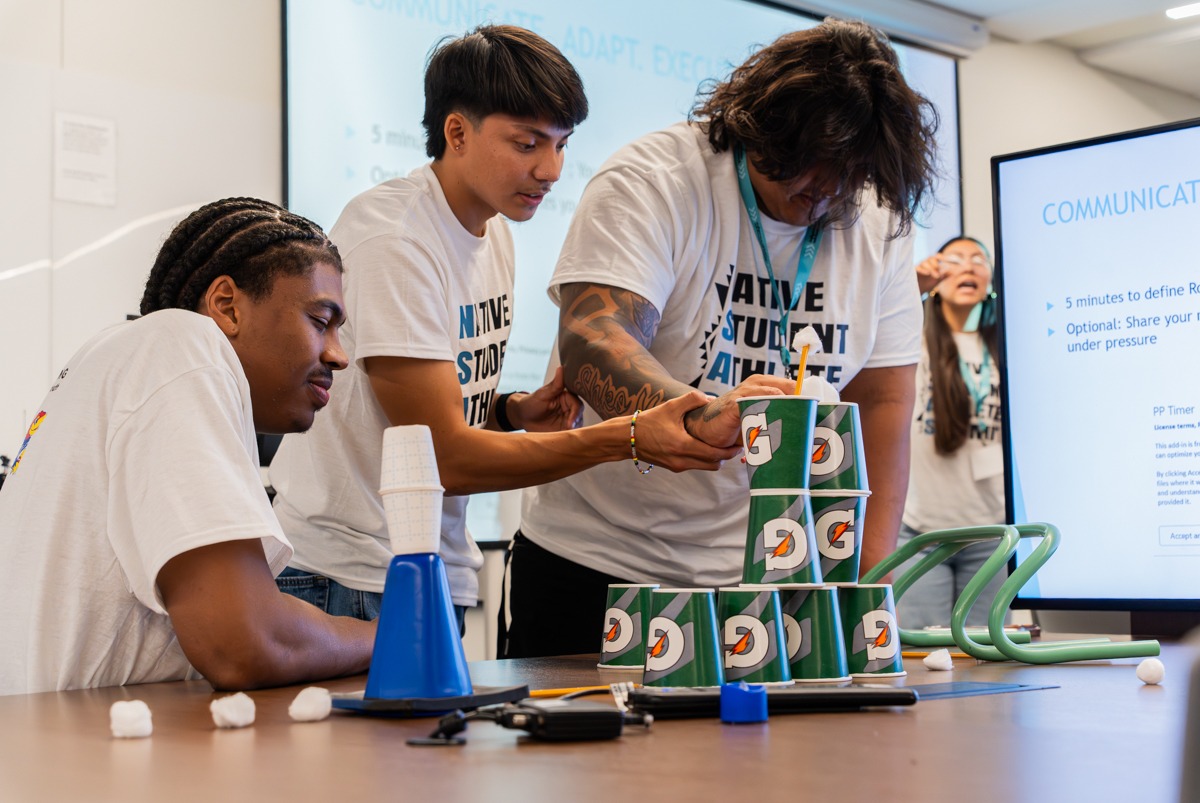
Athletes participating in Robert Doore’s game and exercise in team building on day three of the summit. The goal was to build a construction from random materials that only one person could completely see, only one person could personally build, only one person could strategize how to build it and only one person could communicate how to build it. Every team had members with specific roles and most teams had a unique limitation, such as the builder not being able to see what they are building.
In the previous year’s summit, Doore connected with Koa Baker (MHA Nation – Mandan, Hidatsa and Arikara) who Baker said helped advise him during a critical interview with the head coach of BYU, Kevin Young, for a Graduate Assistant Coach position for the Brigham Young University (BYU) men’s basketball team.
“I had called him up and he gave me a list of questions and a mindset to kind of go into to ask this coach. So, I was prepared to, one, make a great impression on him, and, two, just be able to get more clarity on how I could succeed in my role,” Baker said.
Baker got the job, and said that it’s now his time to give back. Baker was part of a panel with fellow athletes and coaches where panelists shared their experiences and advice to the younger athletes. Baker encouraged developing relationships above all else.
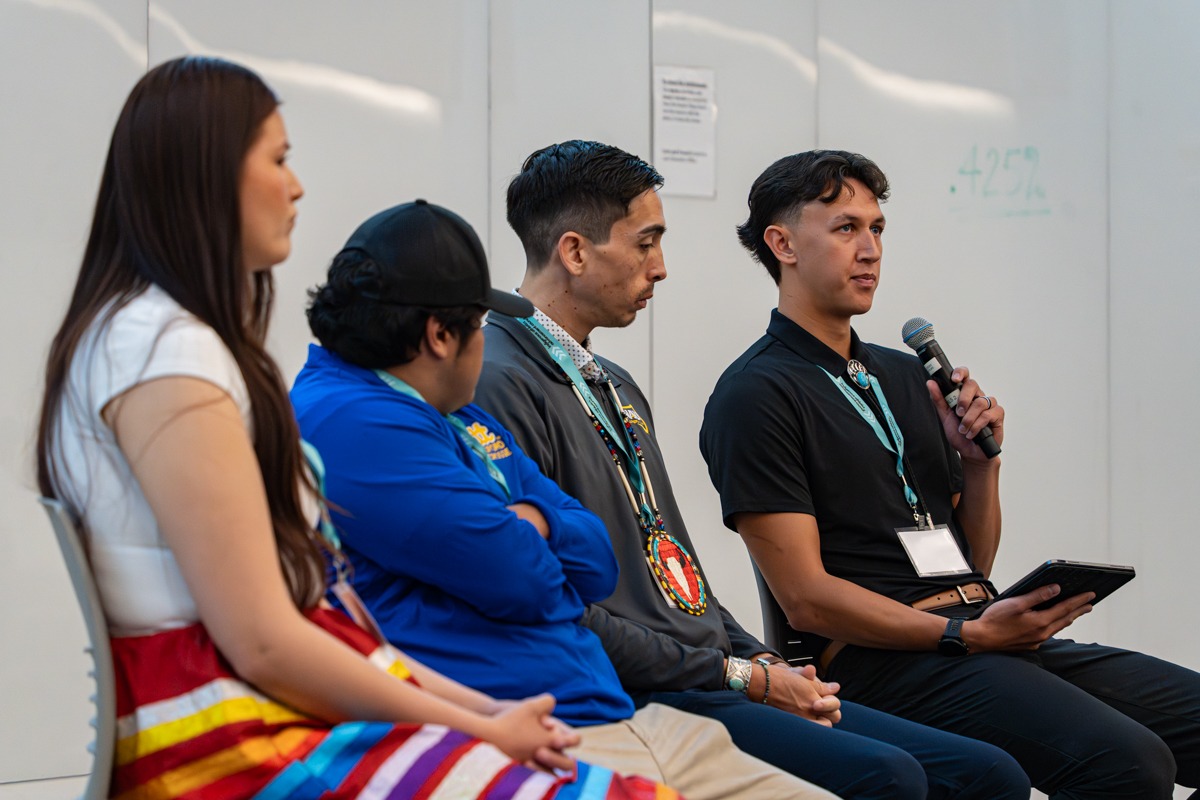
Koa Baker (Mandan, Hidatsa, and Arikara Nation) speaking on the furthest right, at a panel of Native student athletes and coaches about identity, purpose and leadership. From left to right are the other panelists: Lexus Redthunder (Sisseton Wahpeton Oyate), Tyrone Bowen-Collateta (Seneca Nation) and Skyler Benally-Bordeaux (Sicangu Lakota).
“It's just really important to develop relationships with people – really important to develop relationships within your community as Native and also just allies that have access to other places that we probably don't right now,” Baker said.
The first summit was held and funded by the NCAA at their headquarters in Indianapolis, Indiana. Because of this, the summit could only include NCAA athletes, according to Natalie Welch (Eastern Cherokee), council member and director of MBA sports management program at Seattle University.
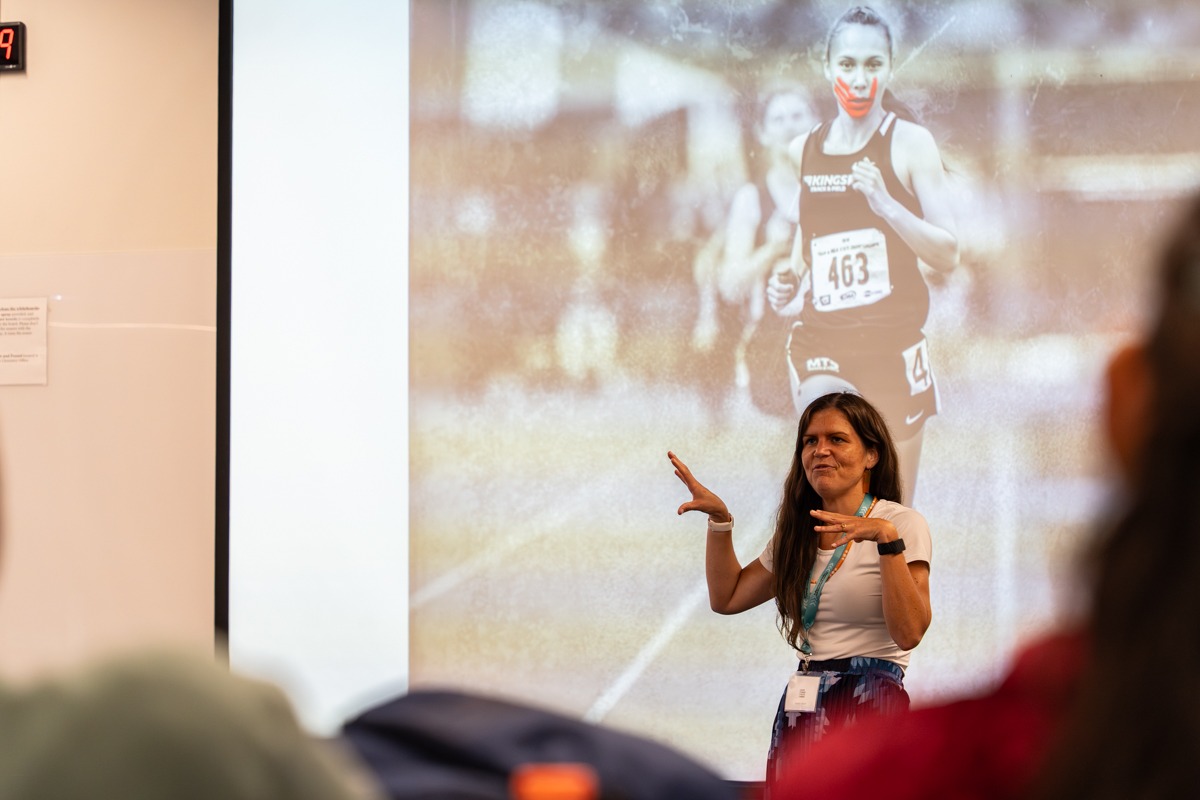
Natalie Welch (Eastern Cherokee) giving her session on the dehumanization of Indigenous people in sports and how young athletes can overcome it. Welch's session focused explored how Indigenous people are used as mascots in sports, and the damaging effects that have been implanted into sports and North American culture as a result.
However, Welch said the council wanted the second summit to expand access to athletes in the National Association of Intercollegiate Athletics (NAIA) and athletes enrolled at junior colleges.
Welch said the change in location to Lawrence came as a result of the IAAC’s partnership with Running Strong for American Indian Youth, which funded the event.
The non-profit, cofounded by Billy Mills and led by his granddaughter, Sydney Mills Farhang (Oglala Lakota), focuses on expanding access to essential needs and leadership opportunities for Native youth. Mills also attended both Haskell Indian Nations University and the University of Kansas, and the proximity to Haskell allowed more athletes at the University easier access to attend.
Haskell Indian Nations University Volleyball player Sandra St.Clair (Eastern Shoshone/Navajo/Cherokee/Pawnee) said this was her first summit, but she will be back to meet up with new friends next year.
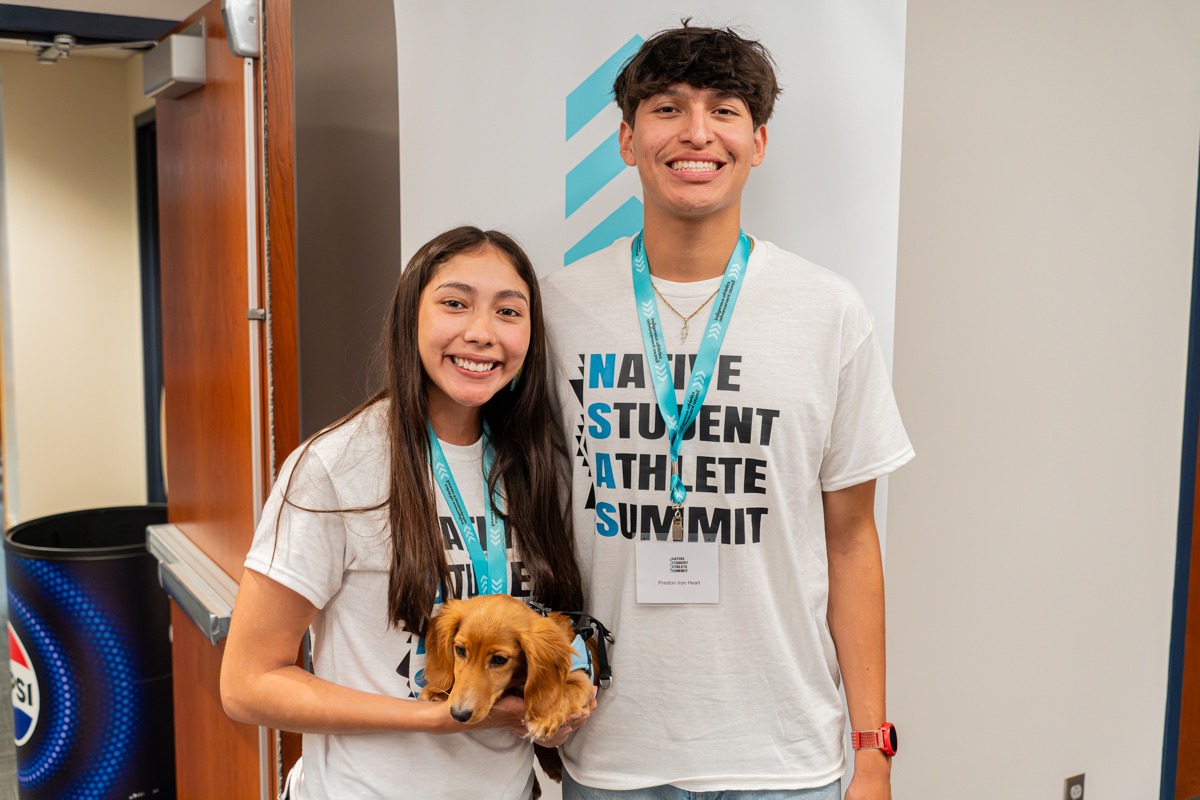
Volleyball player Sandra St. Clair (Eastern/Shoshone/Navajo/Cherokee/Pawnee) with cross country and track and field runner Preston Iron Heart (The Blackfeet Nation, Northern Cheyenne) with St. Clair’s emotional support dog, Rocky. Rocky was welcomed throughout the entire event by both staff and other athletes. Both St. Clair and Iron Heart are athletes from Haskell Indian Nations University.
“Getting to meet everybody and listen to other native athletes' experiences and their struggles that they went through and stuff – I think it was really just moving and knowing that we're not alone,” St. Clair said. “Even though we're all around the country, we get to come to one place, be together for a couple of days, and build connections with each other.”
Jessi Curry (Navajo), a goalkeeper at Southern Methodist University, also attended the first conference held in Indianapolis at NCAA headquarters. Curry said that fellow student connections stuck with her as well, and that she was excited to spend time with her friends from last year.
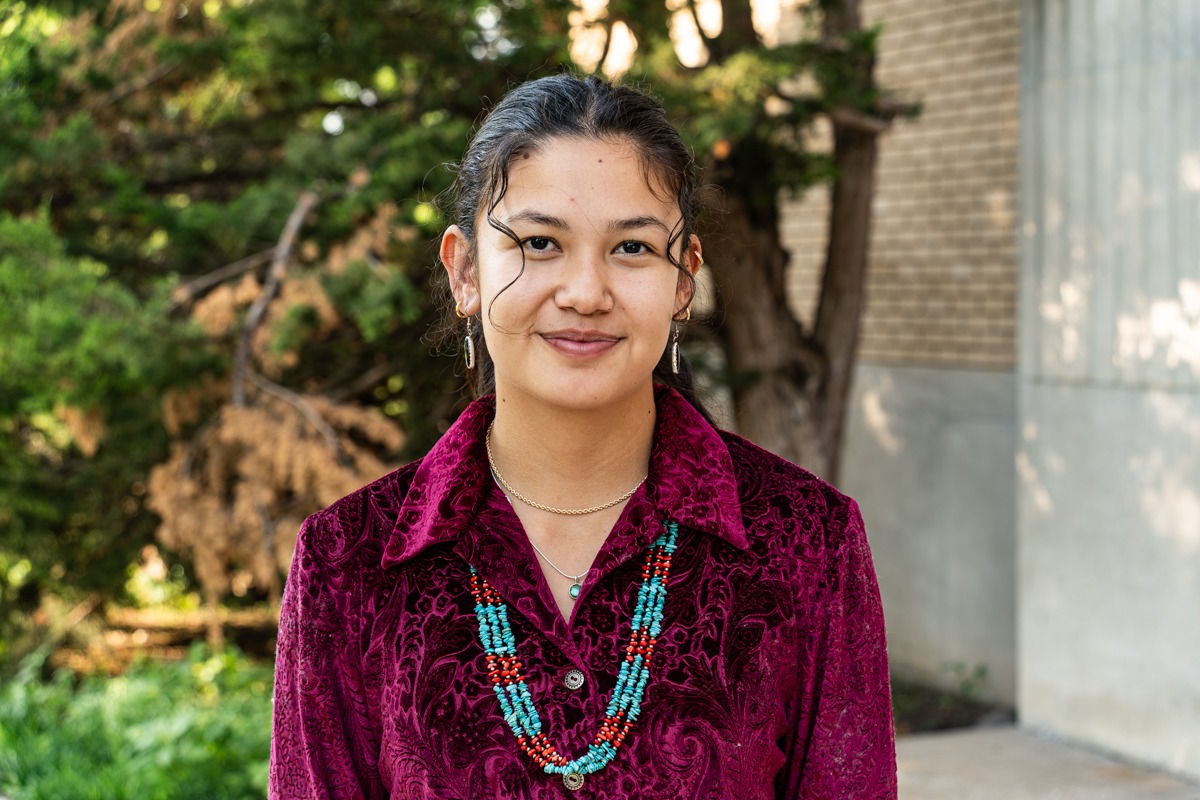
Jessi Curry (Navajo), a goalkeeper at Southern Methodist University, outside the Haskell Indian Nations University Auditorium on June 3, 2026.
“I felt like I was at the table, like laughing with the aunties, you know, and that's awesome – just being able to check in on them,” Curry said coming out of the second day’s supper.
“Ultimately, we all have to know that we are family no matter what. It doesn't matter what tribe you're in. It doesn't matter what nation you're a part of. If you have native blood in you, you are now my brother and my sister, and we're all going to take care of each other the same way. We're all going to act like family.”
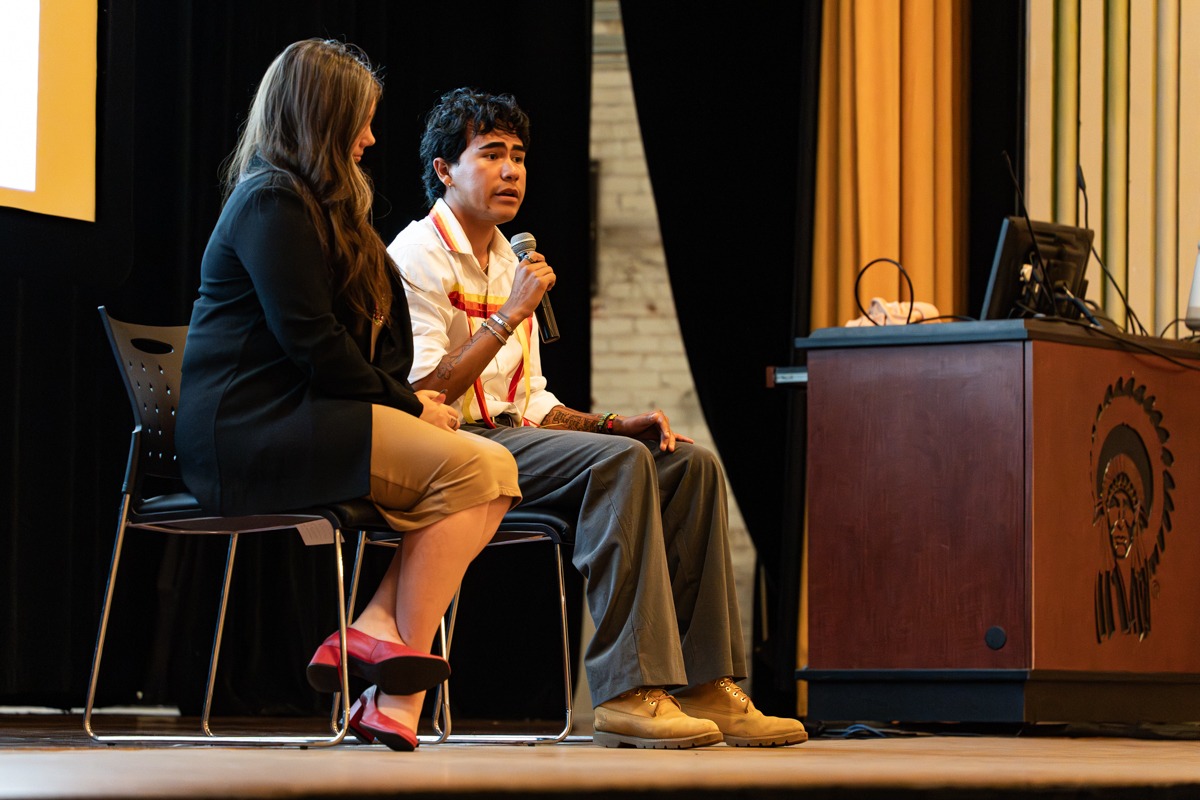
Director Paige Bethmann (Haudenosaunee) and Division 1 athlete Kutoven Stevens (Yerington Paiute), the main focus of the documentary "Remaining Native," answering questions via a panel after showing their film together at the end of the second day of the summit.
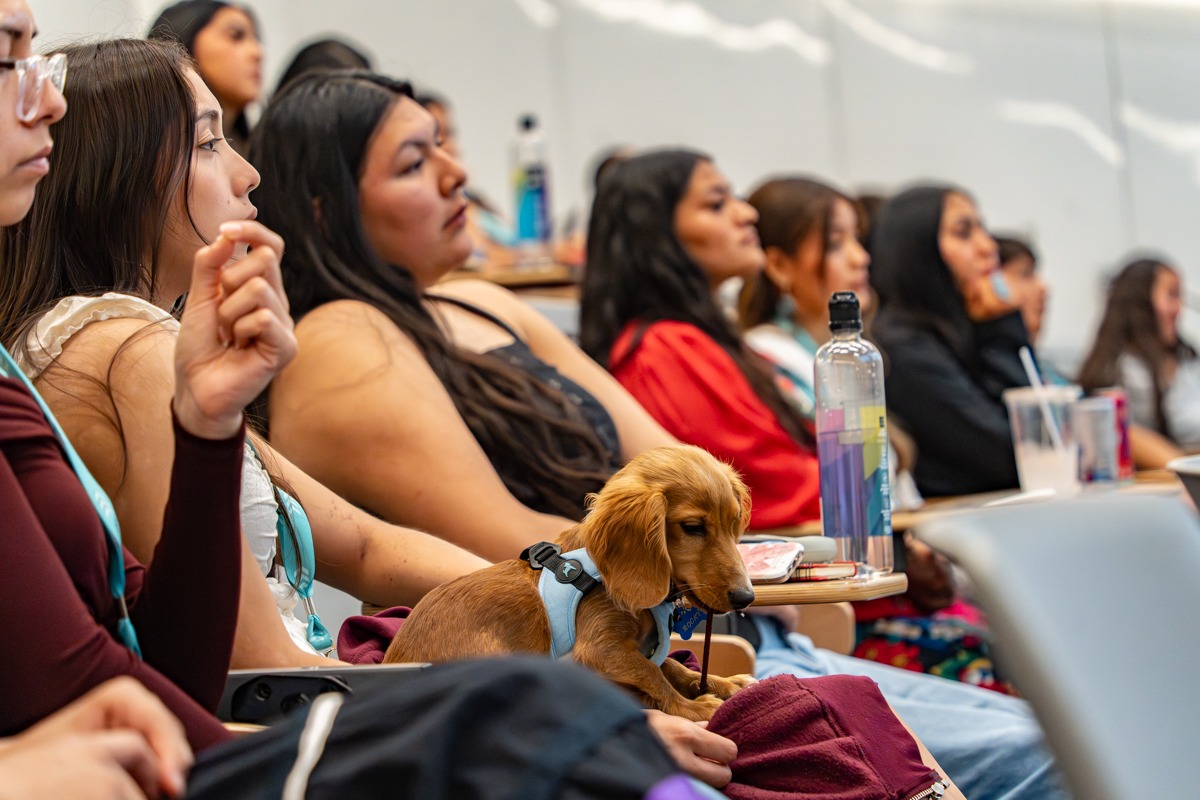
Rocky quietly attending a session on day two of the summit.
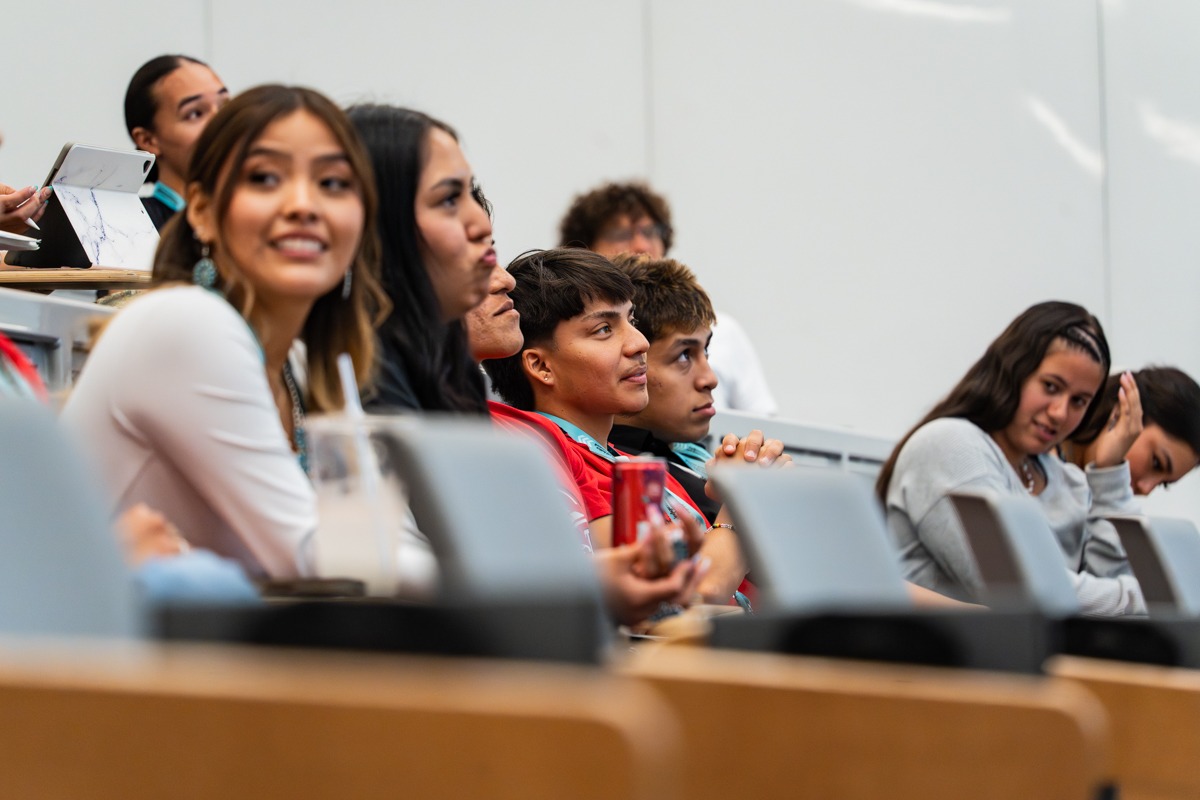
Student athletes attending a session.
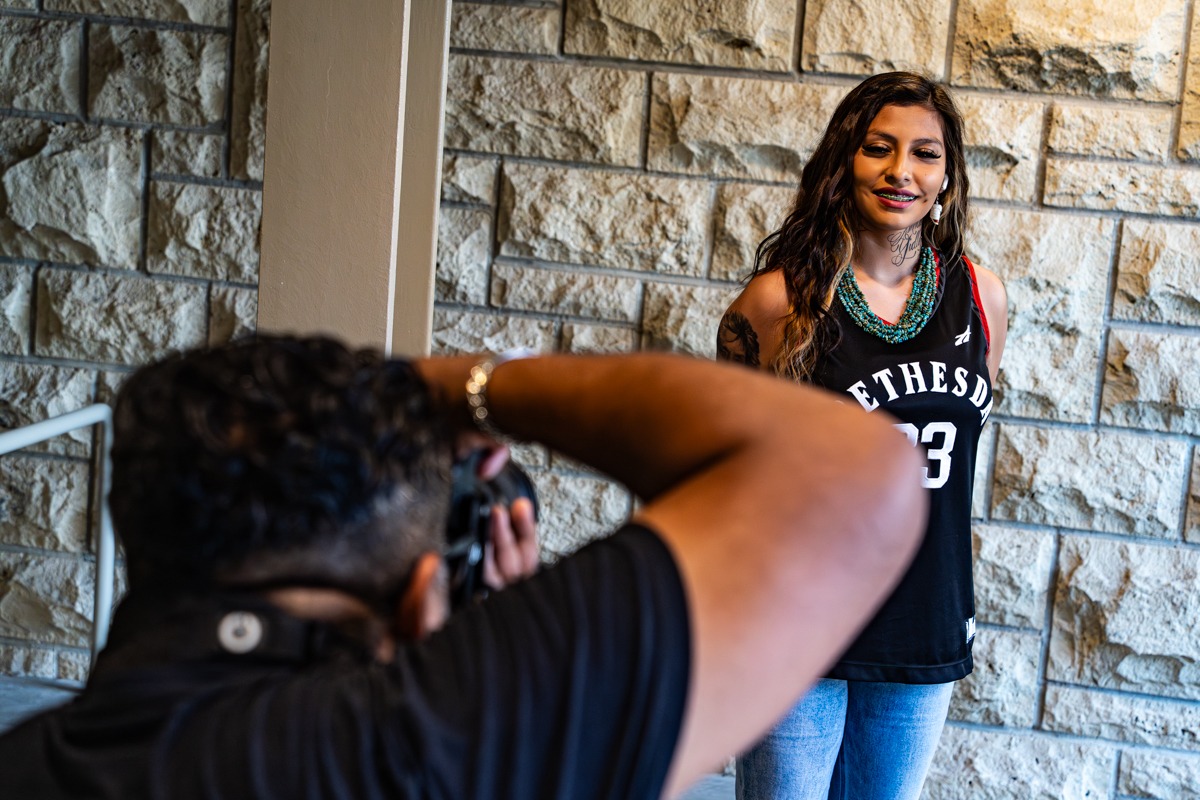
An athlete having their photo taken prior to the start of the summit. Attendees of the summit were offered a chance to get free professional headshots by photographer Francisco Martinez.
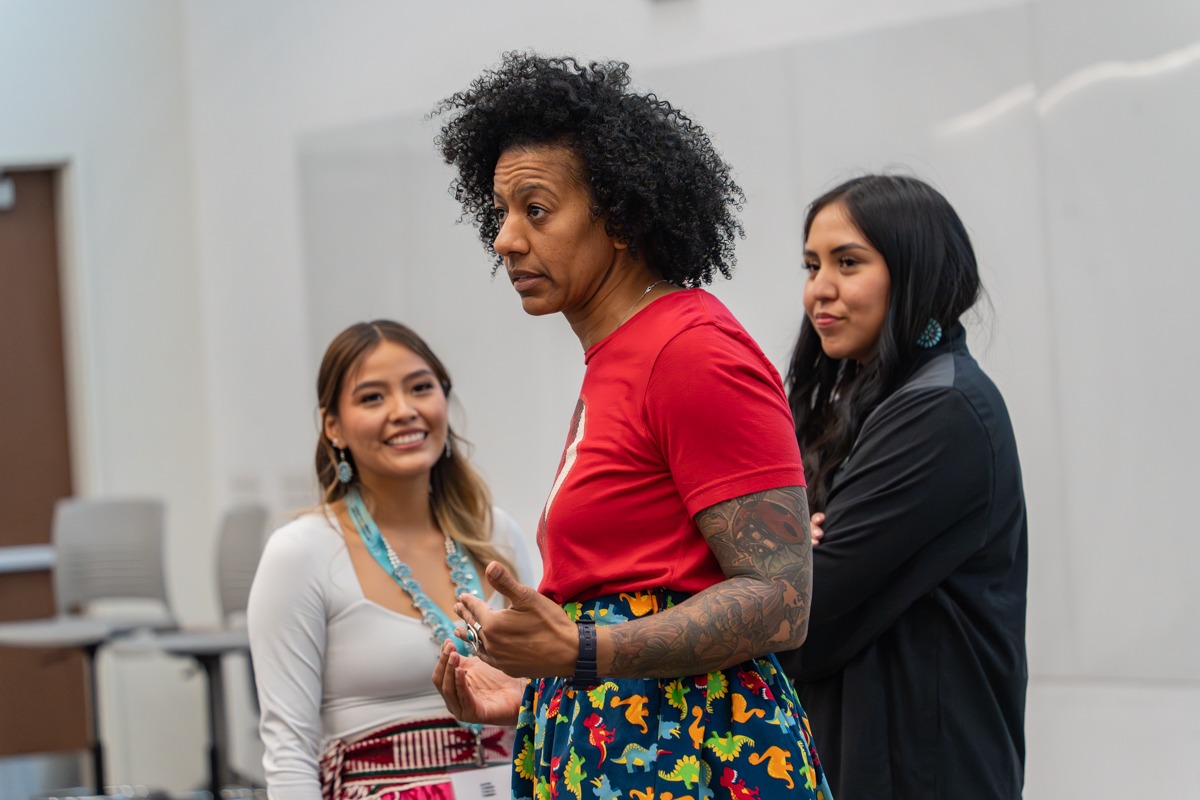
Jen Fry during her session on the second day of the summit showing attending athletes how to approach someone they want to connect with and how to not get interrupted mid-conversation when making those connections.
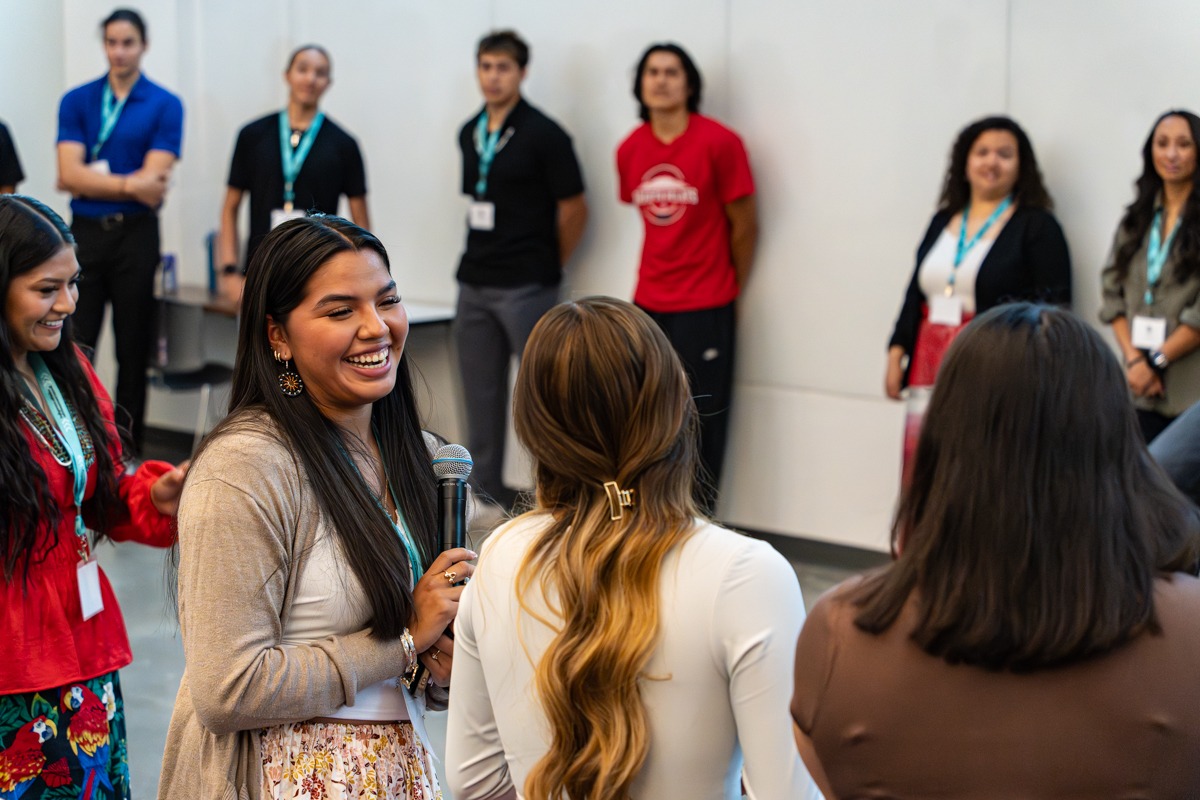
Athletes breaking the ice with the name game before starting the second day of the summit.
0 Comments Add a Comment?