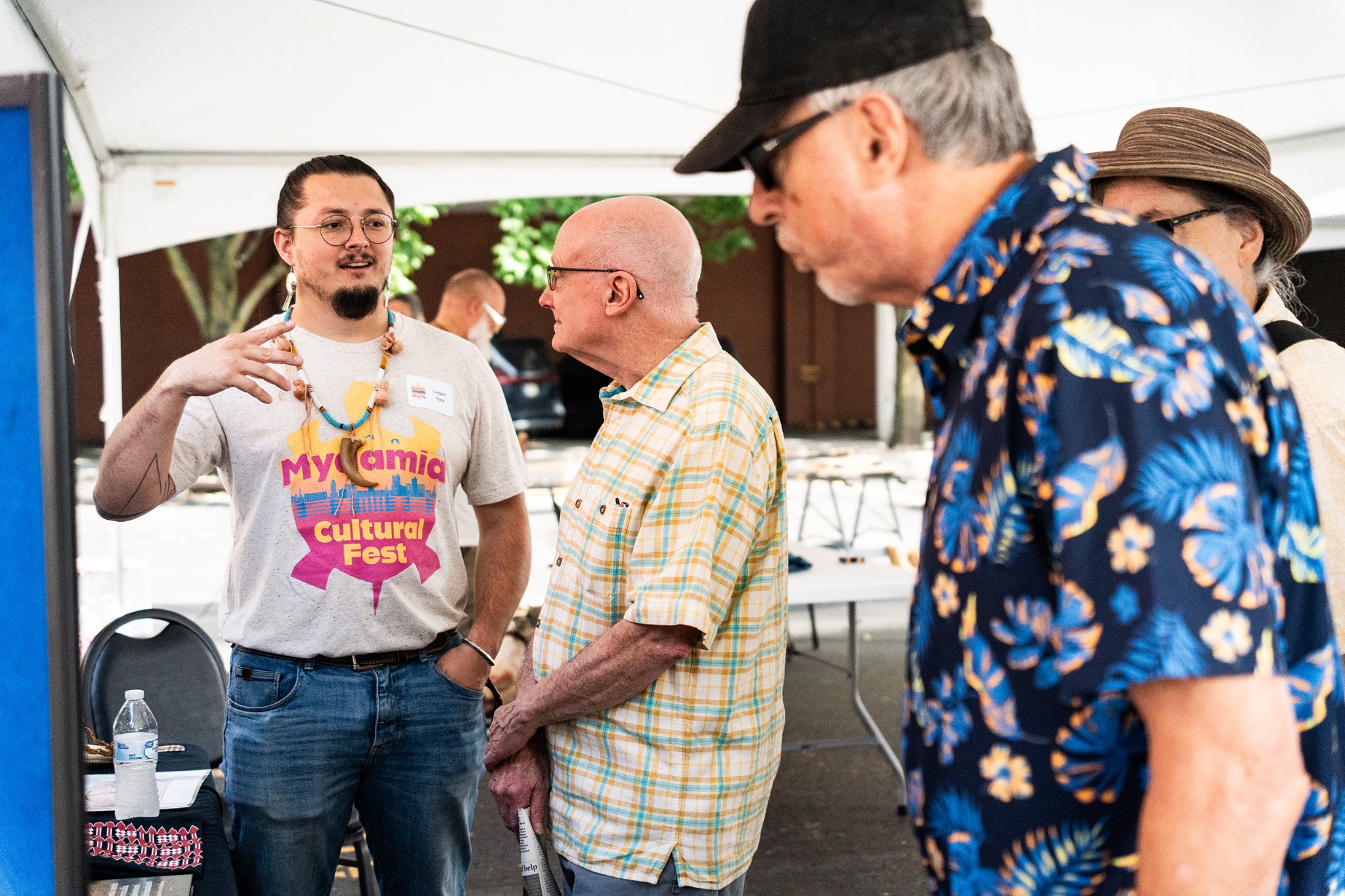
Myaamia Cultural Fest Shared the Myaamia Story through Art With Fort Wayne
Written and Photographed by Logan Pierson
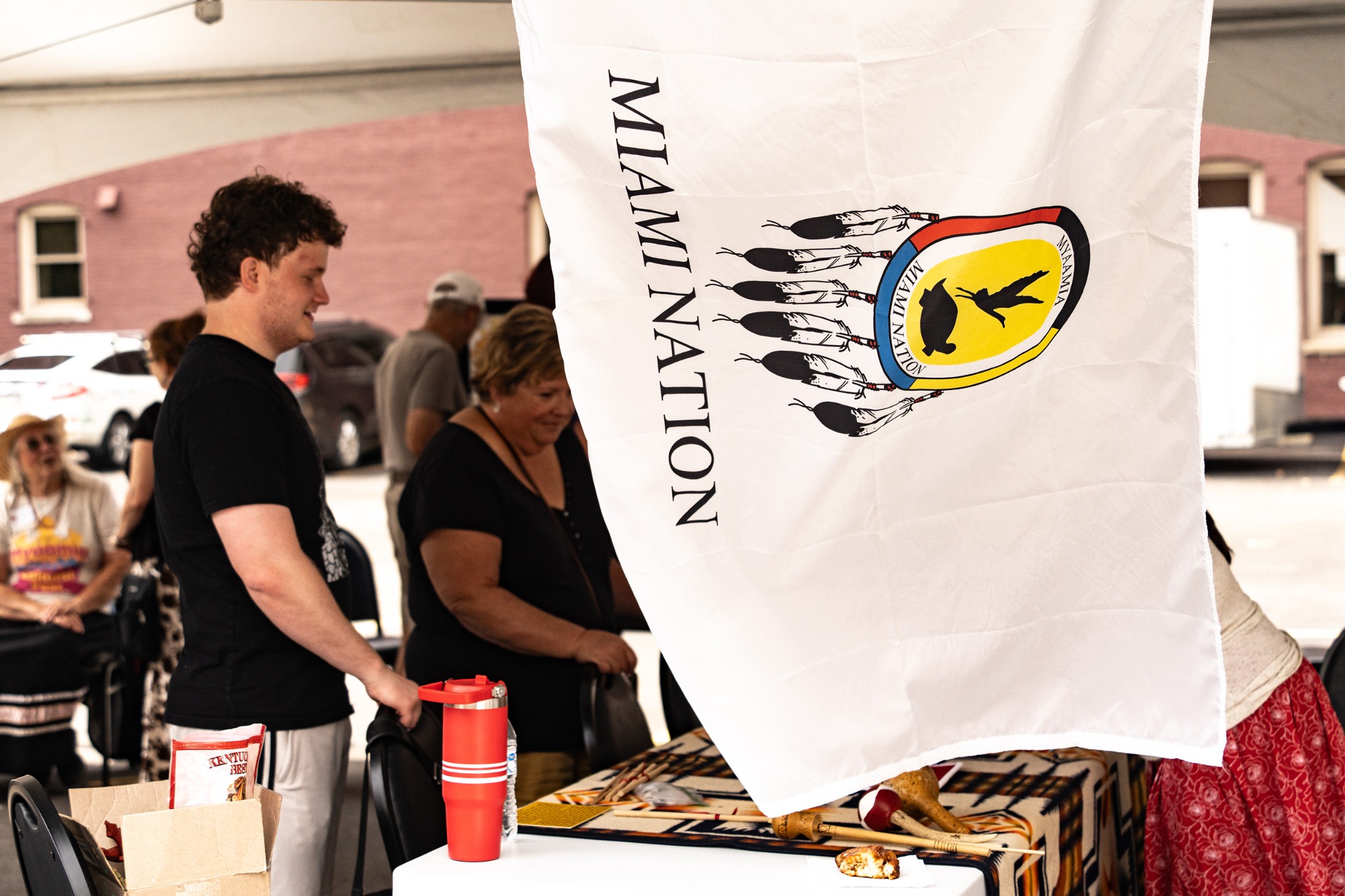
‘Kiihkayonki,’ once the largest village of the Myaamiaki 'Miami people,’ now goes by a second name, ‘Fort Wayne, Indiana,’ which became a bustling hub for the arts, games, crafts, history and language of Miami culture in the Miami Tribe of Oklahoma’s inaugural Myaamia Cultural Fest.
Hosted by the tribe’s nonprofit, the Myaamia Heritage Foundation, and held alongside the annual Taste of the Arts Festival on Saturday, August 29, the festival was held less than a mile from where the Myaamia village was originally located.
Hundreds of visitors entered through the street every hour where they would see a collective of Myaamia artists wrapped around the festival. From sculpture to beadwork and Myaamia fashion; from tree bark-made basketry to vibrant regalia – the entire fest was blooming with Myaamia creativity built on shared Myaamia experience, culture and history as well as the unique mind of each artist.
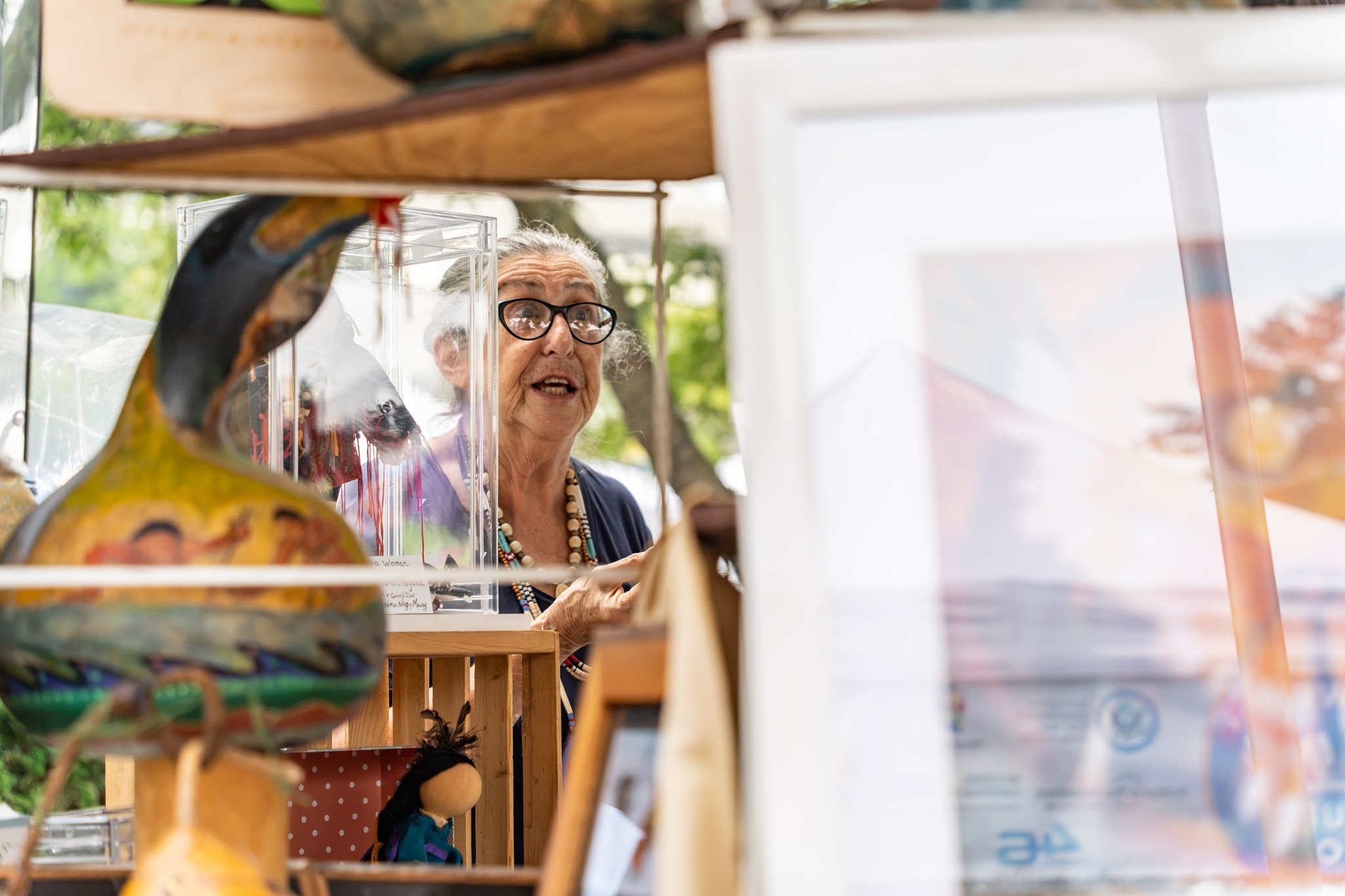
Catherine Mowry at her booth.
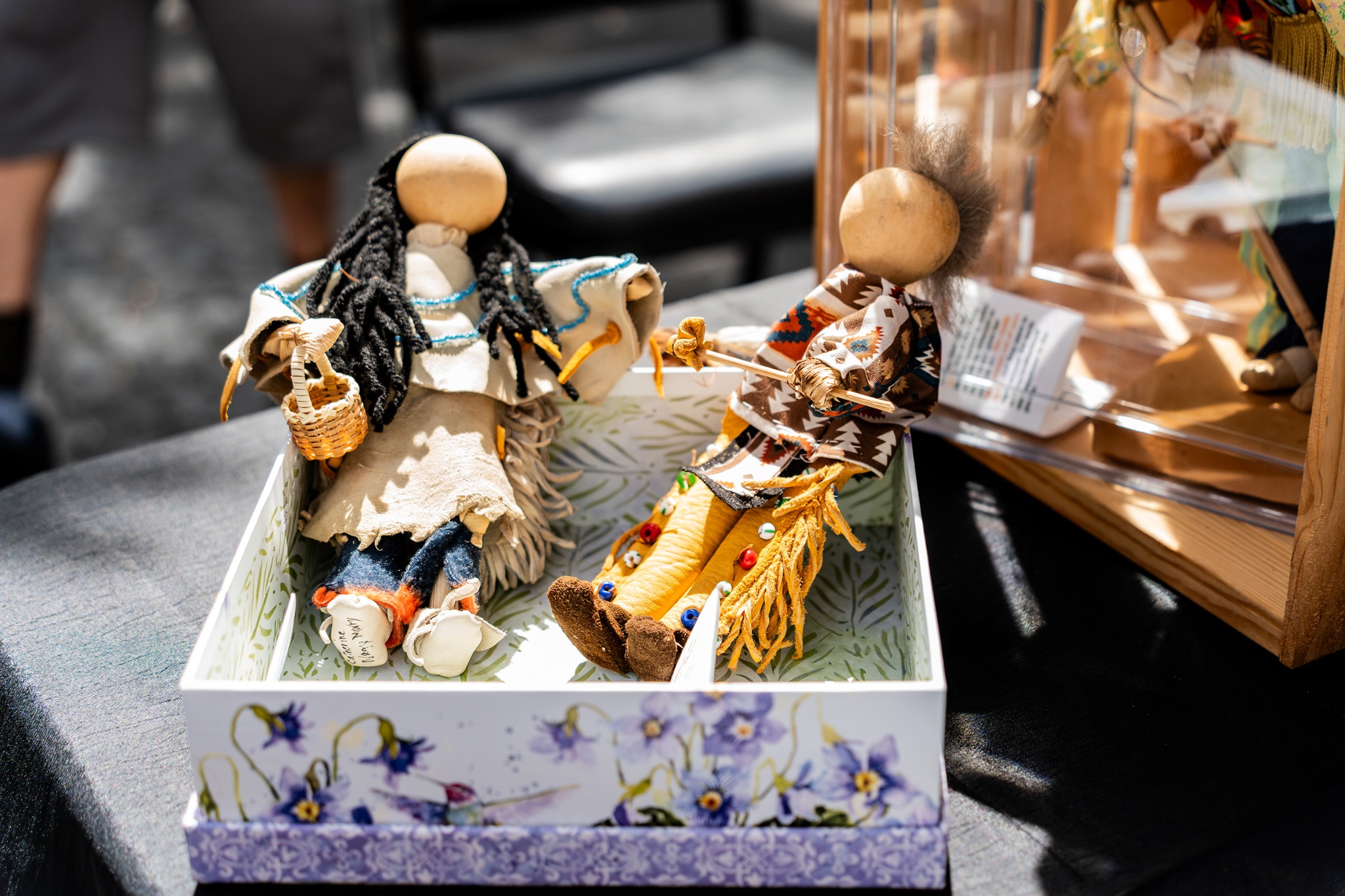
Corn husk dolls by Catherine Mowry,
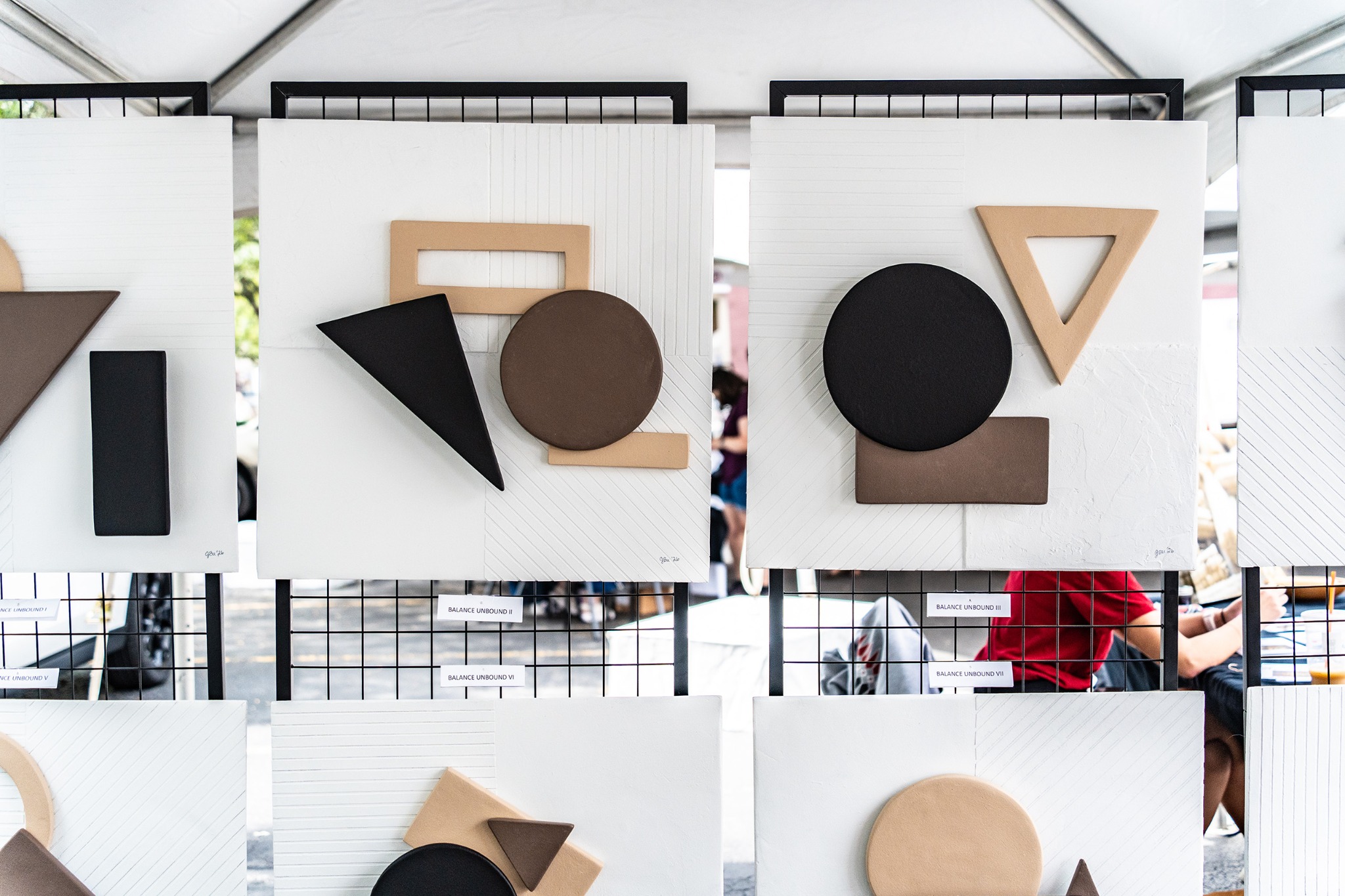
Pieces by artist Jacqueline Butcher, also known as JBu.
Katrina Mitten, a Smithsonian American Art Museum selected beadwork artist, said that Myaamia art is built around storytelling and the history of the Myaamia people, and that her art is built around telling those stories in a three dimensional way.
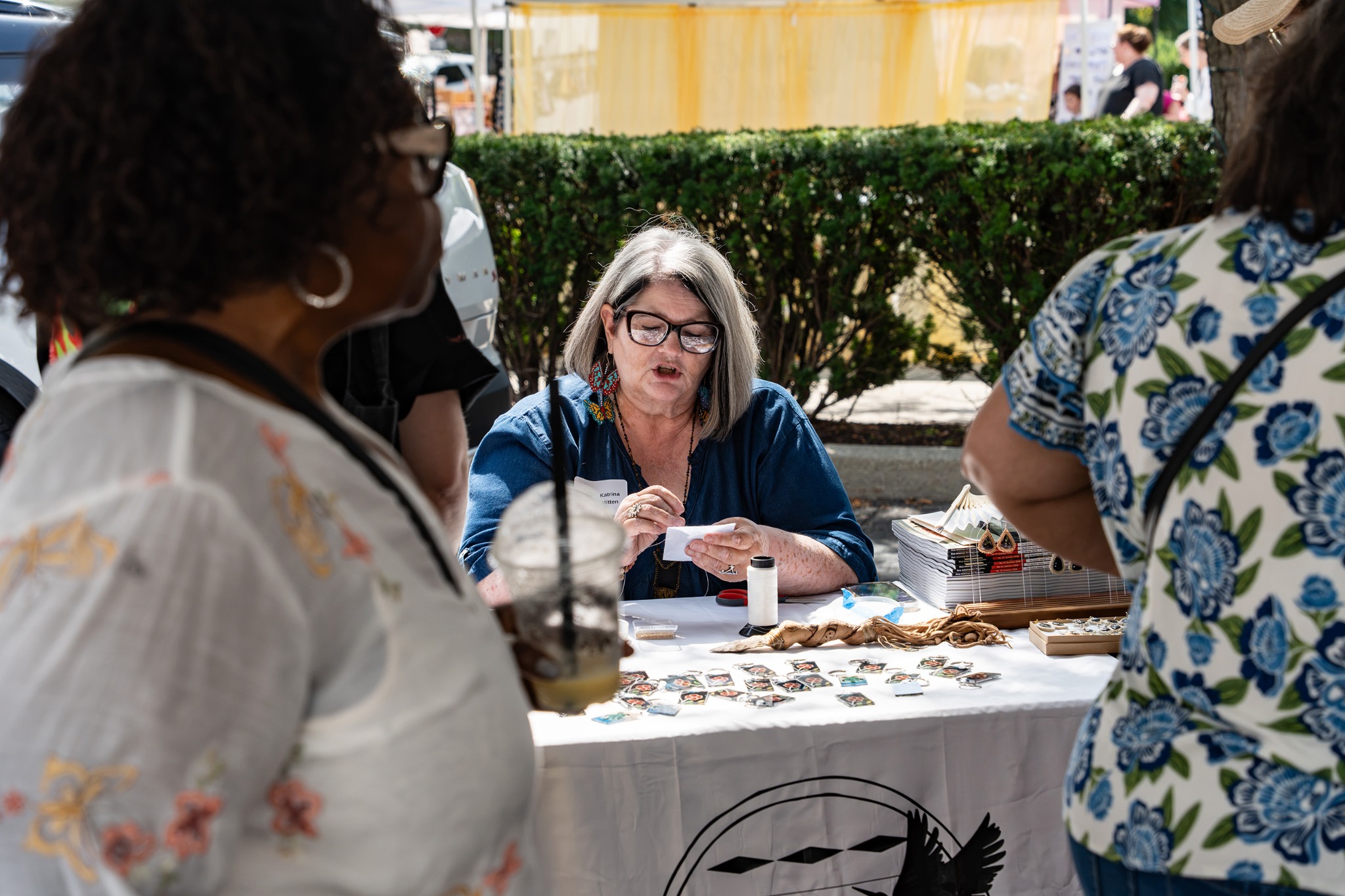
Katrina Mitten speaking with attendees at her booth.
“With our arts right now, we can bring those stories forward and get people to listen to what it is that we're wanting them to know,” Mitten said.
“I'm really proud of the fact that our people, the Myaamia, especially here in Indiana and our people in Oklahoma, us coming together has led to this type of ‘being out in the public’ and being able to do this, because this is how we get more people to know that we're still here, that we're not gone.”
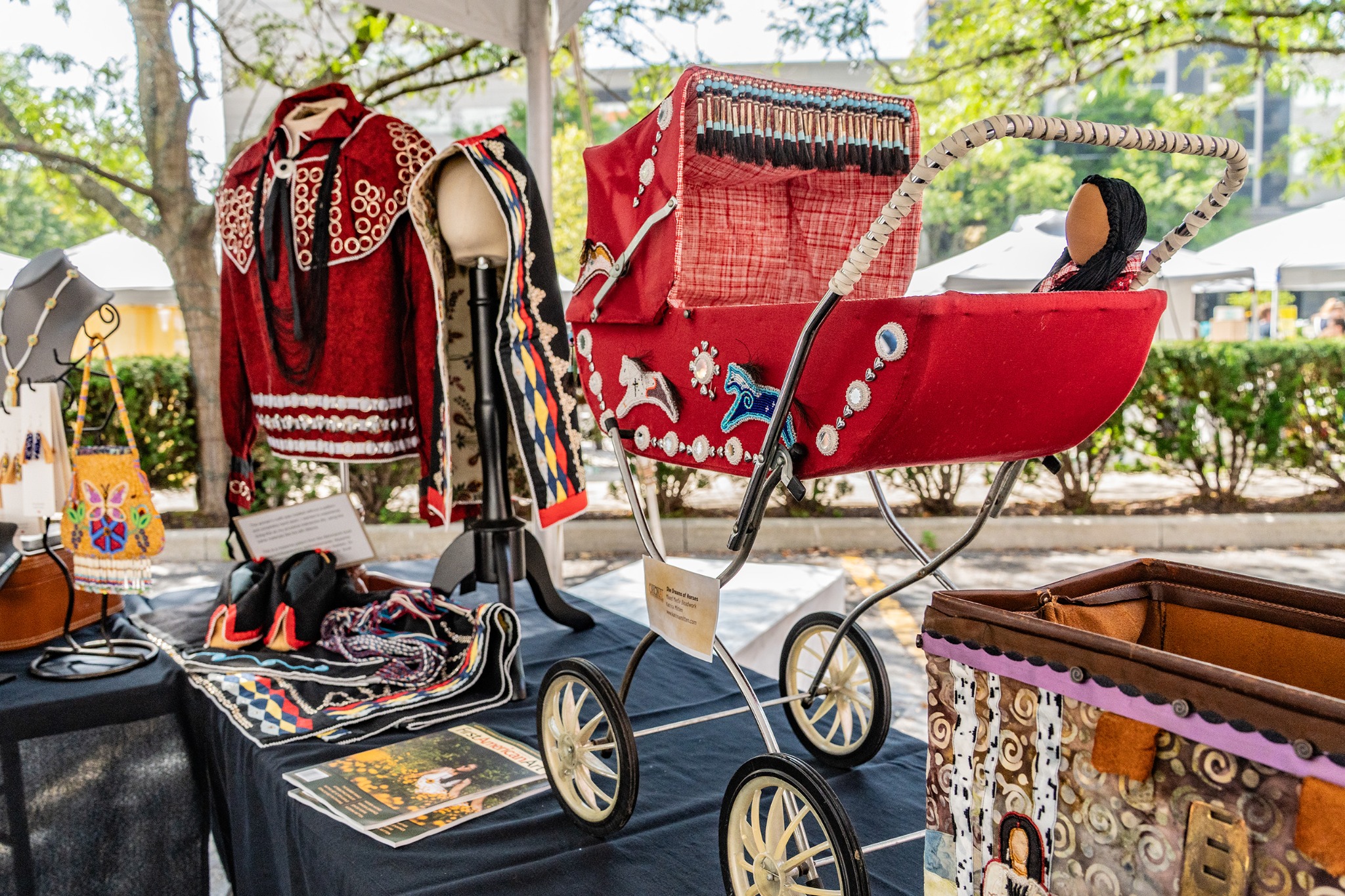
Works by Katrina Mitten.
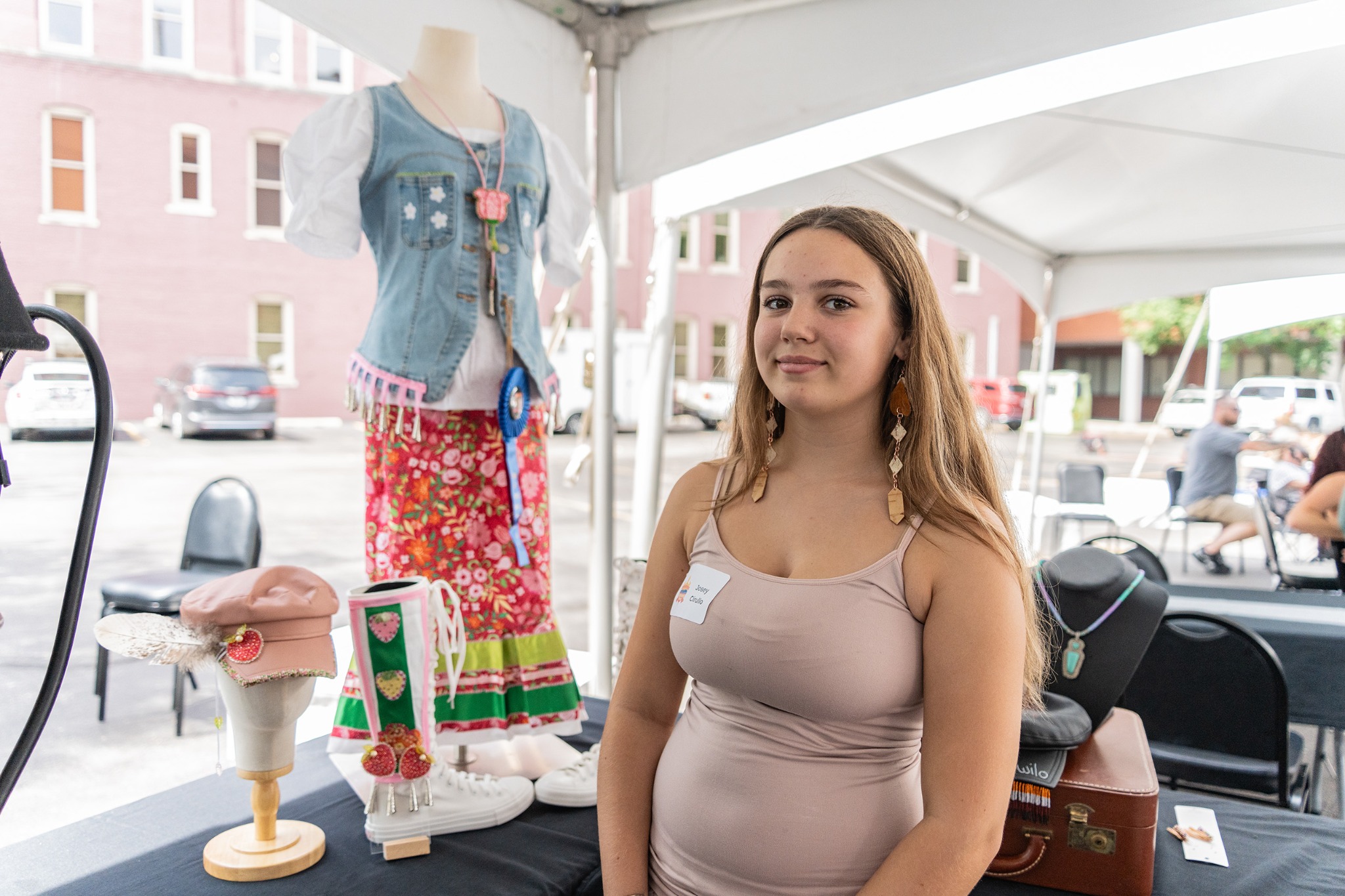
Katrina Mitten’s apprentice, Josephine Cirullo, also held a table at the event with her own collection of beadwork and fashion. Cirullo said many of her pieces were influenced by the different dancers and dances that could be seen at a powwow, such as jingle dance.
Close to the back center wall of the event, attendees would naturally flow toward tables held by Logan York, the Historic Preservation Director for the tribe, and Nate Poyfair, assistant cultural resource officer and second councilperson for the tribe. At their tables, they shared the Miami Tribe’s history in Indiana and the Great Lakes region to bring context to all of the arts and crafts around the fest.
“We’re using our past as a scaffolding for our future,” York told Good Morning Indian Country.
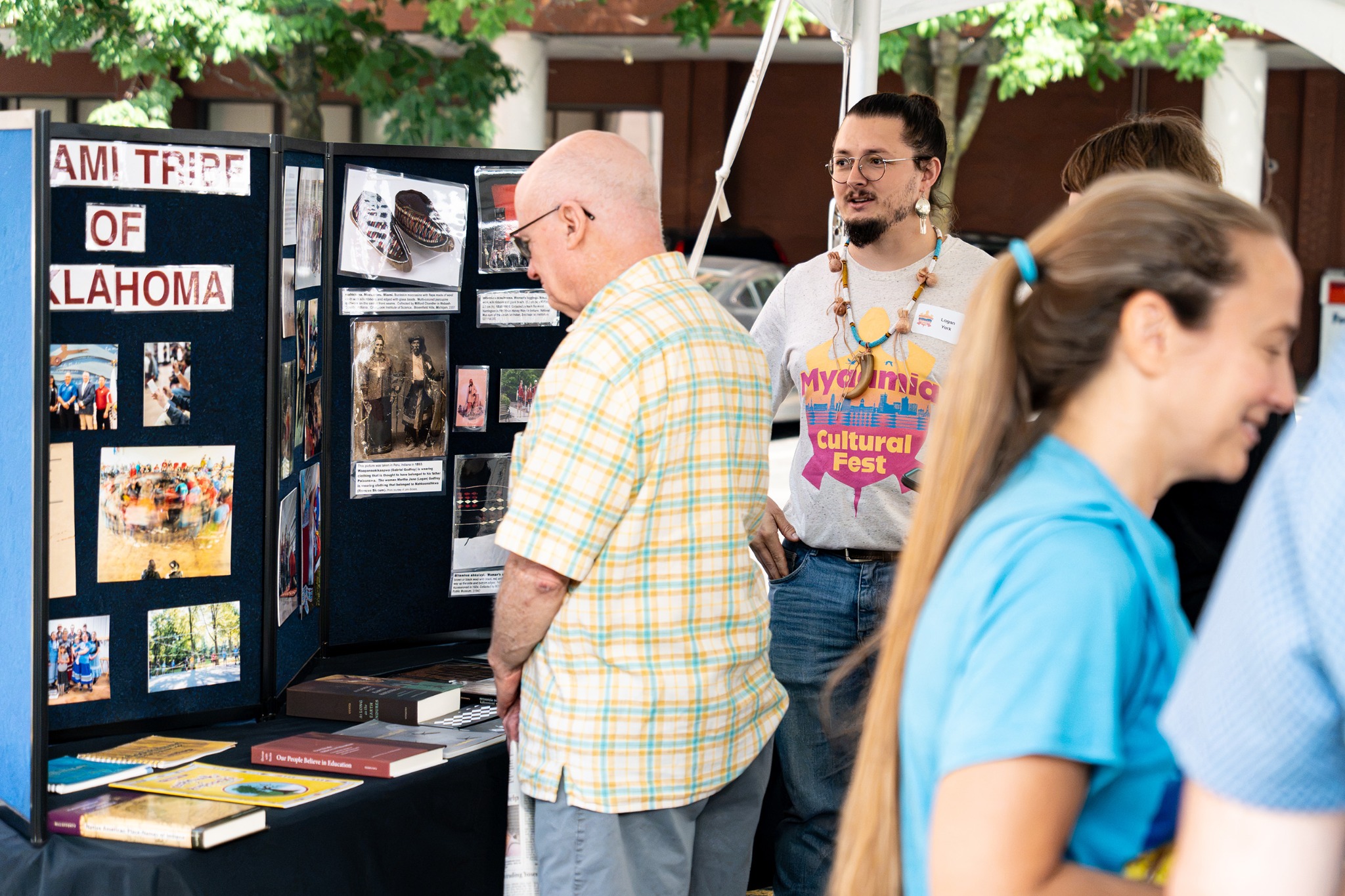
Logan York (right) sharing Myaamia history with attendees at his booth.
York explained that Myaamia people were spread throughout Indiana, Ohio, Illinois, Michigan and Wisconsin via a map at their table, and would answer questions as they came up for visitors.
In the 1840s, many Myaamia who had survived an era plagued by land secession and disease from European settlers were forced onto canal boats and relocated to current day Kansas. The treaty of 1867 then called for the tribe’s removal to modern day Oklahoma. In 1939, the first Tribal Constitution was adopted and the tribe officially became recognized as the Miami Tribe of Oklahoma, where the tribe reestablished and protected the cultural identities of Myaamia citizens. More can be found at the Tribe’s website.
However, small groups of Myaamia remained behind and, later, many others returned to their homelands in Indiana and the Great Lakes region over time. Today, the Miami Tribe of Oklahoma has citizens in almost every state and abroad.
Poyfair said his family came from the Peru, Indiana area along the Wabash River, and were among those forcibly removed. He said his family later returned and moved around the Great Lakes region over time.
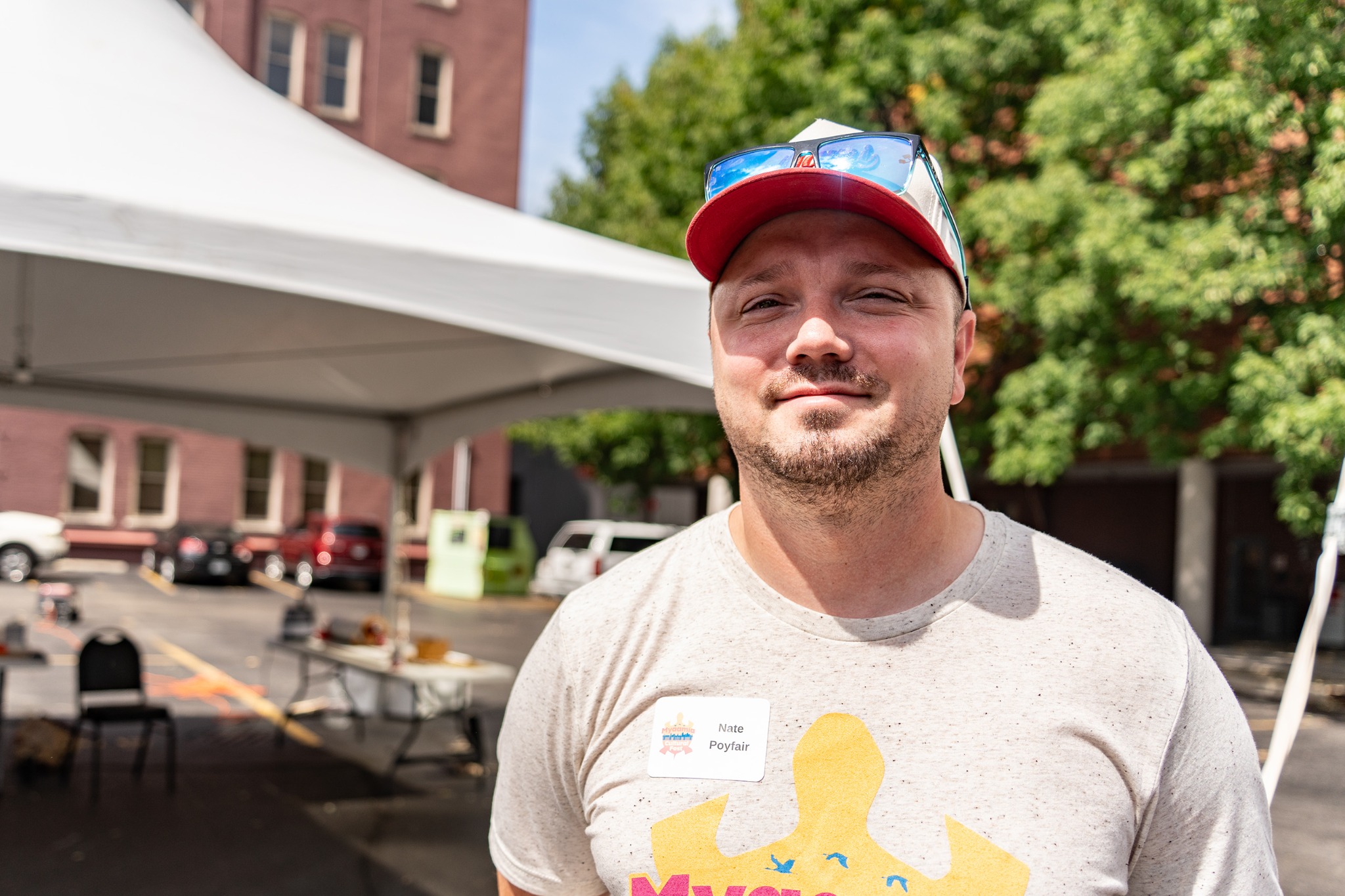
Nate Poyfair
“In Oklahoma, I do feel like that's home. In Indiana, I feel like there's a part of home. In reality, Michigan, Indiana, Ohio, Oklahoma all feel like home to me in a different way. Different parts of my life, I've spent there. My daughter only knows Oklahoma. So, for her, as an extension through her, Oklahoma is our main home. But my family, my mom, relatives live in Indiana,” Poyfair said.
“As a historian, we teach this all the time. Our ancestry is all from Indiana, the core homeland. So, I have a connection to all places.”
Jo New from the Miami Tribe of Oklahoma now lives in Chicago, but traveled to Fort Wayne with her wife to experience the festival and said that she was happy to be able to celebrate her culture in the tribe’s ancestral homelands.
“I love the youth and so many children that were here and to see so many college students that are participating in the culture and celebrating the culture is fantastic. But then, also, there's some of our elders here that are sharing their arts and the things that they're really fantastic and good at,” New said when sharing her highlights of the festival.
Morgan Harris said she was initially drawn into the festival through the wider “Taste of the Arts” festival, but wanted to stay, explore and learn after listening to drums and music being performed by Pimyotamah Hartleroad.
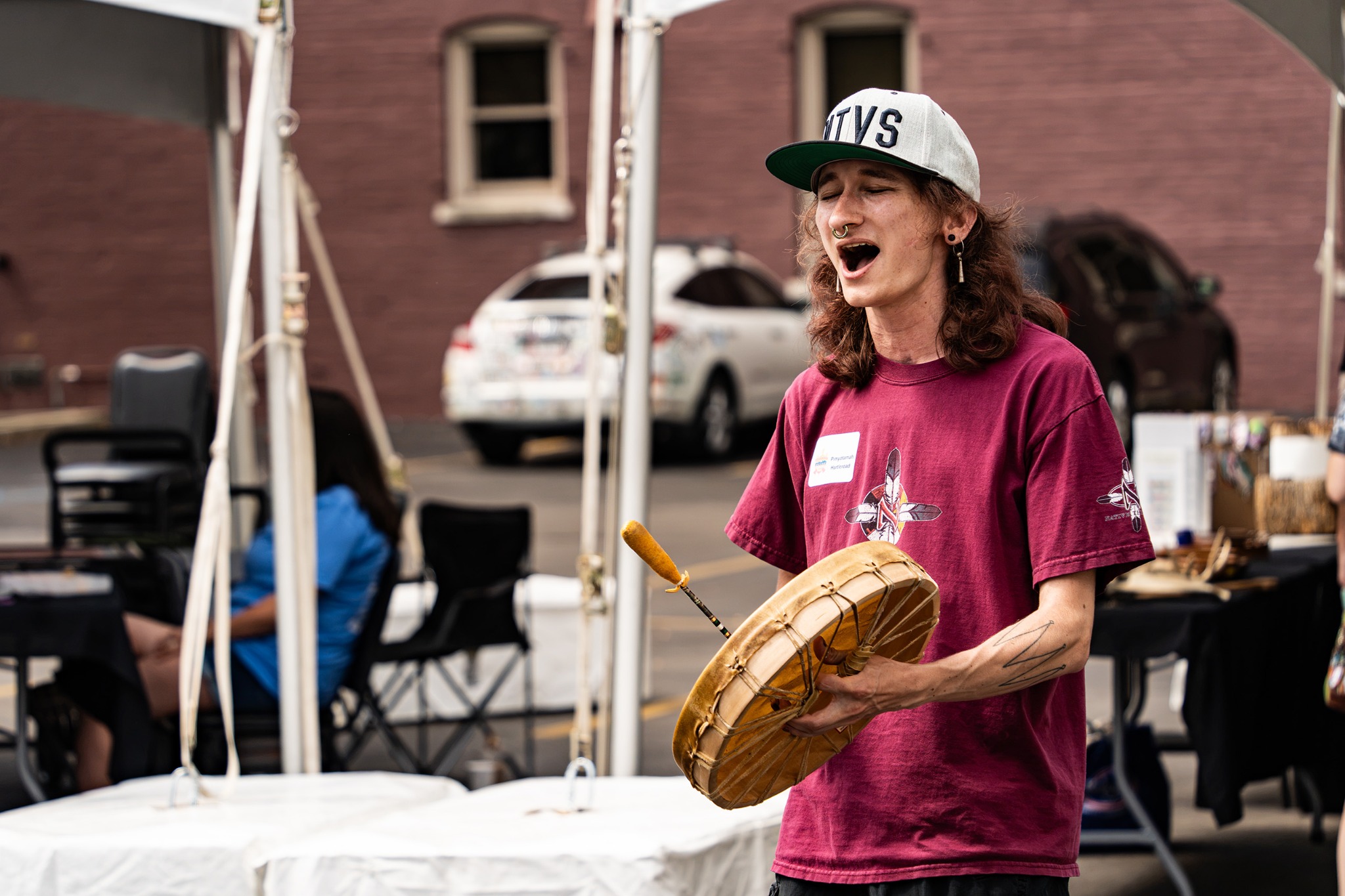
Pimyotamah Hartleroad singing at the fest.
Harris said she would love to see the festival return and had a ton of fun getting to play with Doug Peconge’s handmade lacrosse sticks, used in big Myaamia games and gatherings.
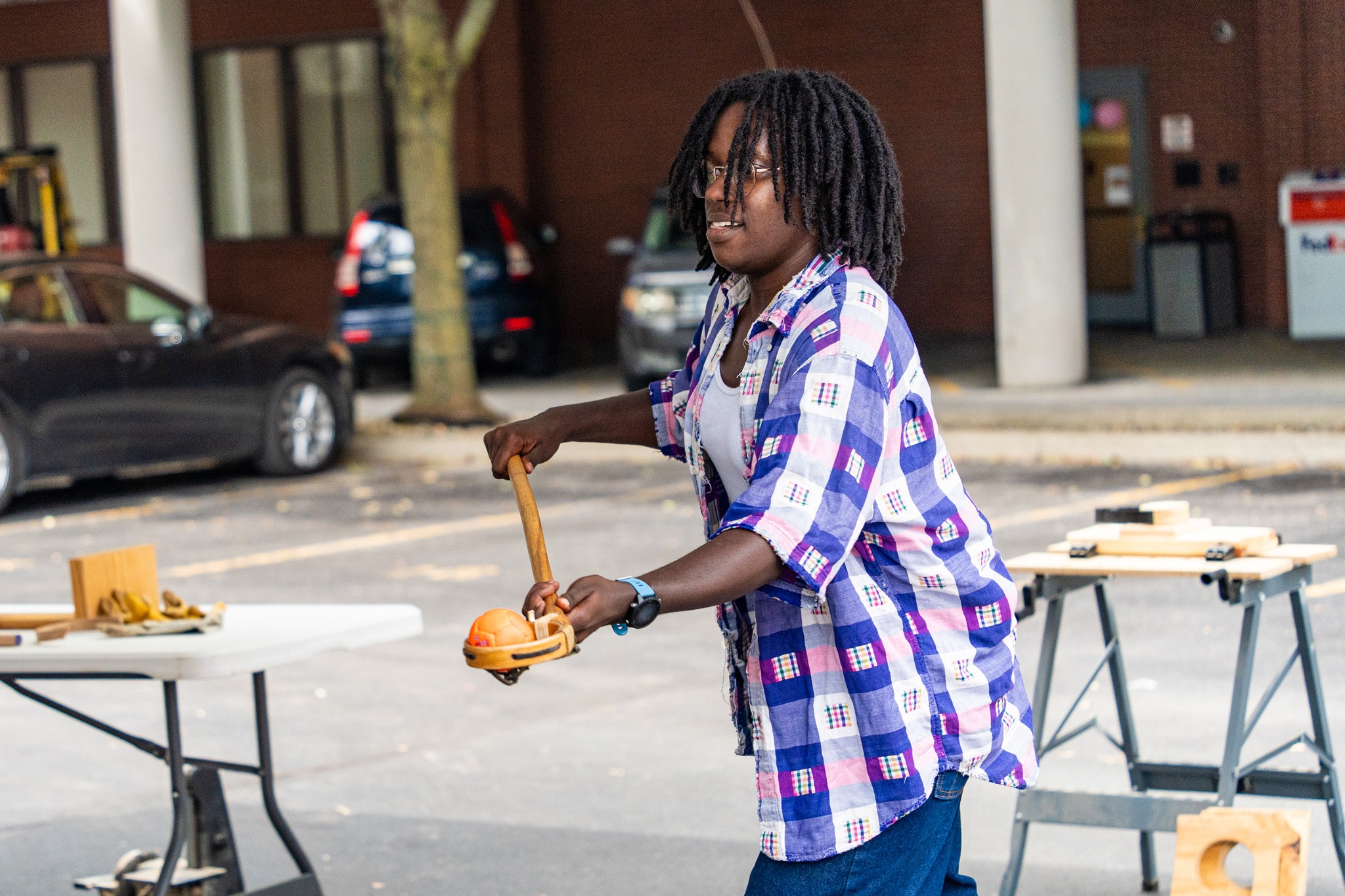
Morgan Harris playing with Doug Peconge’s handmade lacrosse stick.
During the festival, attendees had the chance to play traditional Myaamia games, such as the seenseewinki, ‘bowl game,’ and mahkisina meehkiintinki, ‘moccasin game,’ which hooked kids into exploring the rest of the festival.
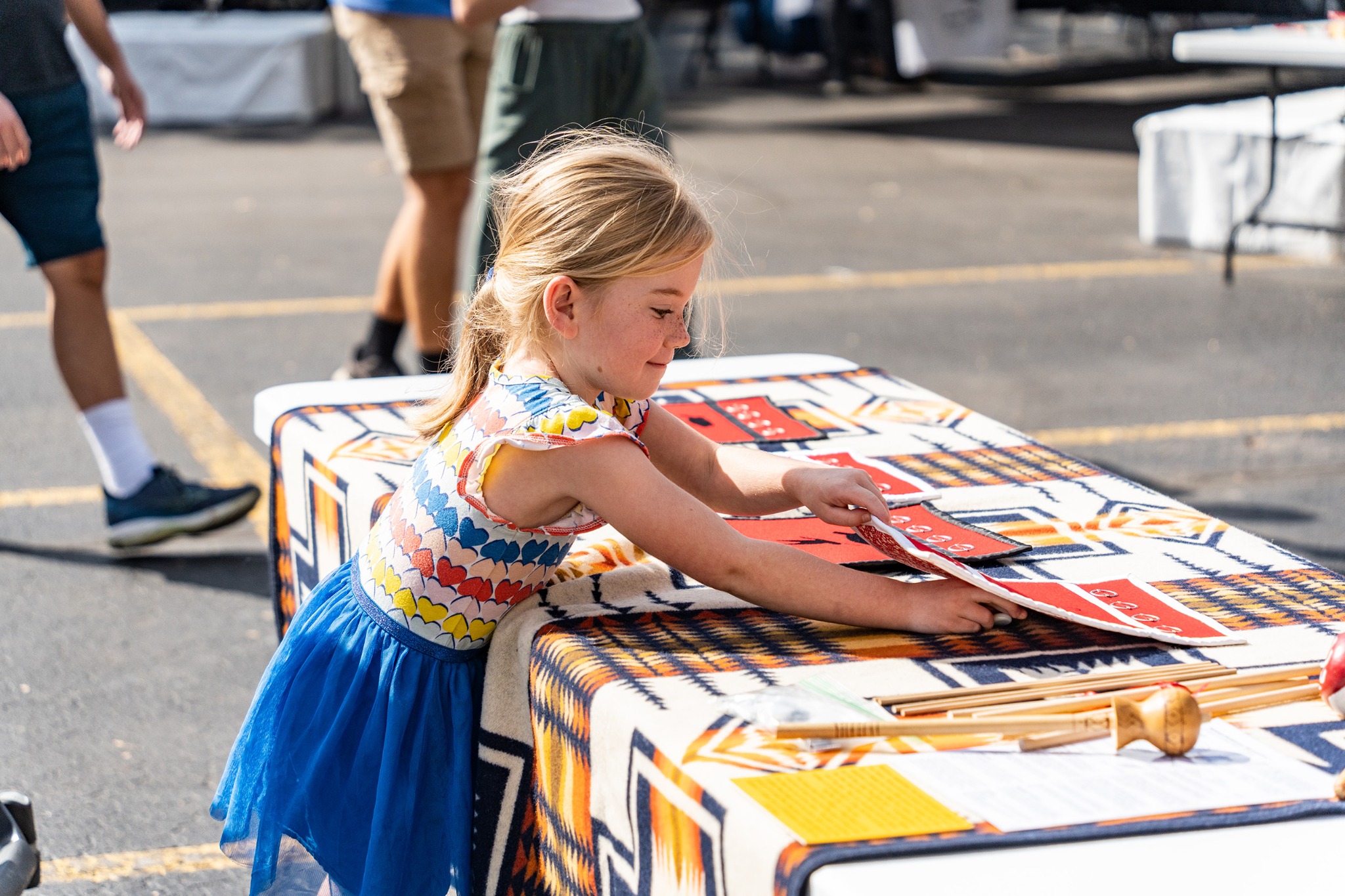
A young attendee playing mahkisina meehkiintinki, ‘moccasin game,’ with her parent.
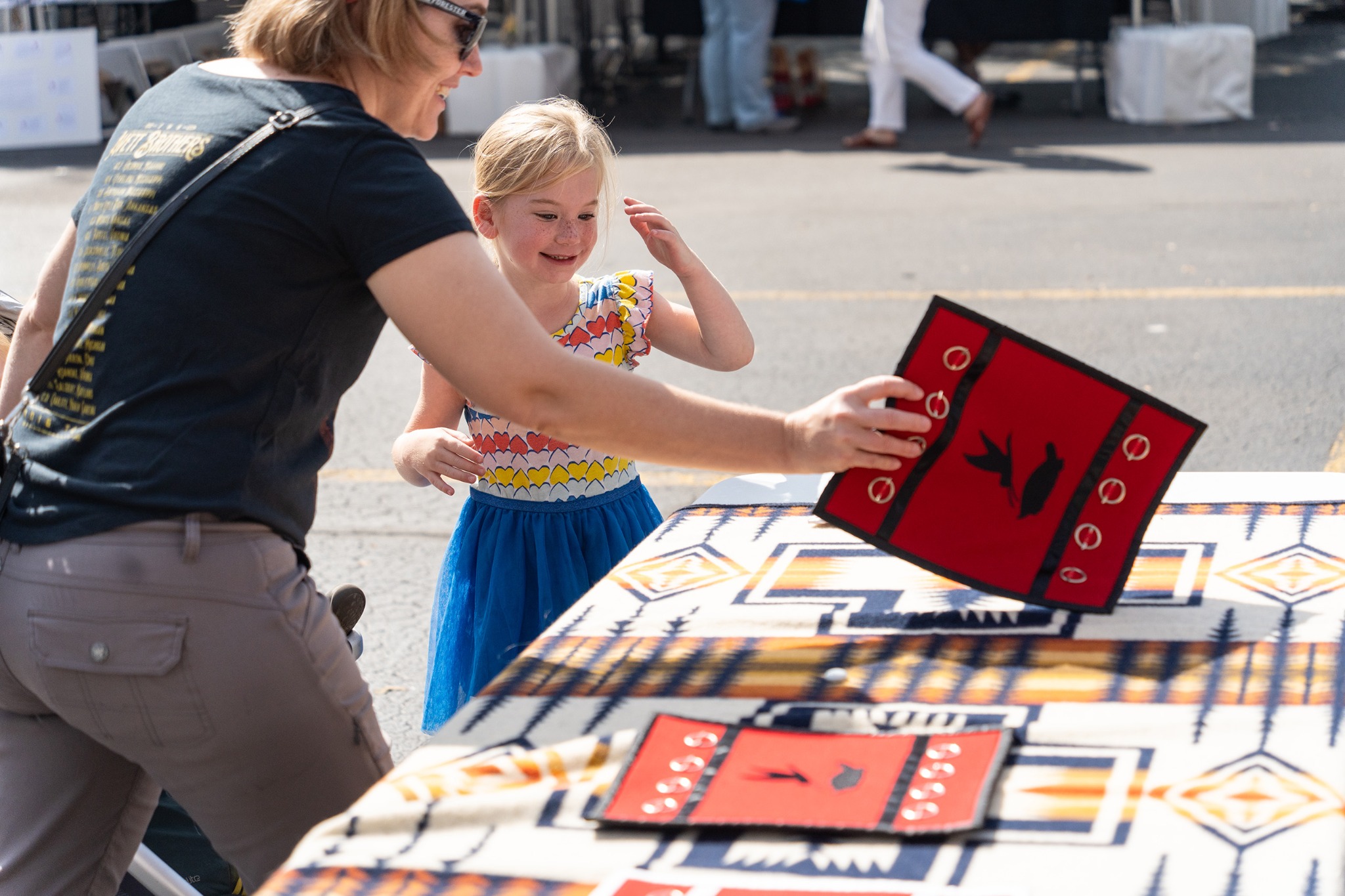
How to play: Most often played between two teams of two to four players, each team will alternate between hiding and attempting to find a special stone, out of four stones total, under one of four moccasins. The number of attempts it takes to find the special stone in a turn will determine which team obtains points. Points are counted with small (quarter point) and big (full point) scoring sticks. Whichever team obtains all four big scoring sticks wins, or four full points, wins.
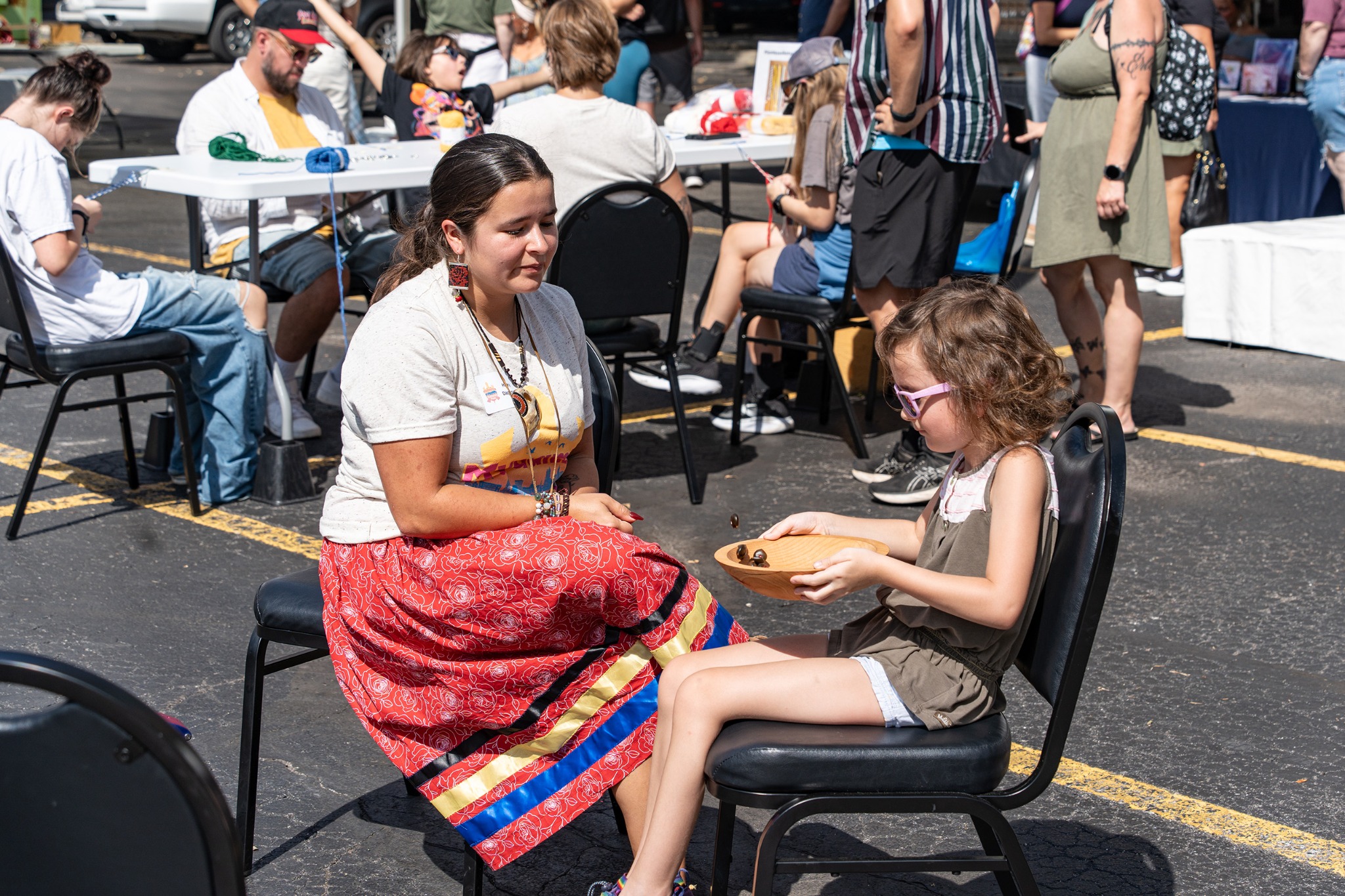
Haley Dagenett (left) teaching a young attendee how to play seenseewinki, ‘bowl game.'
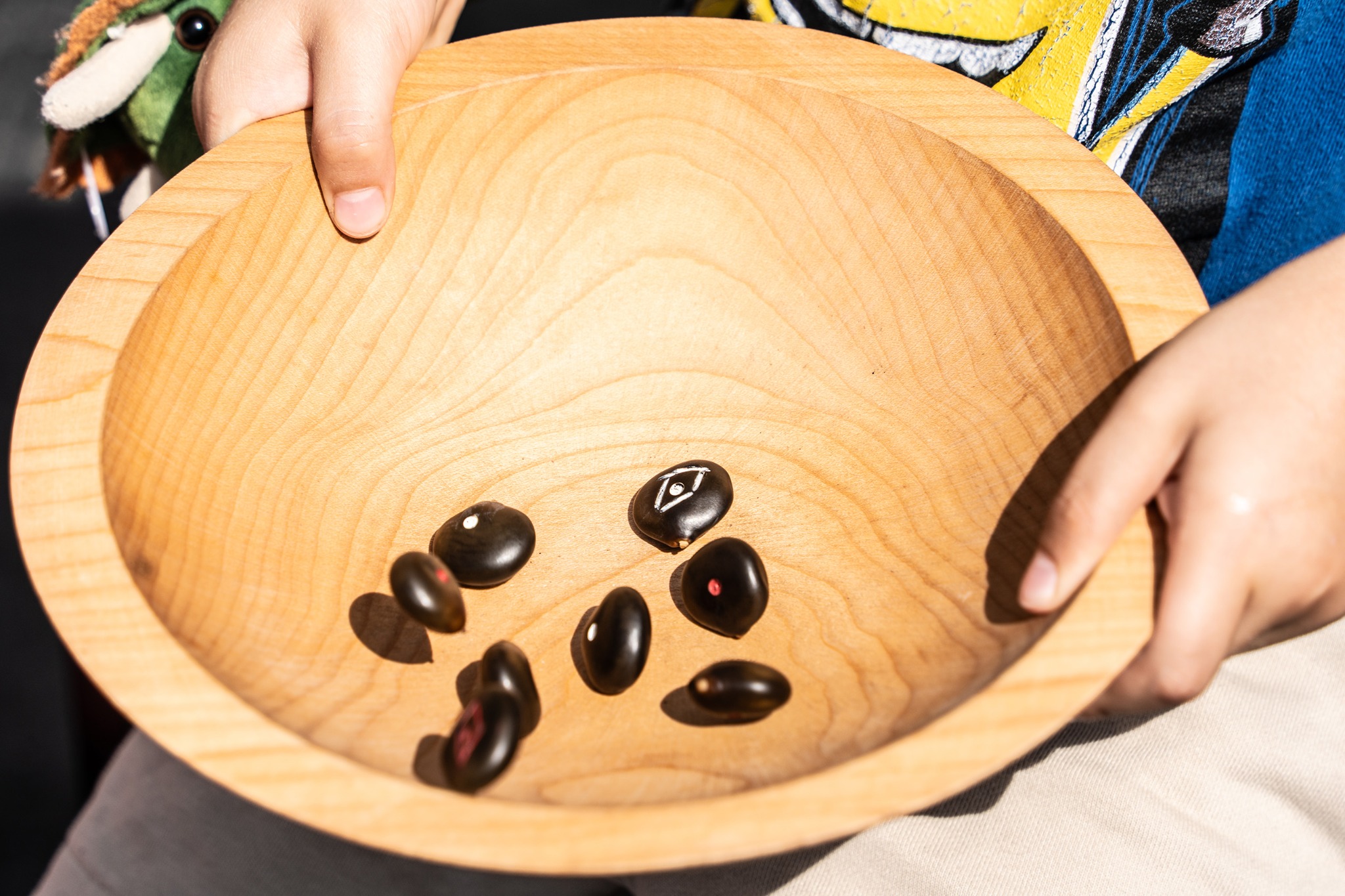
How the game is played: The game is played with at least two people. The bowl will be passed around in a circle until one person reaches at least 10 points and wins. Players hold the bowl and use it to toss the "seenseemina" just off the surface of the bowl into the air. The faces of that the seenseemina land on will determine the number of points.
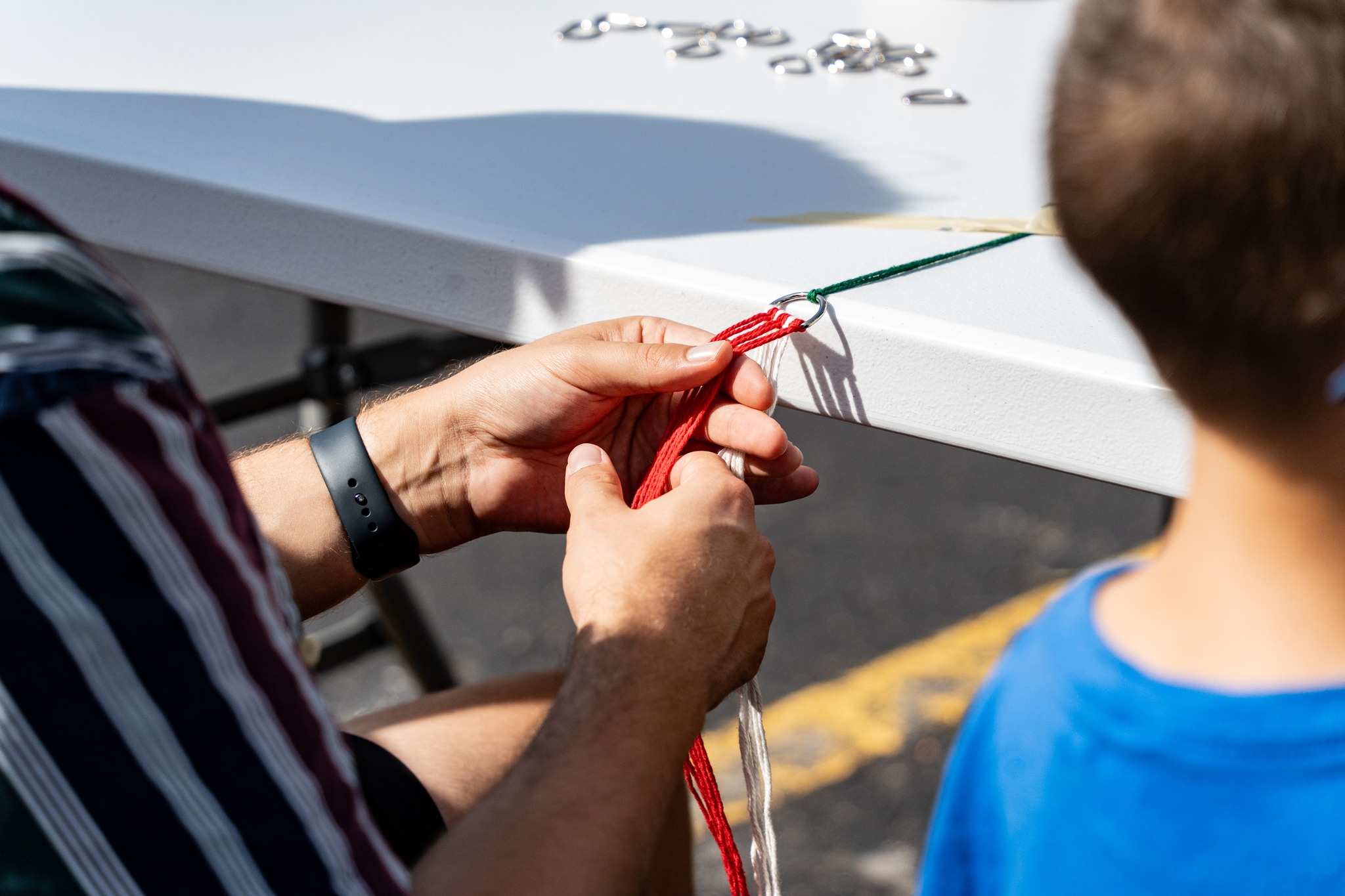
When exploring, they would come across the fingerweaving station, where they would sit choosing colors and weaving their own keychain to take home with family.
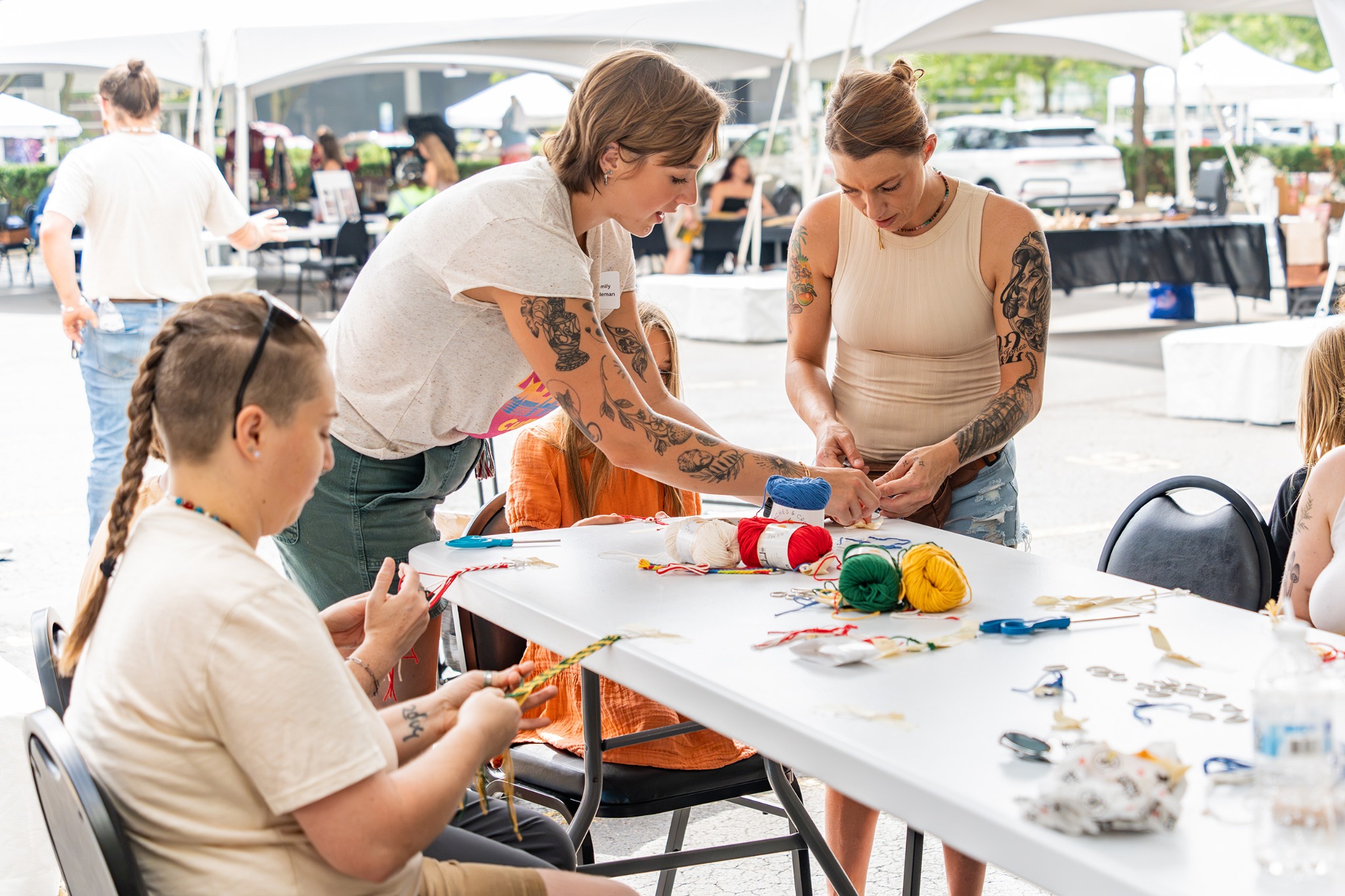
Emily Coleman showing attendees how to make their own fingerwoven keychain.
Christina Casiano said her husband is a citizen of the tribe, and she attended the festival with her kids to encourage curiosity about their heritage and their history. She said that she knew the festival had a positive, community driven impact on her children.
“It's a great experience for them. I mean, looking at their faces, they're all excited, they're smiling and that brings extra joy to my heart that they're curious,” Casiano said as her children explored Artist Dani Tippmann’s section.
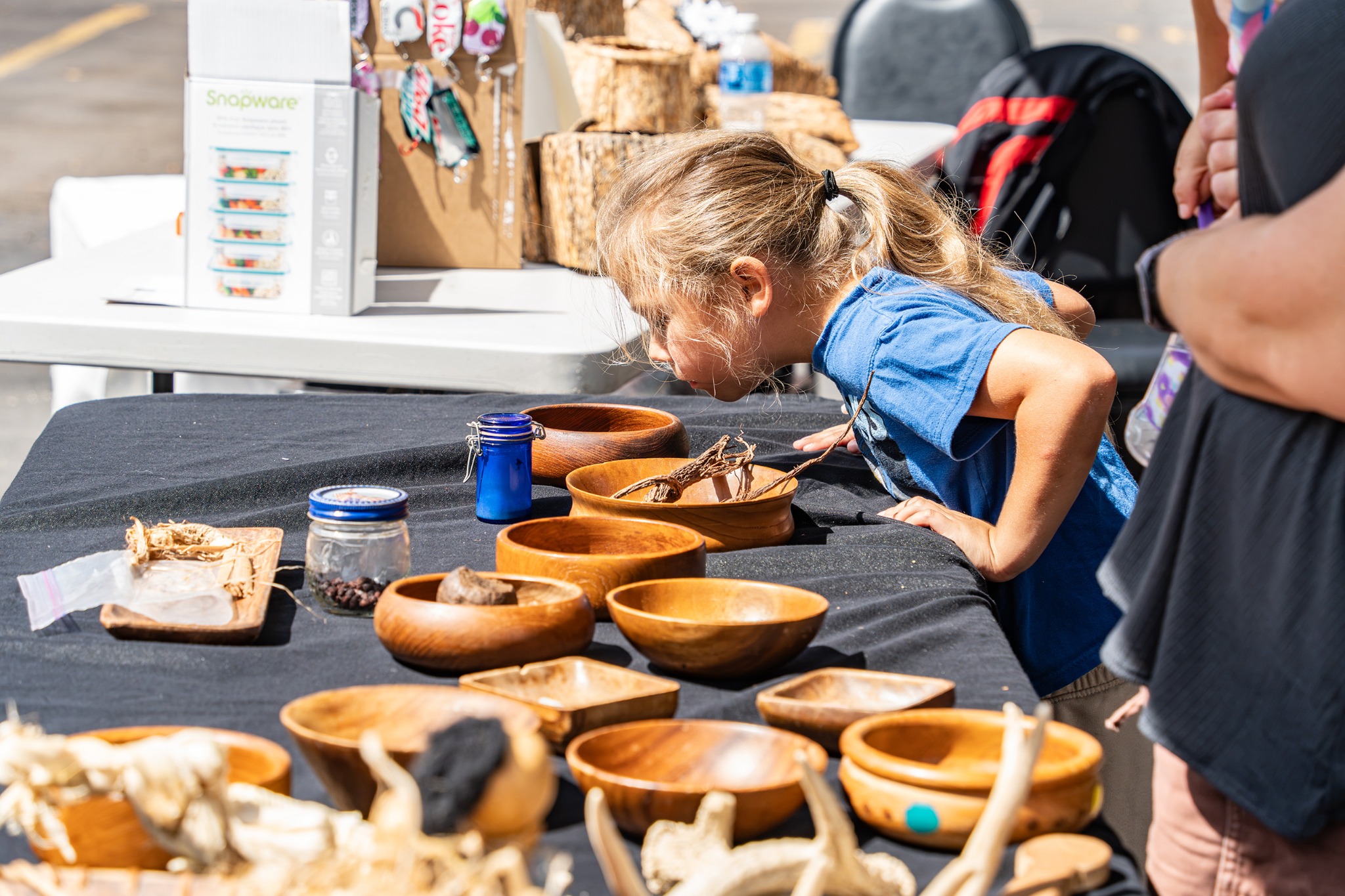
Christina Casiano’s son exploring Artist Dani Tippmann’s station of natural materials and works.
Tippmann, a multidisciplinary artist making her work out of natural materials she finds from the land, said that her work is about connecting back to the earth. She said the relationship between ourselves and plants can reconnect people to their culture, and culture can reconnect people to their ancestors.
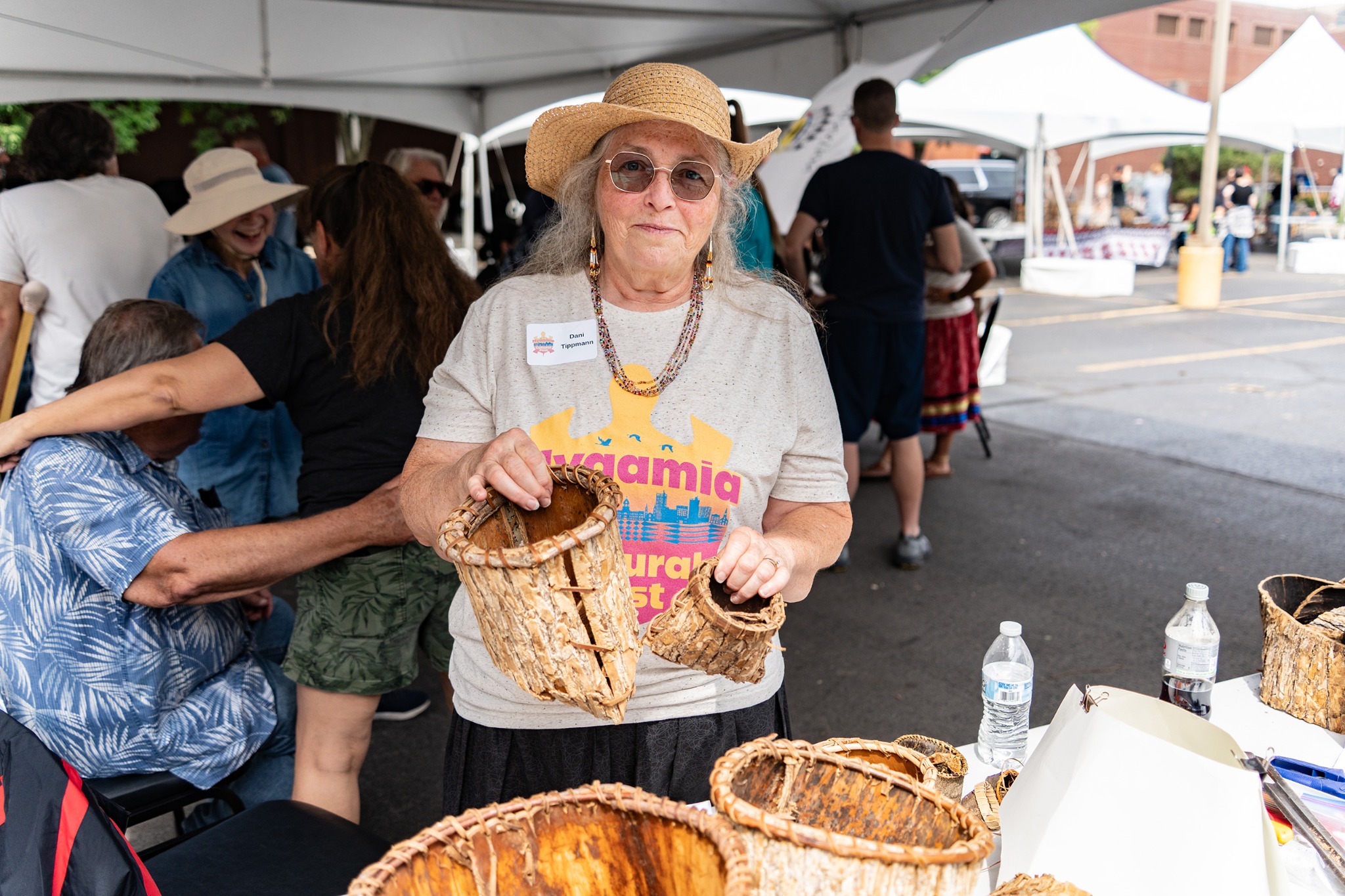
Dani Tippmann with her tree bark baskets made by hand. “We can make these baskets and I get to teach our people and help them to learn about it in a lot of different ways. I think it's really important for our people to have that connection to our history and to the plant."
“I think everything should be art, not just fine art in a museum. I think a basket filled with sugar or a big basket filled with blankets by your couch, or however you decide to use that basket, it should be something beautiful. Everything in your home should be,” Tippmann said. “And that beautiful reflection comes back on you, then you have beauty within you.”
Miami artists with a plethora of work can be supported via the Miami Nation Gift Shop.
The Myaamia Heritage Foundation works to advance Myaamia cultural knowledge, support Myaamia scholars, promote Myaamia artists, and provide educational opportunities for both Myaamia citizens and the general public. More information and events on the foundation can be found on their website.
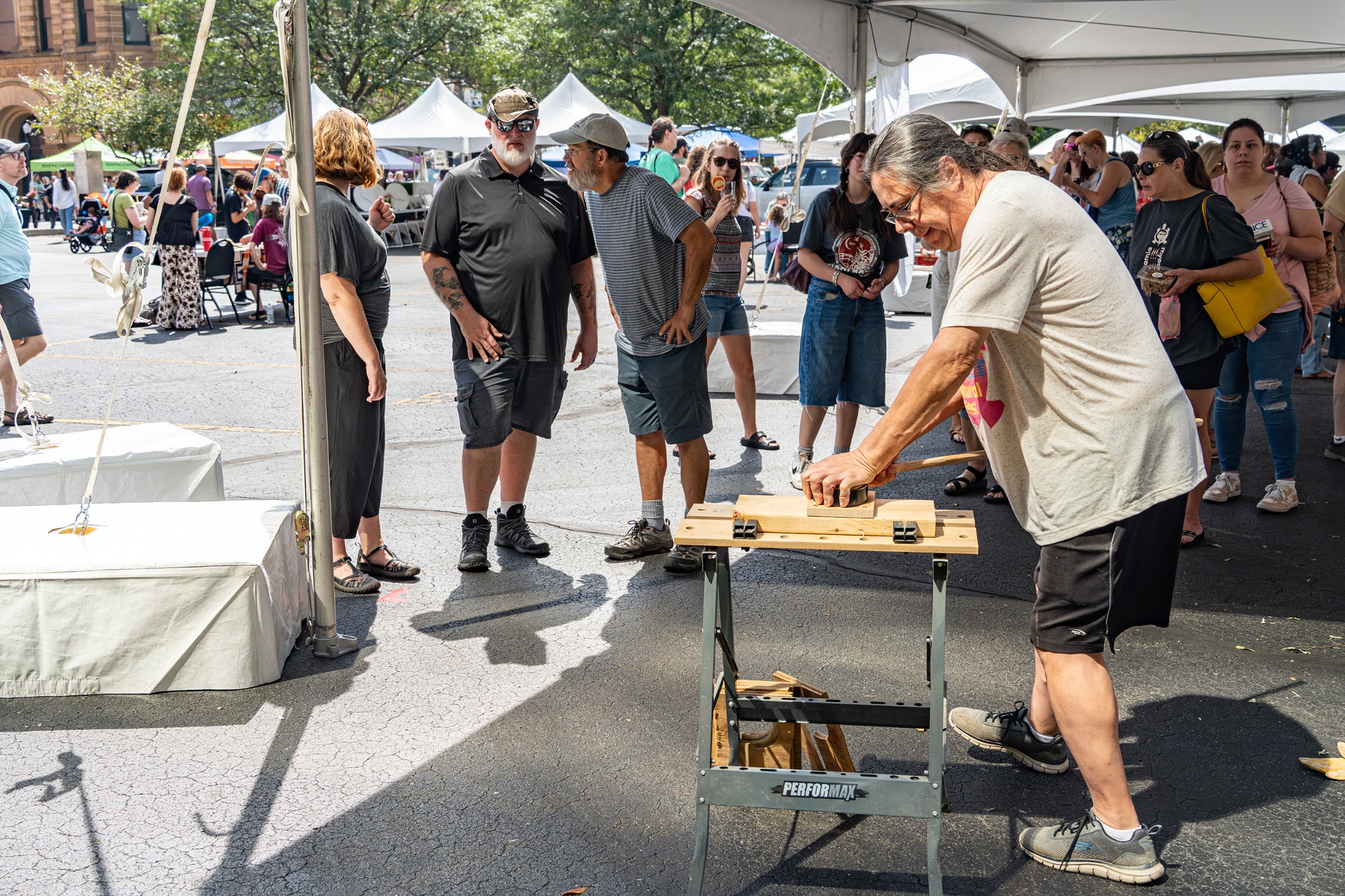
Doug Peconge showed attendees how he makes handmade lacrosse sticks for the Miami tribe’s games, which attendees could play with at the fest.
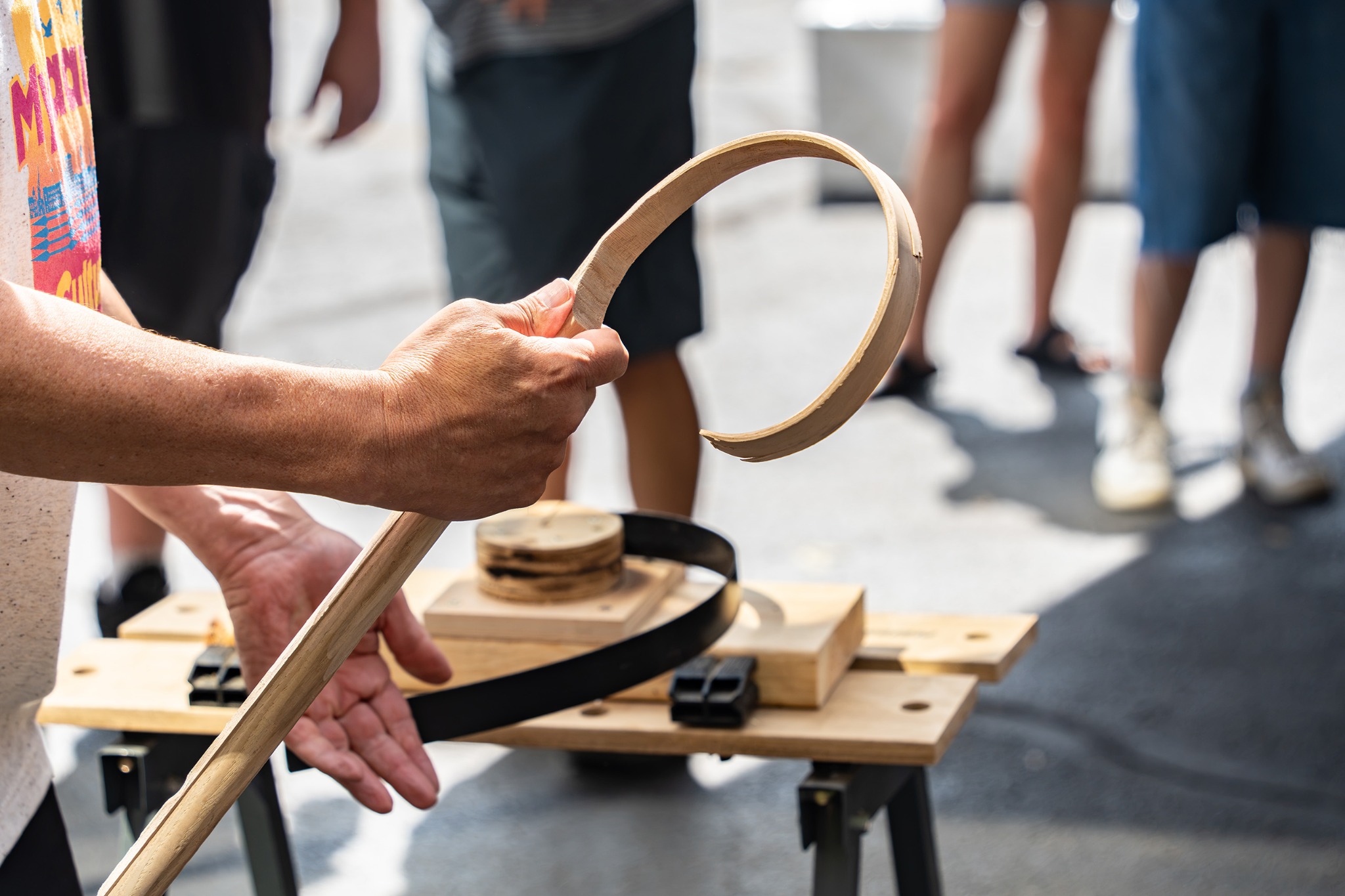
Doug Peconge's handmade lacrosse stick.
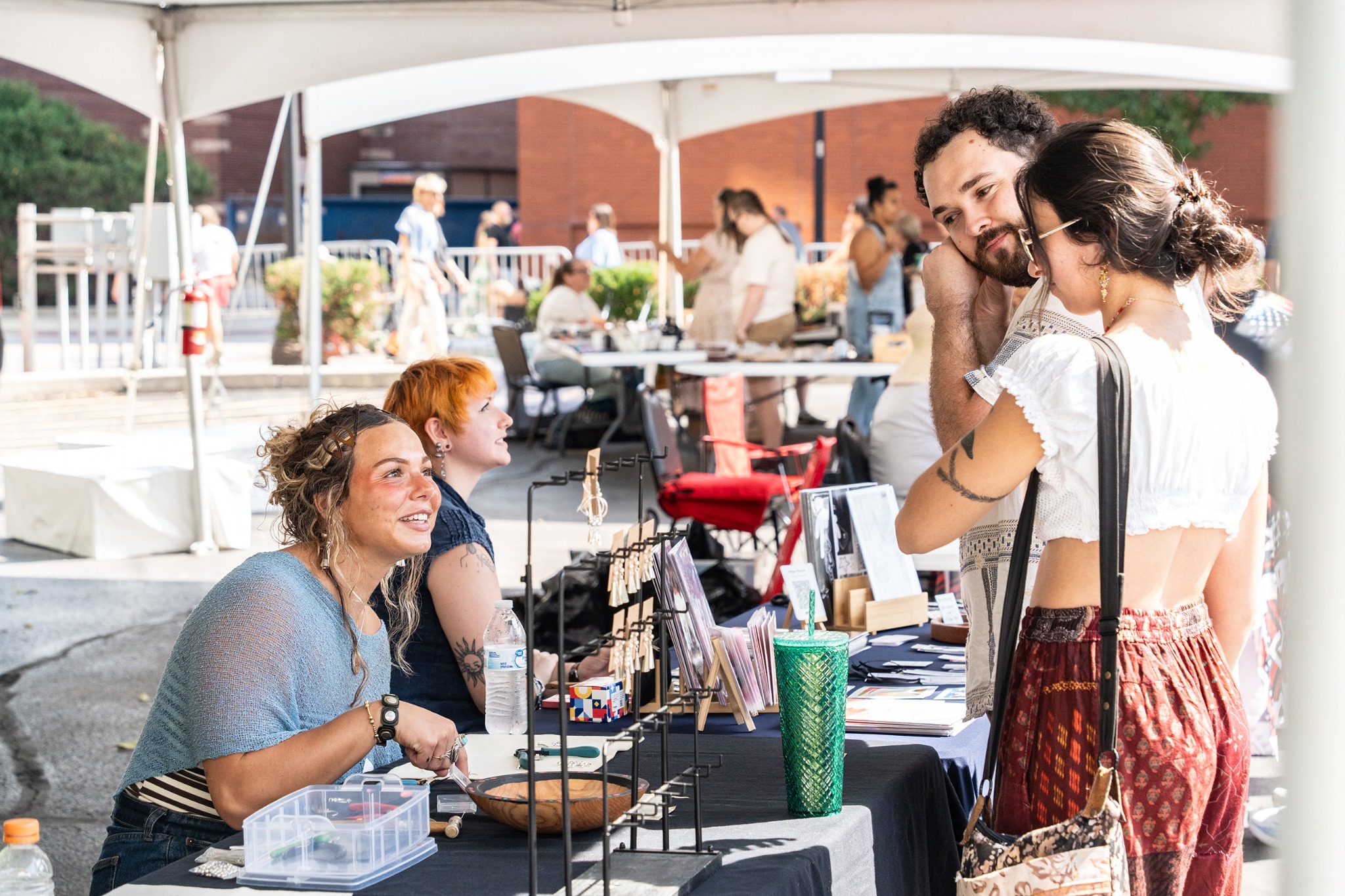
Mia Hankenson (left) engages with Myaamia community members during the fest.
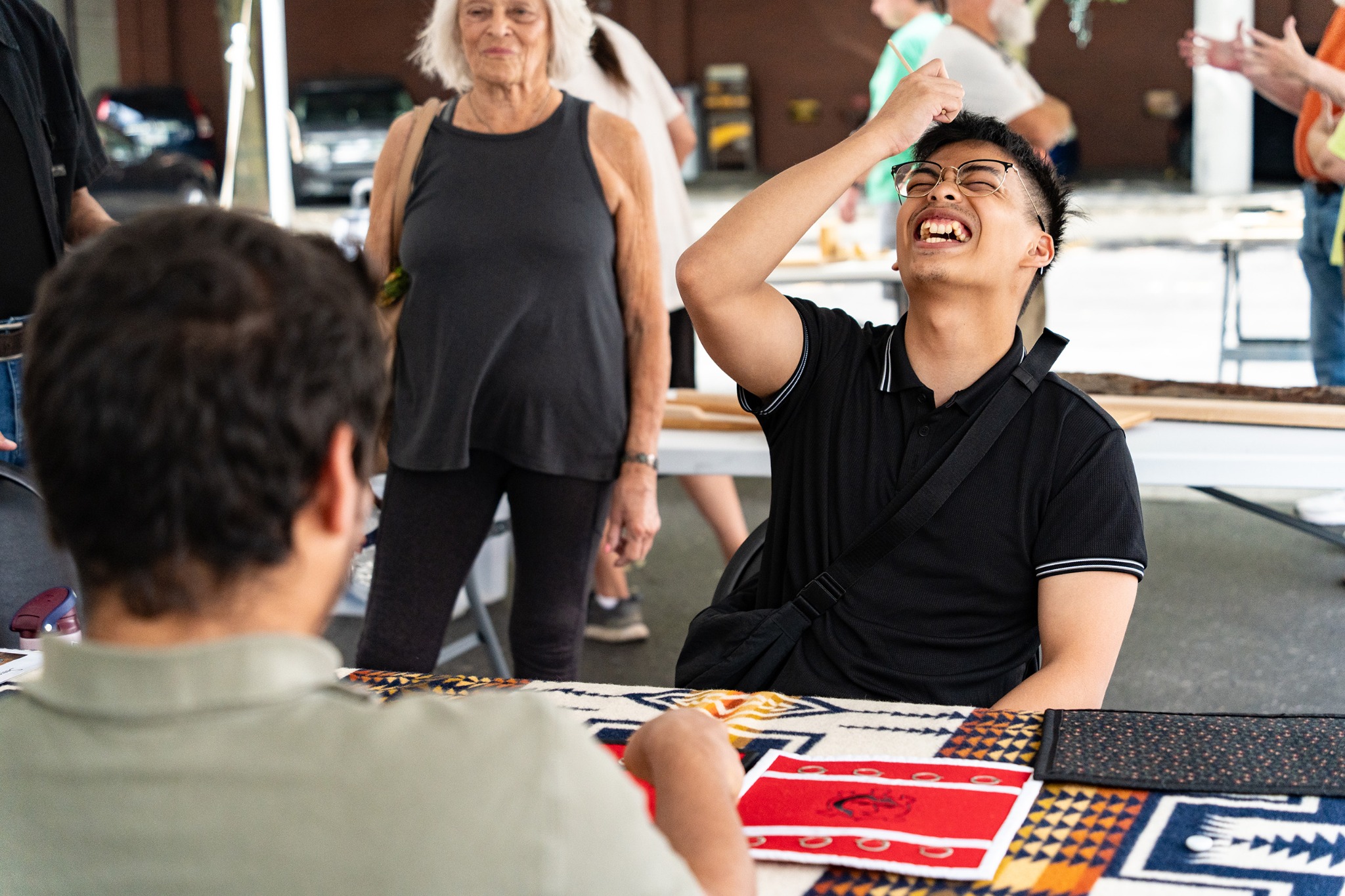
Attendees playing mahkisina meehkiintinki, ‘moccasin game,’ together.
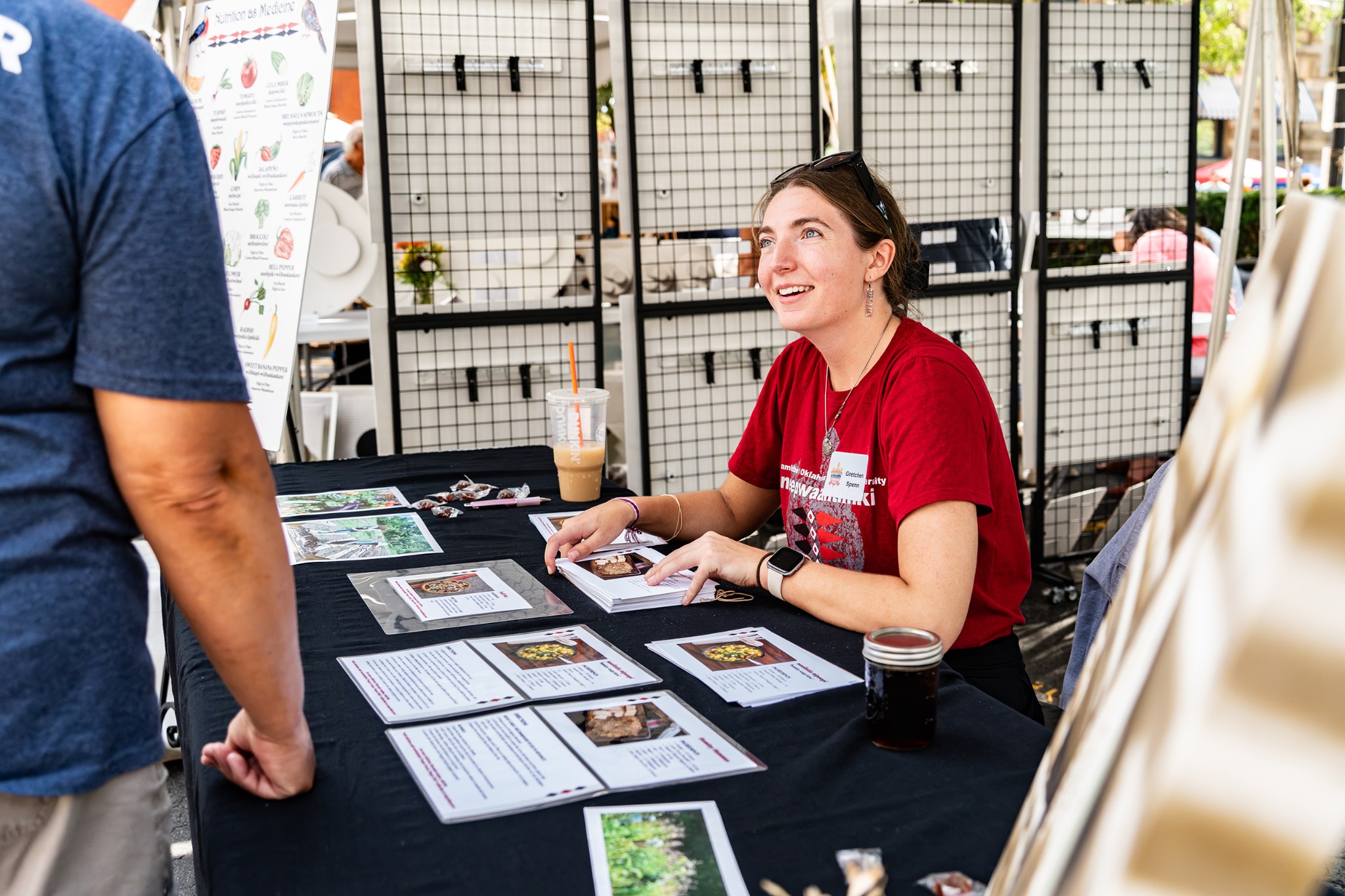
Gretchen Spenn speaking with attendees at her table.
Post a comment